Oni
Oni, the Japanese demonic ogre of superhuman strength who punishes the wicked
Curated byBestiarypediaUpdated on
 Japan(Japan)
⇄ Cultural variants (1)
Mythical Origins of the Oni
The oni emerge in ancient Japanese Shinto and Buddhist traditions, representing primordial forces of chaos and destruction that embody the inherent evil of the world. In texts like the Nihon Shoki from the 8th century, they are described as descendants of rebellious deities or transformations of sinful souls that, after death, find no peace in the afterlife and become fierce guardians of hells or wandering demons. Influenced by Buddhism imported from China, the oni are associated with Indian yaksha and rakshasa, adapted as oni to symbolize temptations and divine punishments. They do not born in a conventional way; they arise from spiritual corruption, excess anger, or possession by malevolent entities, initially serving as servants of Enma, the king of the underworld, before becoming independent in later folklore. This duality positions them between divine allies in cosmic battles and inevitable antagonists of humanity.
Appearance and Symbolic Attributes of the Oni
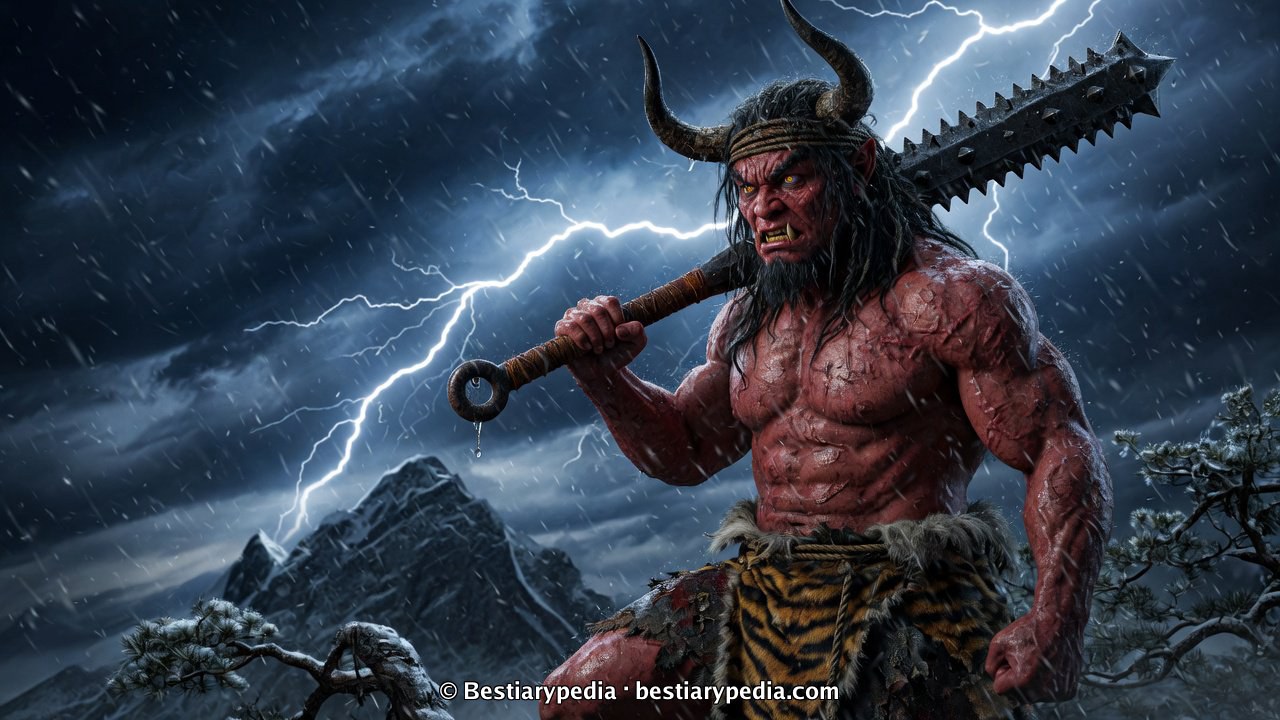
The oni are characterized by colossal and muscular bodies, often with vibrant skin tones like intense red for aka-oni, symbolizing burning fury, or deep blue for ao-oni, evoking lethal coldness. They possess two prominent curved horns representing their demonic and rebellious nature, yellow or red eyes that glow with supernatural malice, prominent fangs for tearing flesh, and long disheveled hair denoting primordial wildness. Dressed in tiger skins or intertwined hay skirts, they carry the kanabō, a massive iron club with spikes or serrated edges, an iconic weapon of mass destruction. Their faces, sometimes masked in artistic representations, express ferocious roars with the exclamation 'wa-gya-ya', encapsulating terror and overwhelming power. These attributes not only intimidate physically but symbolize amplified human vices: wrath, gluttony, and uncontrolled strength.
Powers, Weaknesses and Role in Myths
The oni possess superhuman strength capable of felling trees and crushing rocks with a single kanabō blow, near-limitless endurance to wounds and accelerated regeneration that closes deep gashes in seconds. They induce paralyzing terror in mortals with their mere presence or roars, manipulate minor winds and storms to sow chaos, and devour souls or human flesh to sustain their eternal vigor. However, vulnerable to Shinto rituals like setsubun throwing sacred beans to 'expel oni', ofuda amulets with divine writings, or weapons blessed by kami like Susanoo's sword. In myths like Momotarō, they yield to human cunning, animal allies, and offerings like kibi dango; in Issun-bōshi, a tiny hero defeats them with a needle as sword. Their role oscillates between Enma's executioners punishing sinners and protective spirits in festivals that drive them away for annual renewal.
Worship, Festivals and Cultural Legacy
Though feared, the oni integrate into Japanese popular worship through festivals like Setsubun, where beans are thrown for 'Oni wa soto! Fuku wa uchi!' symbolically expelling them through doors and windows, renewing homes against annual evils. In Oni-odori dances or Namahage in Tohoku, masked as oni visit homes to admonish lazy children, fusing terror with moral pedagogy. Toriyama Sekien's Hyakki Yagyō immortalizes their yokai night procession, inspiring ukiyo-e art and kabuki. In Buddhism, sutra exorcisms subdue them; in Shintoism, shrine offerings appease them as minor kami. Their legacy endures in anime, manga, and games as iconic antagonists, symbolizing struggle between order and chaos, virtue and vice, with names like Shuten-dōji as archetypes of legendary oni defeated by heroes like Minamoto no Yorimitsu.
Also known as
Relics
🏺 Kanabō
Serrated iron club used to crush enemies.
Symbology
Element
Fire, Iron
Number
Three (sometimes three eyes)
Color
Red, Blue
Animals
Tigers
Sigils:
🏷️ Traits
Powers
Weaknesses
Behavioral
Resistances
🔗 Relations with other beings
Variant of
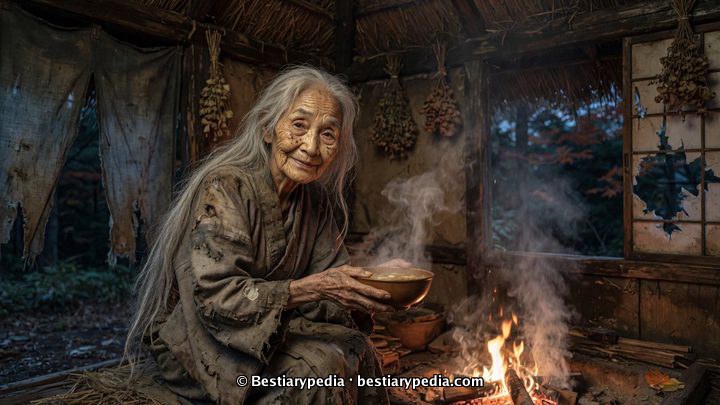
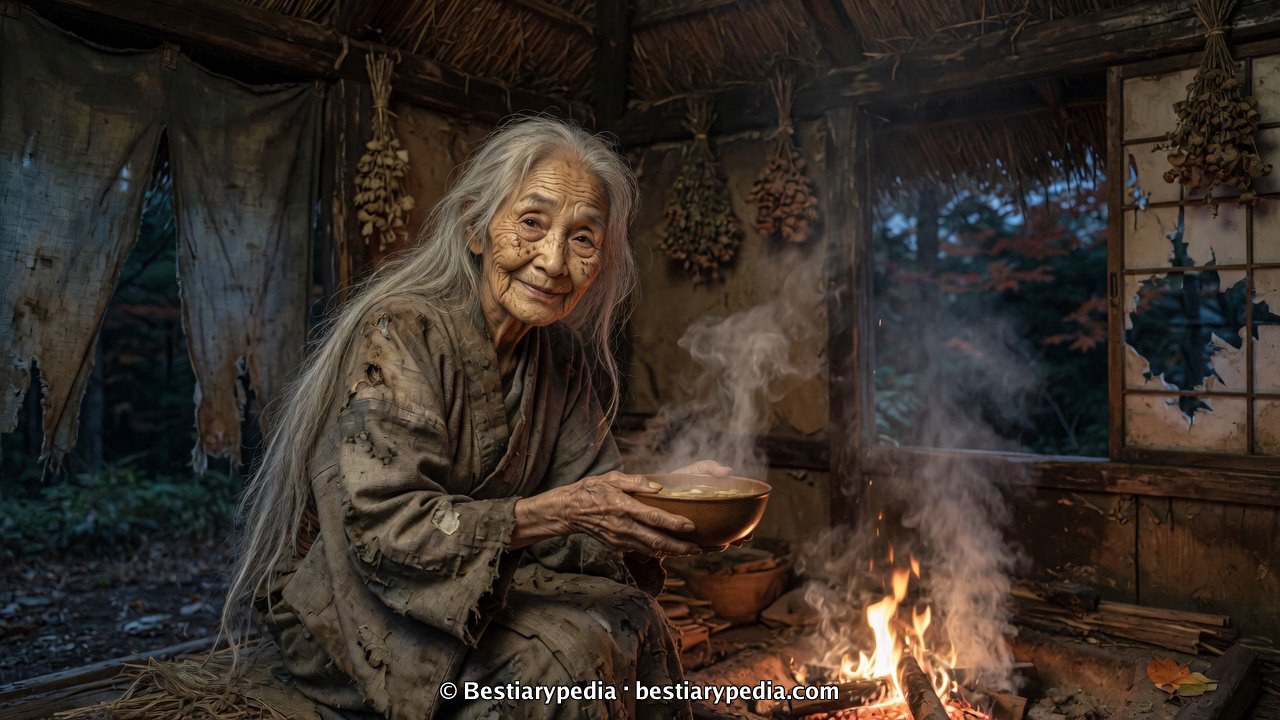
Yamauba is an elderly female variant of the mountain oni archetype.
🗺️In the Atlas
Travel the beings’ world of origin and the cosmos of their dimensions.
📜 Mythologies
Japanese folklore encompasses oral traditions, myths, legends and supernatural creatures like yōkai and kami, compiled in Edo-period illustrated texts by Toriyama Sekien in works like Gazu Hyakki Yagyō and Konjaku Hyakki Shūi, reflecting Shinto animist beliefs, ecological fears of floods and droughts, and respect for nature in rivers, lakes and rice fields of regions like Shiga, Osaka and Kyoto.
Sources
Hyakki Yagyō
Toriyama Sekien · 1776
Illustrated yōkai series by Toriyama Sekien from 1776, linked to the categorization of rokurokubi among popular yōkai.
Nihon Shoki
Prince Toneri · 720
Official Japanese chronicle of 720 CE complementing the Kojiki with mythic variants.
🔖Cite this entry▾
If you cite this article in an academic, journalistic or editorial publication, use any of these formats:
Bestiarypedia. (2026). Oni. Bestiarypedia. https://bestiarypedia.com/en/beings/oni
Free citation with attribution and canonical link for editorial, academic or journalistic use. Full commercial reuse or creation of derivative products requires prior agreement.