Ammit
Ammit, the Devourer of the Dead in Egyptian mythology
Curated byBestiarypediaCreated onUpdated on
 Ancient Egypt(Egypt)
Mythical Origins of Ammit
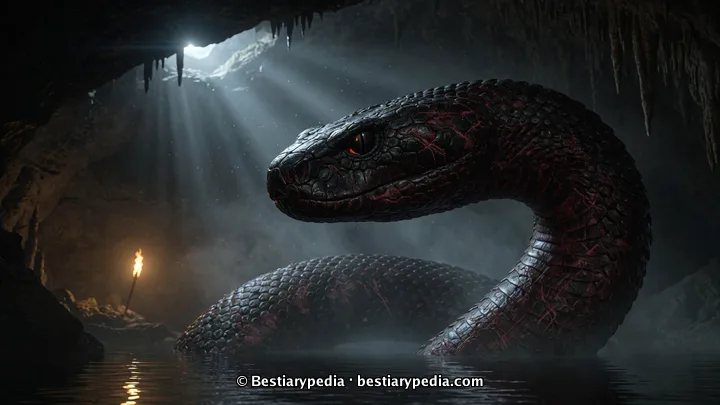
Ammit emerges in the funerary texts of the New Kingdom as the personification of the inevitable destruction awaiting those who fail the judgment. Her composite form of crocodile, lion and hippopotamus unites the three most feared Nile predators, symbolizing total threat against the impure soul. Although she does not appear as a principal deity in cosmogonic myths, her presence in the Book of the Dead chapter 125 links her directly to the order of Maat and the necessity of cosmic balance. Her origin is not narrated as divine birth but as an eternal function assigned by the gods of the tribunal.
Role of Ammit in the Weighing of the Heart
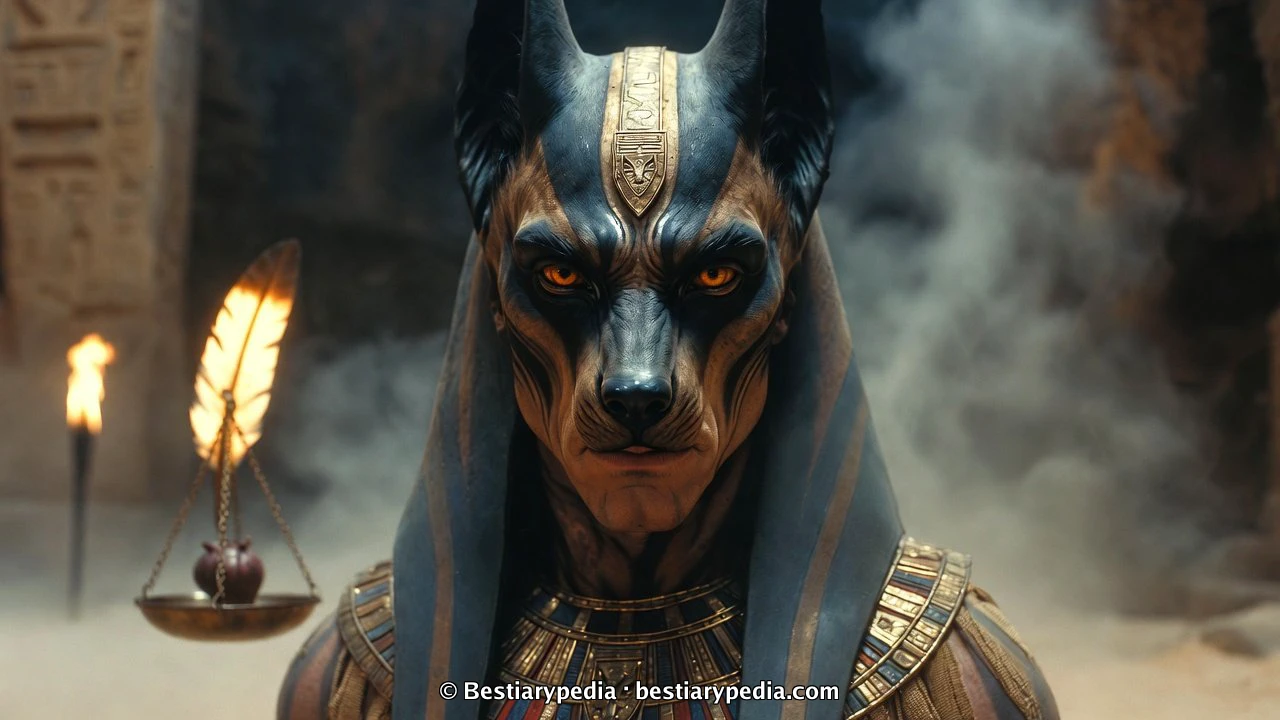
Ammit remains beside the scales during the judgment of the soul. If the deceased's heart proves heavier than Maat's feather, she devours it without delay, causing the second death and the total annihilation of individual existence. This action complements the work of Anubis, who directs the weighing, and Thoth, who records the verdict. Her intervention ensures that only just souls access the ordered afterlife, maintaining the cosmic balance demanded by Maat.
Symbolism and Relations of Ammit
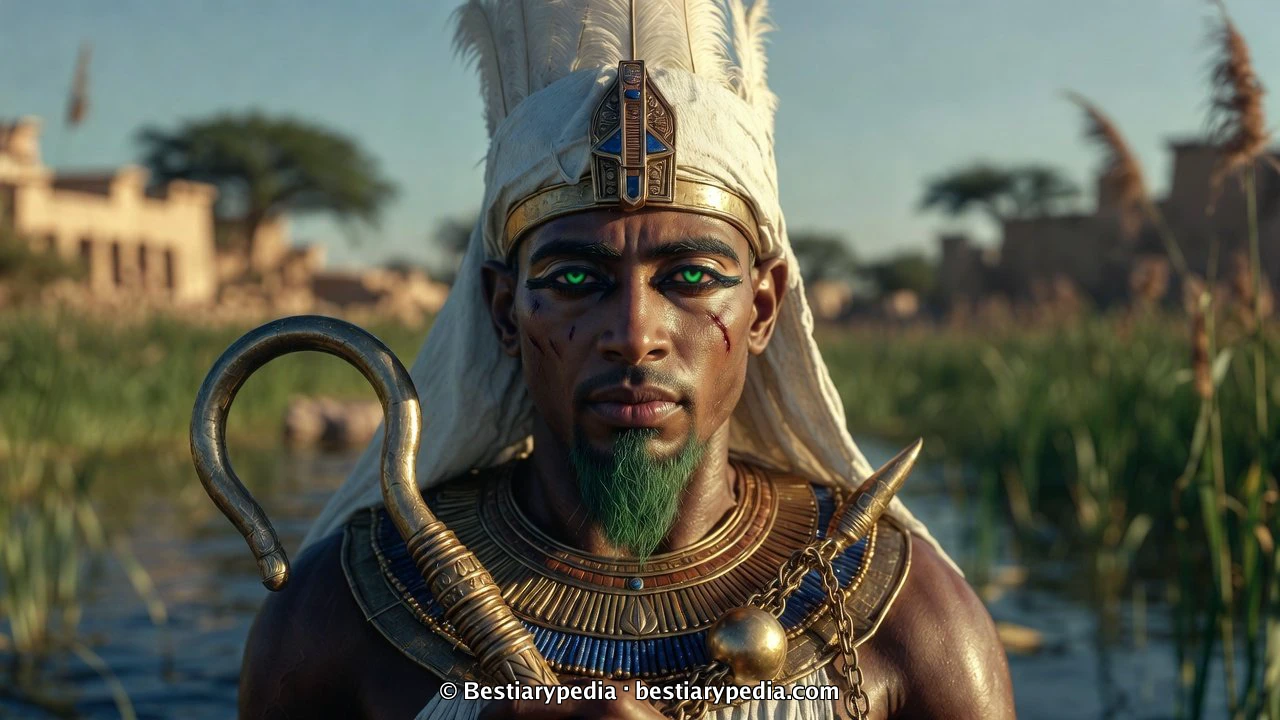
The black and green colors associated with Ammit evoke the fertility of Nile silt and the darkness of the tomb. Her constant companionship with Anubis in the judgment scene defines her as a functional companion rather than subordinate. She is occasionally mentioned as a servant of Osiris in late contexts. The scales and the three devouring animals constitute her essential iconography, reminding that Egyptian justice requires both guidance and inexorable punishment to preserve universal order.
Iconography and cult of Ammit
Unlike most Egyptian deities, Ammit received no cult or temples of her own: she was not worshipped but feared. Her role was deterrent, a reminder that injustice brought absolute annihilation. The vignettes of the Book of the Dead (especially the New Kingdom papyri of Hunefer and of Ani) depict her crouching beside the scales, jaws open, awaiting the verdict. Her name, the Devourer, stresses that her punishment is not eternal torment but the second death: the total dissolution of the being, with no memory or possible resurrection. That definitive character, without prolonged suffering, sets her apart from the punishing demons of other mythologies and casts her as the executor of the order of Maat rather than a force of evil.
Also known as
Relics
🏺 Scale of Judgment
Scale on which the deceased's heart is weighed; if it outweighs Maat's feather, Ammit devours it.
Symbology
Element
Death
Number
3
Color
Green
Animals
Crocodile, Lion, Hippopotamus
Sigils:
🏷️ Traits
Powers
Weaknesses
Behavioral
Resistances
🔗 Relations with other beings
🗺️In the Atlas
Travel the beings’ world of origin and the cosmos of their dimensions.
📜 Mythologies
Egyptian mythology developed in ancient Egypt over more than three millennia, from the predynastic period to the Roman era, and was closely linked to the civilization that inhabited the banks of the Nile. Its beliefs were based on a worldview in which cosmic order, represented by the concept of maat, was maintained through the action of the gods and the performance of rituals by humans. The Egyptian pantheon included numerous local and national deities, among which Ra stood out, associated with the sun and creation, and Osiris, god of resurrection and the underworld, along with other figures such as Isis, Horus, Seth and Amun. Mythological narratives explained the origin of the world, the daily cycle of the sun and the fate of the soul after death, integrating elements of the nature of the Nile valley and astronomical observation. Funerary texts, such as the Book of the Dead, and temple reliefs constitute the main sources for the knowledge of these beliefs. Although official worship declined with the Christianization of Egypt, Egyptian mythology has exerted a lasting influence on art, literature and the Western imagination, and continues to be the subject of study in Egyptology.
Sources
The Gods of the Egyptians
E. A. Wallis Budge · 1904
Two-volume study by the Egyptologist E. A. Wallis Budge (1904) on the gods of ancient Egypt, their mythology and cult.
Book of the Dead
Anonymous · c. 1550 BC
Compilation of funerary spells from ancient Egypt used from the New Kingdom onward.
Coffin Texts
Unknown · c. 2000 BCE
Egyptian funerary texts inscribed on coffins from the Middle Kingdom.
Frequently asked questions
What is the mythical origin of Ammit?
Ammit emerges in New Kingdom texts as an eternal function of the divine tribunal. She has no narrated birth but embodies inevitable destruction for souls failing Maat's judgment.
What happens when Ammit devours the heart?
It causes the second death and the total annihilation of the deceased's individual existence, preventing access to the ordered afterlife.
How does Ammit relate to Anubis and Thoth?
Ammit acts as the functional counterpart of Anubis, who directs the weighing, and Thoth, who records the verdict, completing the judgment process.
🔖Cite this entry▾
If you cite this article in an academic, journalistic or editorial publication, use any of these formats:
Bestiarypedia. (2026, August 3). Ammit. Bestiarypedia. https://bestiarypedia.com/en/beings/ammit
Free citation with attribution and canonical link for editorial, academic or journalistic use. Full commercial reuse or creation of derivative products requires prior agreement.