Lugh
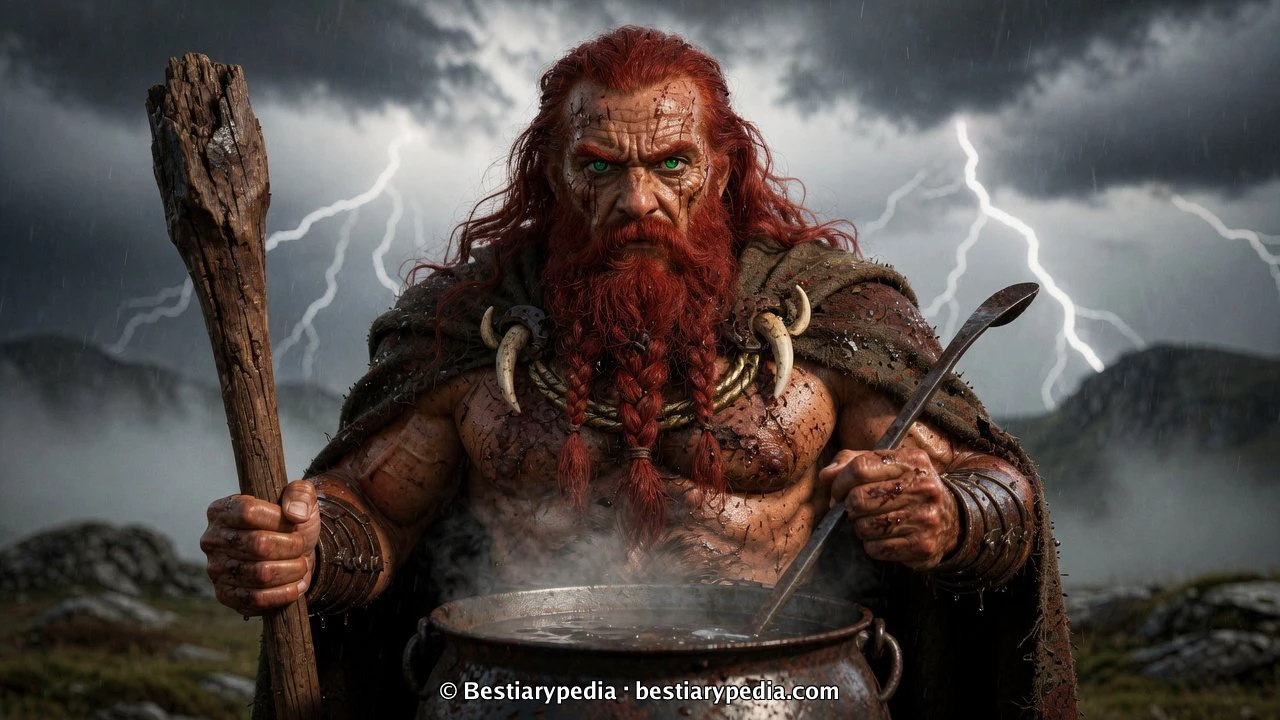
Lugh, Celtic god of light, arts and sovereignty
Curated byBestiarypediaCreated on
 Ireland(Ireland)
Family Tree

Mythical Origins of Lugh
Lugh is the son of Cian of the Tuatha Dé Danann and Ethniu, daughter of the Fomorian king Balor. Born in Gortagren, he was rescued by Taillte to avoid his death according to the prophecy. His lineage combines the heritage of the Tuatha Dé Danann with that of the Fomorians, symbolizing the fusion of light and darkness in Irish mythology. Ancient texts such as the Lebor Gabála Érenn describe his arrival as a pivotal moment in the cycle of invasions of Ireland, where his multiple skills distinguish him from childhood.
Nature and Abilities of Lugh
Known as Samildánach the many-skilled, Lugh masters all arts and crafts including war poetry trade and magic. He is the god of light and sovereignty who wields the spear Assal and the hound Failinis. His solar eye represents divine perception and victory over the forces of chaos. This integral mastery makes him the archetype of the complete Celtic hero who unites practical skills with supernatural powers in the tales of Cath Maige Tuired.
Exploits and Legacy of Lugh
At the battle of Cath Maige Tuired Lugh slew his grandfather Balor by casting a sling-stone that pierced his baleful eye, and became king of the Tuatha Dé Danann. He founded the festival of Lughnasadh in honour of his foster-mother Tailtiu and established a reign of artistic and military prosperity. His legacy endures in Irish mythology as a symbol of ingenuity and leadership that shaped later tales of Celtic heroes and the seasonal celebration marking the harvest.
Lughnasadh, lineage and cult of Lugh
Lugh's name reaches far beyond Ireland: the continental form Lugus gave its name to cities such as Lugdunum (modern Lyon) and appears in Gaulish and British inscriptions, suggesting a pan-Celtic god of very wide cult. In the Ulster Cycle, Lugh is the father of the hero Cú Chulainn, whom he aids and heals in the thick of battle. Among his famous possessions is the Gáe Assail, the flaming spear that never misses and returns to the hand, one of the Four Treasures the Tuatha Dé Danann brought from the northern cities. His festival, Lughnasadh —held at the start of August— marks the beginning of the harvest and was instituted, so the tales say, as funeral games in honour of his foster-mother Tailtiu, who died after clearing the plains of Ireland for tillage. Under Christianity the date survived as a harvest feast and in popular traditions such as the Lughnasa fairs, testimony to the depth of his cult.
Relics
🏺 Gáe Assail
Flaming spear of Lugh, one of the Four Treasures of the Tuatha Dé Danann: it never misses its mark and returns of itself to the thrower's hand.
Symbology
Element
Fire
Number
Eight
Color
Golden
Animals
Hunting hound Failinis
Sigils:
🏷️ Traits
Powers
Weaknesses
Behavioral
Resistances
🔗 Relations with other beings
🗺️In the Atlas
Travel the beings’ world of origin and the cosmos of their dimensions.
📜 Mythologies
Irish folklore developed from the oral traditions of the Celtic peoples who inhabited Ireland since the Iron Age, with later influences from Christianity after the arrival of Saint Patrick in the 5th century. Its tales collect beliefs in supernatural beings and mythical cycles transmitted in medieval manuscripts such as the Lebor Gabála Érenn. Among the most prominent entities are the Tuatha Dé Danann, a mythical people endowed with magical powers who, according to tradition, were defeated and relegated to the underworld, where they are identified with the fairies or sídhe. The worldview of Irish folklore integrates a landscape animated by spirits, enchanted hills and seasonal festivities such as Samhain, which mark the interaction between the human world and that of the fairy beings. The narratives emphasize the ambivalence of these beings, capable both of granting favors and of causing harm, and reflect a continuity between pre-Christian mythology and later popular practices. This set of beliefs has left a lasting mark on the literature, music and arts of Ireland, influencing authors such as W. B. Yeats and the preservation of festivities and customs that still form part of Irish cultural identity.
Sources
Gods and Fighting Men, by Lady Gregory
Lady Augusta Gregory · 1904
Compilation by Lady Augusta Gregory (1904) that gathers and retells in English the myths of the Tuatha Dé Danann and the Irish heroic cycles; a reference work in the public domain.
Lebor Gabála Érenn
Medieval Irish Anonymous · c. 1100
The "Book of the Taking of Ireland", a medieval compilation (c. 1100) recounting the successive mythical peoples who settled the island, among them the Tuatha Dé Danann and the Fomorians, and a fundamental source of the divinities and beings of Irish myth.
Cath Maige Tuired
Medieval Irish Anonymous · c. 900
"The Battle of Mag Tuired", a medieval Irish saga recounting the clash between the Tuatha Dé Danann and the Fomorians. The Dagda, Lugh and Balor stand out in it, and it is an essential source of the gods and supernatural beings of the Irish mythological cycle.
Frequently asked questions
What is Lugh's family origin and how did it shape his destiny according to ancient texts?
His dual lineage is the key: son of the Tuatha Dé Danann Cian and of Ethliu, daughter of the Fomorian Balor, Lugh unites the two warring peoples. A prophecy warned that a grandson would kill Balor, so Balor tried to destroy him at birth; saved and fostered by Tailtiu, he fulfilled it in the end and turned his mixed origin into the instrument of the Tuatha's victory.
What characteristic skills and attributes does Lugh possess according to the narratives of Cath Maige Tuired?
The epithet Samildánach —'the one of many arts'— sums up his defining trait: on coming to Nuada's court he was admitted not for mastering one craft but for mastering them all at once. Warrior, poet, smith, harper, healer and sorcerer, he embodies the Celtic ideal of total excellence, and to that versatility he owes both the command of the Tuatha and his victory over Balor.
What relationship does Lugh maintain with Balor and what consequences did it have for the hierarchy of the Tuatha Dé Danann?
At the battle of Cath Maige Tuired Lugh slew his grandfather Balor by casting a sling-stone that pierced his baleful eye, and became king of the Tuatha Dé Danann. He founded the festival of Lughnasadh in honour of his foster-mother Tailtiu and established a reign of artistic and military prosperity.
🔖Cite this entry▾
If you cite this article in an academic, journalistic or editorial publication, use any of these formats:
Bestiarypedia. (2026, August 4). Lugh. Bestiarypedia. https://bestiarypedia.com/en/beings/lugh
Free citation with attribution and canonical link for editorial, academic or journalistic use. Full commercial reuse or creation of derivative products requires prior agreement.
Similar beings
Nuada
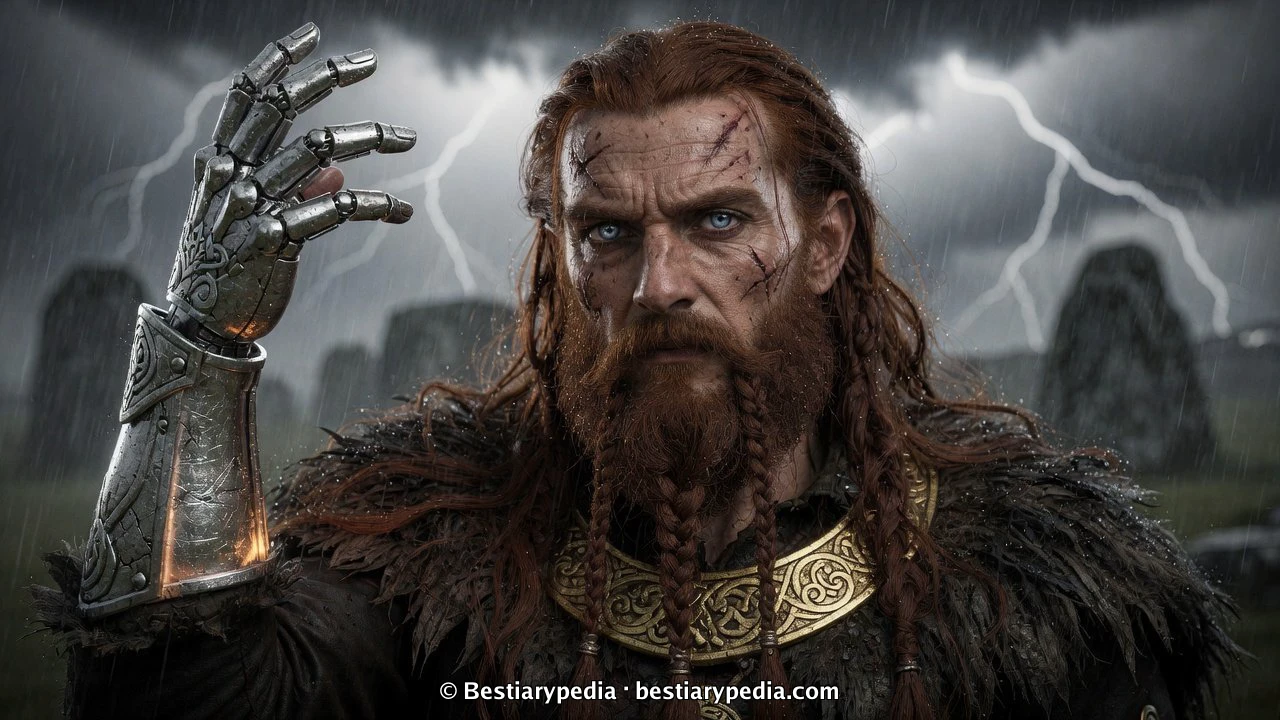
Nuada, king of the Tuatha Dé Danann and Celtic god of war, sovereignty and healing
Danu
Danu, primordial mother goddess of the Irish Celtic pantheon
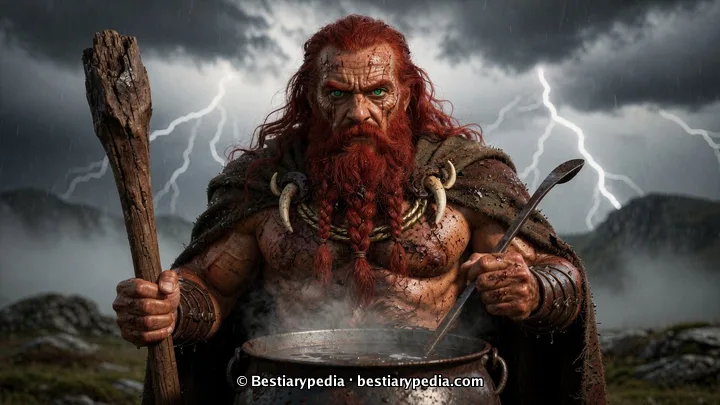
Dagda
Dagda, supreme god of the Irish Celtic pantheon
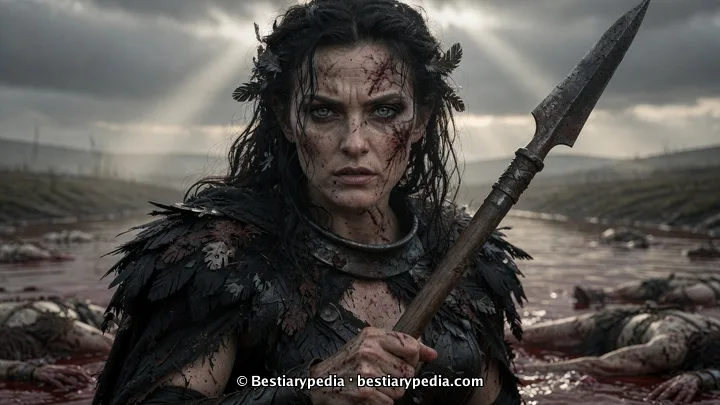
Morrigan
Morrigan, Celtic goddess of war, sovereignty and death