Nuada
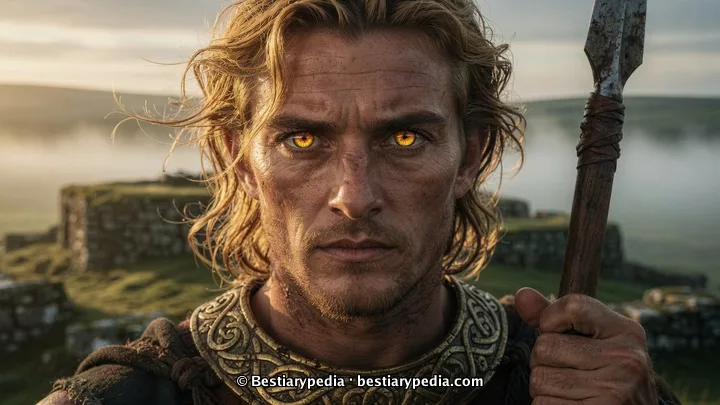
Nuada, king of the Tuatha Dé Danann and Celtic god of war, sovereignty and healing
Curated byBestiarypediaCreated on
 Ireland(Ireland)
Mythical Origins of Nuada
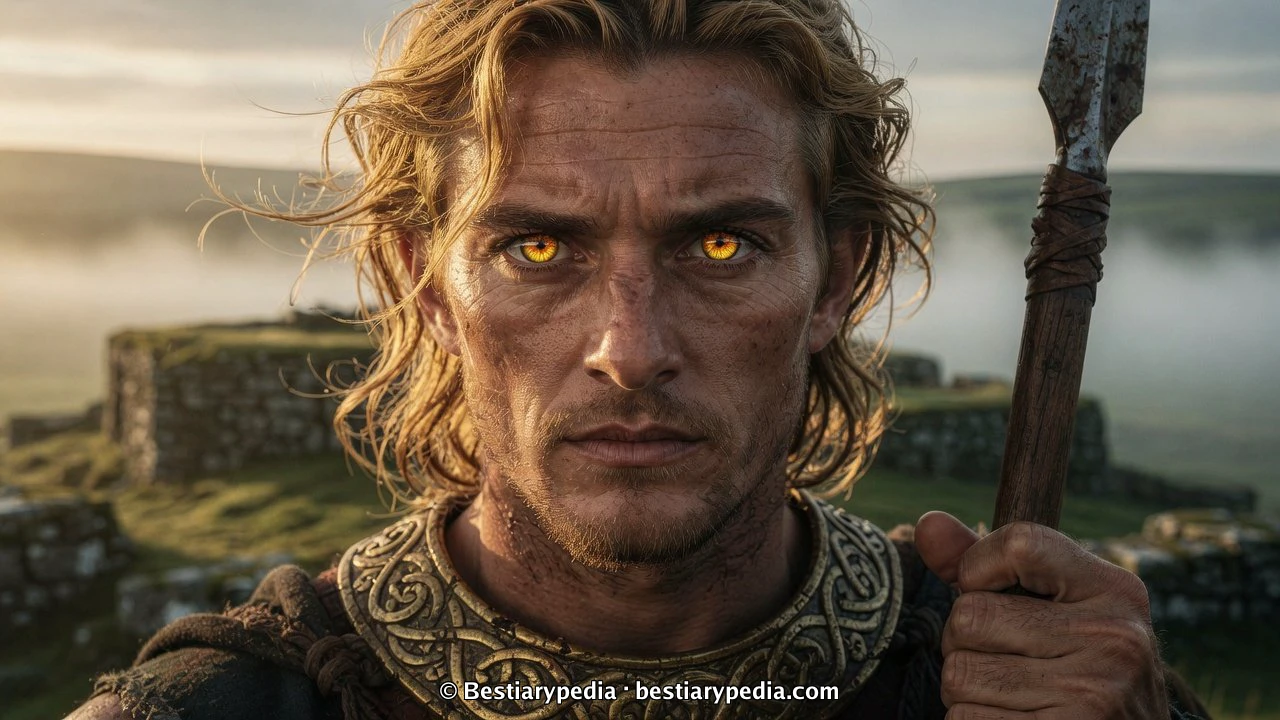
Nuada, also known as Nuada Airgetlám, emerges in Irish mythology as the supreme king of the Tuatha Dé Danann, a divine people who arrived in Ireland in floating ships according to the Lebor Gabála Érenn. His origin dates back to the mythical invasions where he led the conquest against the Fir Bolg, establishing a kingdom based on just sovereignty and druidic knowledge. Ancient sources present him as a descendant of ancestral gods linked to the sea and light, symbolizing the cosmic order that precedes the chaos of the Fomorians.
Loss and Restoration of the King
During the first battle of Mag Tuired against the Fomorians, Nuada lost his right hand, an event that temporarily disqualified him from reigning according to the sacred laws of the Tuatha Dé Danann. The gods forged him a magical silver arm by the divine craftsman Dian Cecht, allowing him to regain the throne. This restoration symbolizes the resilience and capacity for renewal of divine leadership, although he finally ceded power to Lugh to ensure definitive victory in the second battle, consolidating his legacy of sacrifice for the common good.
Legacy and Sacred Symbols
Nuada's legacy endures as an emblem of restorative justice and protection of Ireland, venerated in texts like Cath Maige Tuired where his sacrifice inspires resistance against invaders. His main symbols include the silver arm representing divine regeneration, the invincible sword and leadership in druidic assemblies. His worship influenced later traditions of Celtic sovereignty, where mortal kings imitated his model of physical and spiritual perfection to maintain the favor of the gods and the fertility of the land.
Sword, sovereignty and legacy of Nuada
Among the treasures of the Tuatha Dé Danann, Nuada is credited with the Sword of Light (Claíomh Solais), one of the Four Treasures brought from the city of Findias: a blade from which, once drawn, none escaped. The requirement that the king be physically whole —the reason the loss of his hand barred him from the throne— reflects a deep principle of Celtic kingship: the sovereign had to embody perfection, for his integrity guaranteed the fertility of the land and the justice of the realm. Restored by Dian Cécht's silver hand and, in some versions, by the flesh one his son Miach gave back to him, Nuada reigned again until the magnitude of the Fomorian threat led him to yield command to Lugh. He fell at last before Balor in the second battle of Mag Tuired, sealing with his death the sacrifice that opened the way to victory. His figure fixed the model of the just king whose power depends on his wholeness, an ideal that later Irish literature projected onto historical and legendary kings.
Also known as
Relics
🏺 Silver Hand
Magical silver hand that granted him power.
Symbology
Element
Metal
Number
Four
Color
Silver
Animals
War Horse
Sigils:
🏷️ Traits
Powers
Weaknesses
Behavioral
Resistances
🔗 Relations with other beings
🗺️In the Atlas
Travel the beings’ world of origin and the cosmos of their dimensions.
📜 Mythologies
Irish folklore developed from the oral traditions of the Celtic peoples who inhabited Ireland since the Iron Age, with later influences from Christianity after the arrival of Saint Patrick in the 5th century. Its tales collect beliefs in supernatural beings and mythical cycles transmitted in medieval manuscripts such as the Lebor Gabála Érenn. Among the most prominent entities are the Tuatha Dé Danann, a mythical people endowed with magical powers who, according to tradition, were defeated and relegated to the underworld, where they are identified with the fairies or sídhe. The worldview of Irish folklore integrates a landscape animated by spirits, enchanted hills and seasonal festivities such as Samhain, which mark the interaction between the human world and that of the fairy beings. The narratives emphasize the ambivalence of these beings, capable both of granting favors and of causing harm, and reflect a continuity between pre-Christian mythology and later popular practices. This set of beliefs has left a lasting mark on the literature, music and arts of Ireland, influencing authors such as W. B. Yeats and the preservation of festivities and customs that still form part of Irish cultural identity.
Sources
Gods and Fighting Men, by Lady Gregory
Lady Augusta Gregory · 1904
Compilation by Lady Augusta Gregory (1904) that gathers and retells in English the myths of the Tuatha Dé Danann and the Irish heroic cycles; a reference work in the public domain.
Lebor Gabála Érenn
Medieval Irish Anonymous · c. 1100
The "Book of the Taking of Ireland", a medieval compilation (c. 1100) recounting the successive mythical peoples who settled the island, among them the Tuatha Dé Danann and the Fomorians, and a fundamental source of the divinities and beings of Irish myth.
Cath Maige Tuired
Medieval Irish Anonymous · c. 900
"The Battle of Mag Tuired", a medieval Irish saga recounting the clash between the Tuatha Dé Danann and the Fomorians. The Dagda, Lugh and Balor stand out in it, and it is an essential source of the gods and supernatural beings of the Irish mythological cycle.
Frequently asked questions
How is Nuada's mythical origin described in the invasions of Ireland according to the Lebor Gabála Érenn?
Nuada emerges as supreme king of the Tuatha Dé Danann, a divine people who arrived in Ireland in floating ships. He led the conquest against the Fir Bolg establishing a kingdom based on just sovereignty and druidic knowledge. Ancient sources present him as descendant of ancestral gods linked to the sea and light.
What event caused Nuada's temporary loss of the throne and how did he regain his position?
During the first battle of Mag Tuired against the Fomorians, Nuada lost his right hand, disqualifying him temporarily according to the sacred laws. The gods forged him a magical silver arm by Dian Cecht, allowing him to regain the throne. He finally ceded power to Lugh to ensure definitive victory in the second battle.
What relationships did Nuada establish with Lugh and Balor in the context of the Mag Tuired battles?
Nuada had Lugh as an ally who helped restore his kingdom and ensure final victory. Balor acted as his rival leading the Fomorians against the Tuatha Dé Danann at Mag Tuired. Nuada ceded power to Lugh to guarantee definitive triumph.
What main symbols represent Nuada's legacy in Irish mythology?
Nuada's legacy endures as an emblem of restorative justice and protection of Ireland. His main symbols include the silver arm representing divine regeneration, the invincible sword and leadership in druidic assemblies. His worship influenced later traditions of Celtic sovereignty.
🔖Cite this entry▾
If you cite this article in an academic, journalistic or editorial publication, use any of these formats:
Bestiarypedia. (2026, August 4). Nuada. Bestiarypedia. https://bestiarypedia.com/en/beings/nuada
Free citation with attribution and canonical link for editorial, academic or journalistic use. Full commercial reuse or creation of derivative products requires prior agreement.