Tsukuyomi
Tsukuyomi, kami of the moon in the Shinto pantheon
Curated byBestiarypediaCreated on
 Japan(Japan)
Family Tree
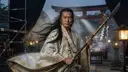


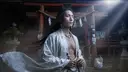
Mythical Origins of Tsukuyomi
Tsukuyomi emerges in the ancient texts of Shinto as one of the three kami born from Izanagi's purification after his descent to the underworld. According to the Kojiki, the lunar kami is born from the right eye of the creator god during the ablution ritual that follows the loss of Izanami. This genesis directly links him to the cycle of night and the flow of time, establishing his essence as regulator of lunar order. His appearance marks the initial separation between diurnal and nocturnal forces in Japanese cosmogony. Tsukuyomi embodies from his origin the mystery inherent to darkness and the duality that complements his sister Amaterasu. Shinto chronicles describe him as an eternal entity without conventional anthropomorphic beginning or end, similar to other primordial kami that transcend limited forms.
Myths of Solar-Lunar Separation
The central myth recounts how Tsukuyomi, sent by Amaterasu to earth, kills the food goddess Ukemochi for considering her impure. This act provokes the wrath of the solar goddess and establishes the definitive separation between day and night. From then on Tsukuyomi governs exclusively the nocturnal realm while Amaterasu dominates the diurnal one. The tale symbolizes cosmic duality and the lunar order that regulates temporal cycles. The versions of the Nihon Shoki emphasize how this foundational event explains the alternation of light and darkness in Japan. Tsukuyomi embodies the mystery of night and the precision of lunar time that contrasts with solar vitality. The myth reinforces the complementarity between both kami without possible fusion.
Attributes, Mystery and Lunar Duality
Tsukuyomi represents the lunar order that structures the passage of time and nocturnal rhythms in Shinto tradition. His main attributes include night as sovereign domain, the temporal flow measured by lunar phases and the mystery that envelops invisible cycles. The duality with Amaterasu illustrates cosmic complementarity without fusion, maintaining functional separation between light and shadow. In the sacred geography of Japan this kami is associated with shrines that observe eclipses and tides. His symbolism evokes balance between revelation and concealment, vital for natural harmony. Ancient narratives highlight how Tsukuyomi embodies precision and enigma simultaneously, reinforcing Shinto respect for non-visible forces. This mythological configuration supports ritual practices oriented to honoring lunar time.
Symbology
Element
Moon
Number
2
Color
Silver
Animals
Moon Rabbit
Sigils:
🏷️ Traits
Powers
Weaknesses
Behavioral
Resistances
🗺️In the Atlas
Travel the beings’ world of origin and the cosmos of their dimensions.
📜 Mythologies
Japanese folklore encompasses oral traditions, myths, legends and supernatural creatures like yōkai and kami, compiled in Edo-period illustrated texts by Toriyama Sekien in works like Gazu Hyakki Yagyō and Konjaku Hyakki Shūi, reflecting Shinto animist beliefs, ecological fears of floods and droughts, and respect for nature in rivers, lakes and rice fields of regions like Shiga, Osaka and Kyoto.
Sources
Shinto: The Way of the Gods, by W. G. Aston
William George Aston · 1905
Classic study by the British orientalist W. G. Aston on the Shinto religion: its myths, kami, rites and texts, a reference work in the public domain.
Kojiki
Ō no Yasumaro · 712
Foundational Japanese text of 712 CE recording myths and imperial genealogies.
Nihon Shoki
Prince Toneri · 720
Official Japanese chronicle of 720 CE complementing the Kojiki with mythic variants.
Frequently asked questions
How is Tsukuyomi born in Shinto myths?
Tsukuyomi is born from Izanagi's right eye during the purification ritual after the loss of Izanami. This origin links him to the nocturnal cycle and lunar order from the beginning of Japanese cosmogony.
What myth explains the separation between Tsukuyomi and Amaterasu?
The myth of Tsukuyomi killing Ukemochi provokes Amaterasu's wrath and establishes the definitive division between day and night. Since then each kami rules their own temporal realm.
What does the duality of Tsukuyomi with the solar goddess symbolize?
The duality symbolizes cosmic complementarity between night and day, maintaining functional separation that regulates temporal order and lunar mystery in Shinto tradition.
🔖Cite this entry▾
If you cite this article in an academic, journalistic or editorial publication, use any of these formats:
Bestiarypedia. (2026, August 3). Tsukuyomi. Bestiarypedia. https://bestiarypedia.com/en/beings/tsukuyomi
Free citation with attribution and canonical link for editorial, academic or journalistic use. Full commercial reuse or creation of derivative products requires prior agreement.
Similar beings
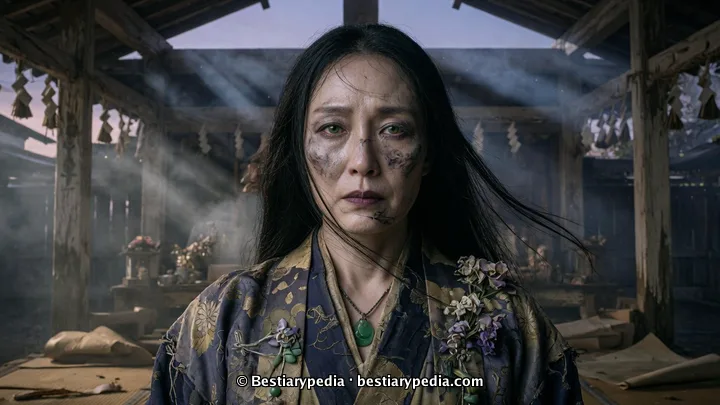
Izanami
Izanami, creator kami of death and the underworld in the Shinto pantheon
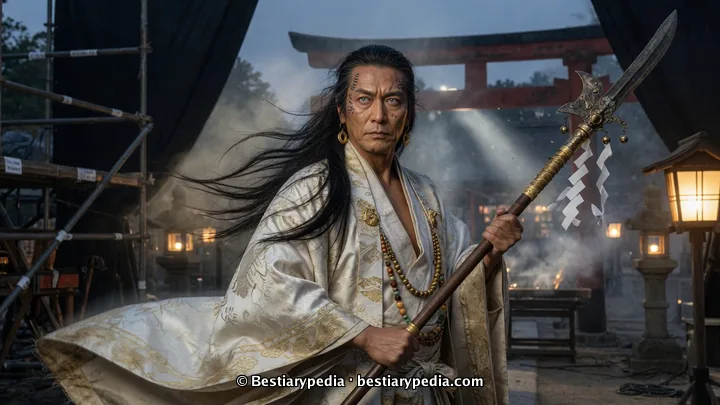
Izanagi
Izanagi, creator kami of the islands of Japan and the principal deities
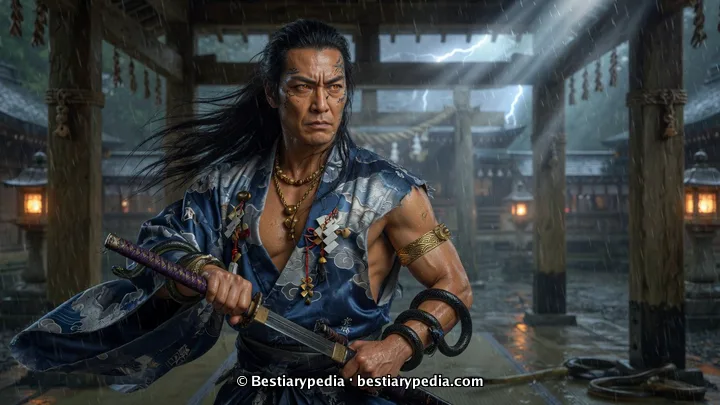
Susanoo
Susanoo, kami of the storm and the sea in Japanese Shinto folklore
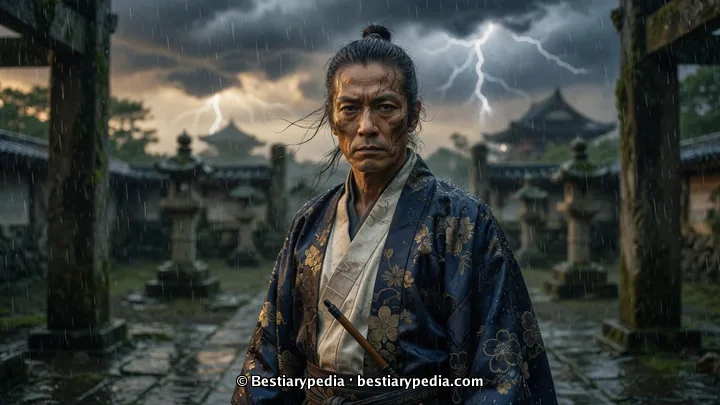
Tenjin
Tenjin, god of lightning and scholarship in the Shinto pantheon
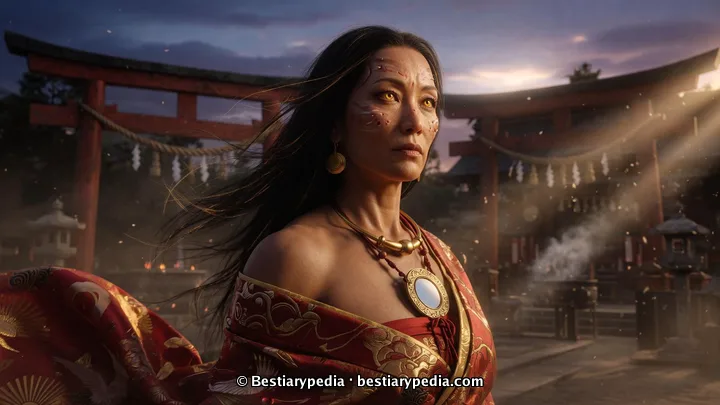
Amaterasu
Amaterasu, goddess of the sun and imperial ancestor in the Shinto pantheon