Courtesan Gumiho
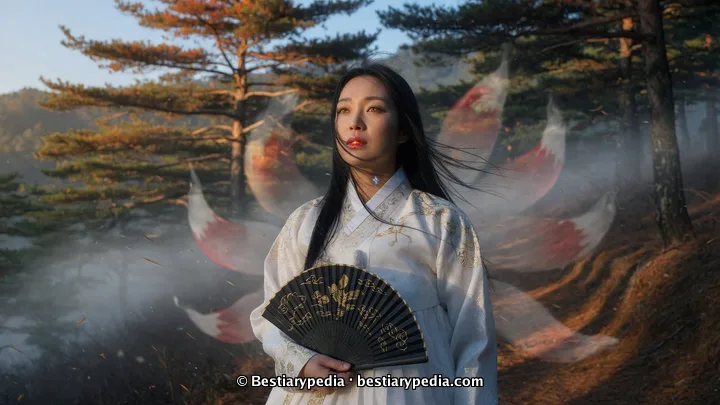
Noble Infiltrator Gumiho, yangban lady who infiltrates the Joseon court draining qi from her husbands
Curated byBestiarypediaCreated onUpdated on
 Korean Peninsula(Korea)
🔄 Transformation line (Phase 2 of 4)

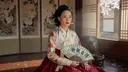


Origins of the courtesan gumiho
The «noble infiltrator» form of the gumiho (구미호) develops the Korean folk motif of the nine-tailed fox that infiltrates the upper classes by posing as a human lady. After mastering seduction in the rural sphere, the creature understands that power and vital energy are concentrated in the court, and migrates to the capital during the Joseon dynasty presenting itself as the surviving daughter of a yangban lineage (the Confucian aristocracy) ruined in a distant province, without relatives who could contradict her. This strategy of social infiltration, with absence of verifiable family and ascent through advantageous marriages, is an elaboration of the traditional fear of the fox-woman who hides among humans, collected in classical Korean folklore.
Nature and powers
In this form, the gumiho combines its supernatural powers with a remarkable social intelligence. The tradition of the nine-tailed fox that drains the vitality of its successive husbands is refined here into a patient political manipulation: strategic marriages with magistrates and scholars, accumulation of influence and slow consumption of the vital energy of its spouses without arousing suspicions of murder. It masters illusion sustained for decades, including the ability to appear to age at the human pace, and an extremely sharp perspicacity to detect lies and ambitions. Its erudition in calligraphy and poetry allows it to move in the literate circles of the court, although, like every gumiho, it retains the yeouiju pearl and the nine tails, which only manifest when its nature emerges.
Symbols and tradition
The fox courtesan embodies the hidden danger at the very heart of power: the perfect aristocrat whose identity is a fiction and whose influence erodes those around her. Her symbology is associated with the attributes of the yangban lady of Joseon (silk, the bun with binyeo hairpin, the brush and ink) and with the motif of invented lineage. She shares with the Chinese court huli-jing, like the legends linked to Daji, the archetype of the seductress who corrupts the throne, albeit in a Korean key. Within the gumiho cycle, this figure represents the phase of maximum social sophistication, between the predatory youth of the maiden and the retirement of the old woman, and expresses the traditional fear that the supernatural infiltrates the human structures of power.
Relics
🏺 calligraphed silk fan
🏺 personal cinnabar seal
🏺 beaten gold binyeo hairpin
Symbology
Element
yin metal
Number
9
Color
dark gold
Animals
gumiho, Korean crowned crane, white tiger
Sigils:
🏷️ Traits
Powers
Weaknesses
Behavioral
Resistances
🗺️In the Atlas
Travel the beings’ world of origin and the cosmos of their dimensions.
📜 Mythologies
Korean folklore encompasses oral traditions, myths, legends and supernatural creatures like dokkaebi, associated with streams, waterfalls, water and fertility, compiled in Joseon dynasty texts reflecting animist beliefs, ecological fears and respect for nature in rivers and rice fields of South Korea.
Sources
Anthology of Joseon Korean Folklore
Several anonymous compilers · 1800
Anthology of folk tales from Joseon-dynasty Korea. It gathers myths, legends and stories about gods, ghosts (gwisin) and creatures such as the dokkaebi, and is an essential source of Korean supernatural folklore.
Korean Mythology Anthology
Several compilers · 1900
Collection of traditional Korean folk tales documenting water spirits and supernatural beings associated with rivers and fertility.
Frequently asked questions
How does the gumiho migrate to the Hanyang court?
After centuries of rural seduction, it migrates by posing as daughter of a ruined yangban clan. This enables strategic marriages at the Joseon court.
What does the gumiho control over her husbands?
It controls the residual qi of successive husbands, draining it without visible murder. It accumulates political influence through favors and poetic soirées.
What are the distinctive symbols of this phase?
They include the golden binyeo hairpin, fan with hanja calligraphy, cinnabar seal and feigned ancestral altar. The tails appear only in spiritual vision.
🔖Cite this entry▾
If you cite this article in an academic, journalistic or editorial publication, use any of these formats:
Bestiarypedia. (2026, July 26). Courtesan Gumiho. Bestiarypedia. https://bestiarypedia.com/en/beings/gumiho-noble-infiltrator
Free citation with attribution and canonical link for editorial, academic or journalistic use. Full commercial reuse or creation of derivative products requires prior agreement.
Similar beings
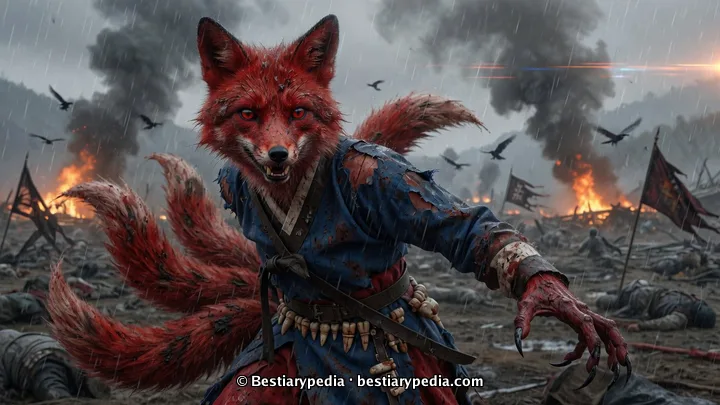
Bloody Gumiho
Blood Omen Gumiho, corrupted branch of the gumiho archetype that emerges in Korean valleys subjected to prolonged collective catastrophes
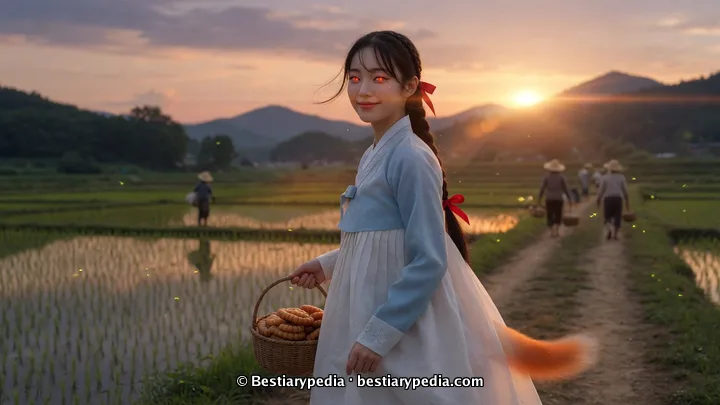
Maiden Gumiho
Maiden Seductress Gumiho, first human phase of the Korean fox after one hundred years
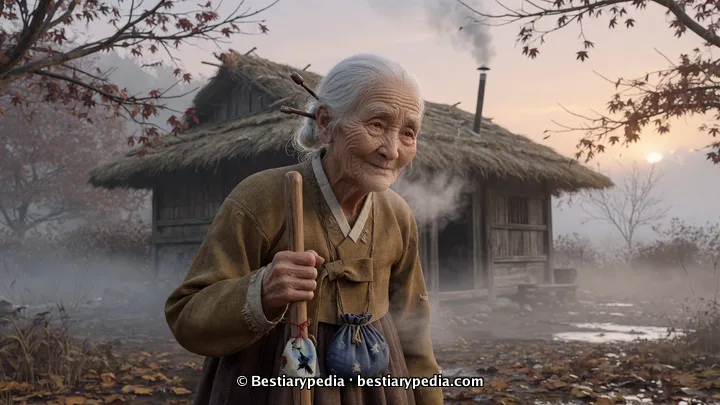
Elder Gumiho
Elder Crone Gumiho, shaman and mentor of mudangs in remote mountain villages
Celestial Gumiho
Ancient Celestial Gumiho, supreme form of the archetype after a thousand years without losing the yeouiju pearl