Hestia
Hestia, goddess of the home, sacred fire, and family in Greek mythology
Curated byBestiarypediaCreated on
 Ancient Greece(Greece)






Mythical Origins of Hestia
Hestia, firstborn of Cronos and Rhea in Hesiod's Theogony, emerges as the primordial goddess of the hearth fire before the Titanomachy. As the firstborn, she was the first swallowed by her father Cronos to avert prophecies of overthrow, and the last released by Zeus when Cronos vomited the stone and his siblings. In the Homeric Hymns, she is invoked as the eternal guardian of the sacred fire in homes and temples, symbolizing cosmic stability at the center of Olympus. She rejected marriage proposals from Poseidon and Apollo to preserve her eternal virginity, yielding her Olympian throne to Dionysus according to a late tradition, underscoring her humility and devotion to the home over divine power. Her immortality is linked to the inextinguishable Olympian fire, representing the principle of family unity and domestic peace from the dawn of the Greek cosmos.
Appearance, Symbols and Powers of Hestia
Hestia is depicted as a serene and mature woman, wrapped in a pure white veil symbolizing virginity and home purity, with hair gathered in a simple bun adorned with laurel or wheat ears, evoking domestic fertility. Seated beside an eternal hearth with inextinguishable blue flames, she holds a scepter or flaming torch, emblem of her dominion over sacred fire. Her powers include igniting inextinguishable fires that bless homes with lasting peace, purifying spaces with sacred smoke that dispels evils and curses, calming family disputes restoring harmony, and her immortality linked to the central Olympian fire, which if extinguished weakens her mortally. As goddess of the center, her presence ensures family cohesion and Greek hospitality.
Worship, Interactions and Legacy of Hestia
Hestia was venerated by all Greeks in every home and temple through the perpetual central fire, where firstfruits of food, wine and oil were offered as family gratitude; her ingratitude was her greatest weakness, extinguishable only by domestic negligence. Intimate ally of Demeter in hospitality myths, sharing cults in Eleusis promoting agricultural and family peace. In temples like the Athenian Prytaneum and Delphi, her sacred fire burned incessantly, guarded by virgin priestesses. Complete myth: during the Olympian assembly, Hestia calmed a dispute among gods over her seat, proposing to yield it to Dionysus to avoid war, earning eternal respect. Her legacy endures in Stoic philosophy as symbol of home self-sufficiency and in modern neopagan rituals, where blue candles are lit to invoke her purifying blessing. Habitat in humble Greek homes and central temples reinforces her peaceful, humble and devoted role to domestic well-being against fire extinction.
Also known as
Relics
🏺 Sacred Fire of Hestia
🏺 Veil of Hestia
Symbology
Element
Sacred Fire
Number
1
Color
Blue
Animals
Domestic Donkey
Sigils:
🏷️ Traits
Powers
Weaknesses
Behavioral
Resistances
🗺️In the Atlas
Travel the beings’ world of origin and the cosmos of their dimensions.
📜 Mythologies
Greek mythology developed in Ancient Greece from the Late Bronze Age and reached its most elaborate form during the archaic and classical periods, between the 8th and 4th centuries BCE. It emerged among the Hellenic peoples who inhabited the Greek peninsula, the Aegean islands and the coasts of Asia Minor, and was transmitted mainly through the oral poetry of Homer and Hesiod, as well as local traditions collected in sanctuaries and festivals. Its worldview presents a universe ordered by a hierarchy of divinities that intervene in human and natural affairs, with Olympus as the dwelling of the principal gods and Hades as the destination of the deceased. The central deities include the twelve Olympians, headed by Zeus, god of the sky and sovereign, together with Hera, Poseidon, Athena, Apollo, Artemis, Aphrodite, Ares, Hephaestus, Hermes, Demeter and Dionysus. Before them, the Titans, among whom Cronus and Rhea stand out, ruled the cosmos until they were deposed by the Olympians in the Titanomachy. Other important entities are the Muses, the nymphs, the Cyclopes and the Moirai, who embody cosmic forces and destinies. This tradition exerted a lasting influence on the literature, art and thought of Rome, the European Renaissance and subsequent Western culture, supplying motifs, characters and narrative structures that have endured in philosophy, astronomy and the arts to the present day.
Sources
Theogony
Hesiod · -700
Poem by Hesiod detailing the origin of Greek gods and Titans.
Homeric Hymns to Hestia
Homer (attributed) · c. 600 BCE
The Homeric Hymns (7th-6th c. BCE) praise Hestia as guardian of sacred fire in homes and temples with firstfruit offerings.
Frequently asked questions
What is Hestia's mythical origin according to Hesiod's Theogony?
Hestia is the firstborn of Cronos and Rhea. She was the first swallowed by her father and the last released by Zeus. Her immortality is linked to the inextinguishable Olympian fire.
What characteristic powers does Hestia possess in Greek mythology?
Hestia ignites inextinguishable fires that bless homes with peace. She purifies spaces with sacred smoke and calms family disputes. Her immortality depends on the central Olympian fire.
What relationship does Hestia maintain with Demeter in Greek myths?
Hestia is an intimate ally of Demeter in hospitality myths. They share cults in Eleusis promoting agricultural and family peace. Both reinforce domestic cohesion and gratitude.
What place does Hestia occupy in the Olympian hierarchy and cosmology?
Hestia represents cosmic stability at the center of Olympus. She yields her throne to Dionysus out of humility. Her presence ensures family cohesion and Greek hospitality.
🔖Cite this entry▾
If you cite this article in an academic, journalistic or editorial publication, use any of these formats:
Bestiarypedia. (2026, July 17). Hestia. Bestiarypedia. https://bestiarypedia.com/en/beings/hestia
Free citation with attribution and canonical link for editorial, academic or journalistic use. Full commercial reuse or creation of derivative products requires prior agreement.
Similar beings
Ares
Ares, the Olympian Greek god of war, violence and martial ardor

Persephone
Persephone, goddess of rebirth, vegetation and queen of the underworld
Demeter
Demeter, Greek goddess of agriculture, grain and harvests
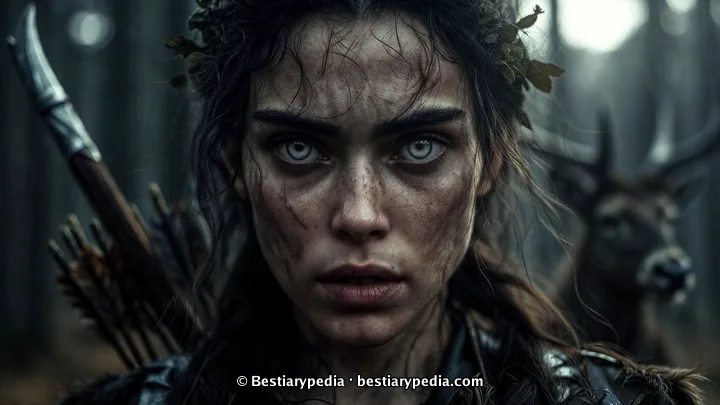
Artemis
Artemis, Greek goddess of the hunt, the moon and chastity
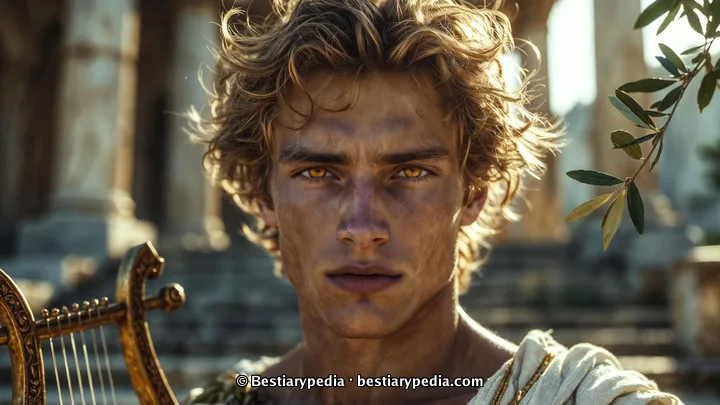
Apollo
Apollo, Greek god of music, prophecy, healing, the sun and the arts
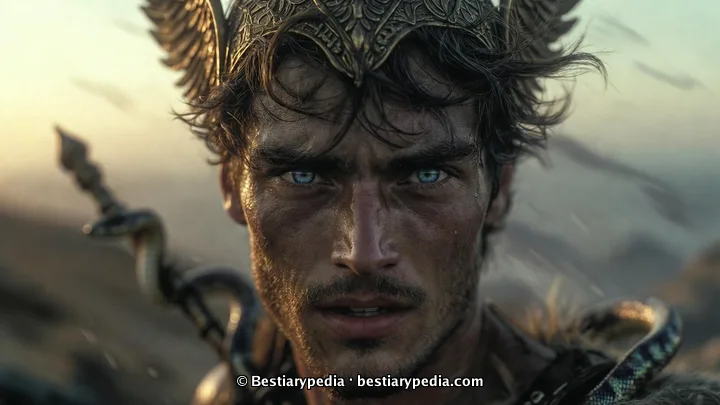
Hermes
Hermes, messenger of the Olympian gods and guide of souls
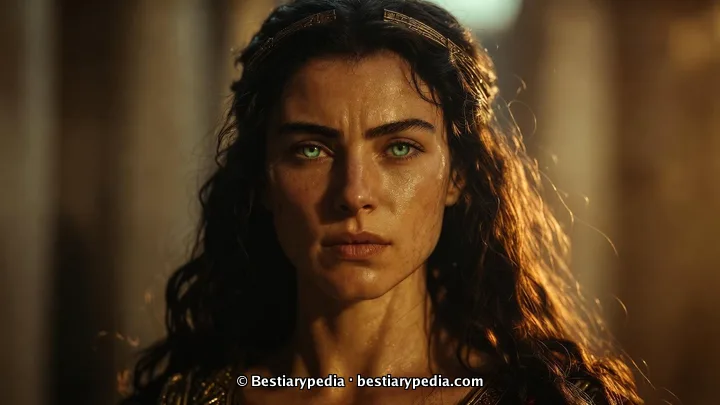
Hera
Hera, queen of the Olympian gods and goddess of marriage
Athena
Athena, Greek goddess of wisdom, military strategy, arts and justice