Demeter
Demeter, Greek goddess of agriculture, grain and harvests
Curated byBestiarypediaCreated onUpdated on
 Ancient Greece(Greece)







Origins and divine lineage of Demeter
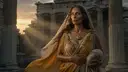
Demeter is the daughter of the Titans Cronus and Rhea, born in the generation that preceded the Olympian reign. Her siblings are Zeus, Poseidon, Hades, Hera and Hestia, forming the family core of the gods who overthrew their father. As goddess of agriculture and grain, her domain is directly linked to terrestrial fertility and the life cycle of harvests. Her genealogy places her at the center of relations between Titans and Olympians, acting as a bridge between the ancient generation and the new divine order.
The abduction of Persephone and the origin of the seasons
Hades abducted Persephone, daughter of Demeter and Zeus, to make her queen of the underworld. The goddess's grief drove her to wander the earth, denying its fertility and causing famines. Zeus intervened and it was agreed that Persephone would spend part of the year with her mother and part with Hades. This pact explains the cycle of the seasons: Persephone's return brings spring and summer, while her absence causes autumn and winter. The myth illustrates Demeter's power over plant life and the balance between the upper and lower worlds.
Foundation of the Eleusinian Mysteries and sacred symbolism
Demeter founded the Eleusinian Mysteries, initiation rites that promised knowledge about life after death and the regeneration of nature. Associated symbols include the wheat ear representing harvest and abundance, the torch that lights the path in the darkness of mourning, and the cornucopia embodying agricultural prosperity. These emblems reinforce her role as protector of fertility and spiritual guide for initiates seeking understanding of the eternal cycle of death and rebirth.
Relics
🏺 Cornucopia
Symbology
Element
Earth
Number
1
Color
Gold
Animals
Serpent
Sigils:
🏷️ Traits
Powers
Weaknesses
Behavioral
Resistances
🗺️In the Atlas
Travel the beings’ world of origin and the cosmos of their dimensions.
📜 Mythologies
Greek mythology developed in Ancient Greece from the Late Bronze Age and reached its most elaborate form during the archaic and classical periods, between the 8th and 4th centuries BCE. It emerged among the Hellenic peoples who inhabited the Greek peninsula, the Aegean islands and the coasts of Asia Minor, and was transmitted mainly through the oral poetry of Homer and Hesiod, as well as local traditions collected in sanctuaries and festivals. Its worldview presents a universe ordered by a hierarchy of divinities that intervene in human and natural affairs, with Olympus as the dwelling of the principal gods and Hades as the destination of the deceased. The central deities include the twelve Olympians, headed by Zeus, god of the sky and sovereign, together with Hera, Poseidon, Athena, Apollo, Artemis, Aphrodite, Ares, Hephaestus, Hermes, Demeter and Dionysus. Before them, the Titans, among whom Cronus and Rhea stand out, ruled the cosmos until they were deposed by the Olympians in the Titanomachy. Other important entities are the Muses, the nymphs, the Cyclopes and the Moirai, who embody cosmic forces and destinies. This tradition exerted a lasting influence on the literature, art and thought of Rome, the European Renaissance and subsequent Western culture, supplying motifs, characters and narrative structures that have endured in philosophy, astronomy and the arts to the present day.
Sources
Theogony
Hesiod · -700
Poem by Hesiod detailing the origin of Greek gods and Titans.
Homeric Hymn to Demeter
Anonymous · c. 600 BCE
Epic poem narrating the abduction of Persephone and the origin of the Eleusinian Mysteries.
Frequently asked questions
How does the myth of Demeter explain the origin of the seasons?
The pact after Persephone's abduction requires the daughter to divide the year between the underworld and earth. Her return brings spring and summer; her absence causes autumn and winter.
What relationship does Demeter maintain with Hades and with Persephone?
Hades is her brother and at the same time the abductor of her daughter: the two men of the conflict are from her own family. When Zeus, also her brother, mediates to return Persephone to her, the pact divides the girl between the two worlds. Demeter then lets the grain grow again, and with that agreement the agricultural cycle and that of death remain tied.
What role does Demeter play in the Eleusinian Mysteries?
Demeter founded the Eleusinian Mysteries as initiation rites revealing the cycle of death and rebirth. The symbols of wheat, torch and cornucopia guide the initiates.
🔖Cite this entry▾
If you cite this article in an academic, journalistic or editorial publication, use any of these formats:
Bestiarypedia. (2026, July 22). Demeter. Bestiarypedia. https://bestiarypedia.com/en/beings/demeter
Free citation with attribution and canonical link for editorial, academic or journalistic use. Full commercial reuse or creation of derivative products requires prior agreement.
Similar beings
Ares
Ares, the Olympian Greek god of war, violence and martial ardor
Persephone
Persephone, goddess of rebirth, vegetation and queen of the underworld
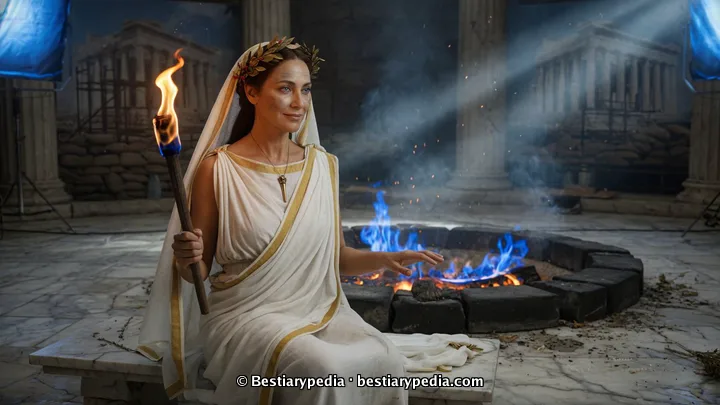
Hestia
Hestia, goddess of the home, sacred fire, and family in Greek mythology
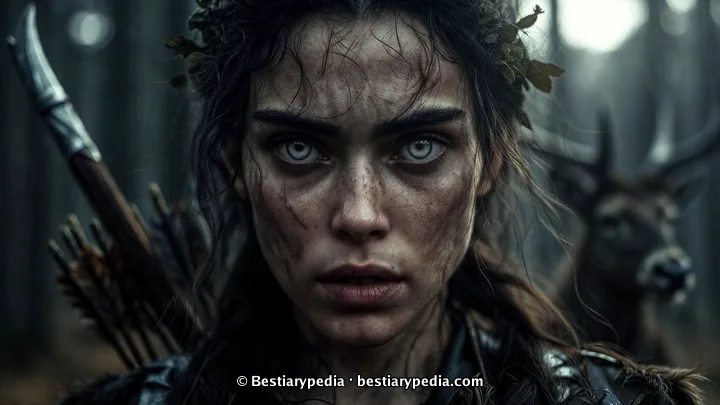
Artemis
Artemis, Greek goddess of the hunt, the moon and chastity
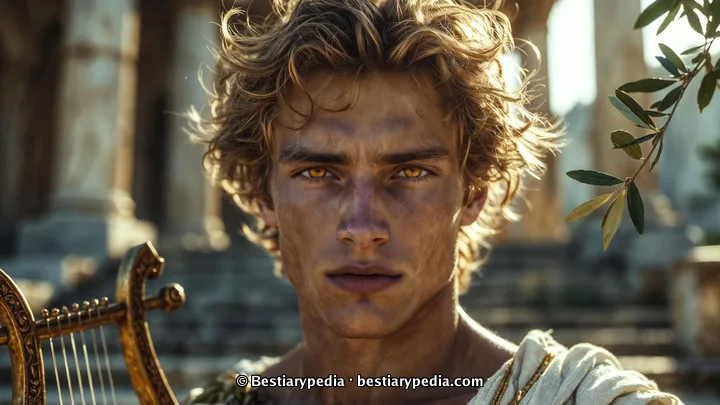
Apollo
Apollo, Greek god of music, prophecy, healing, the sun and the arts
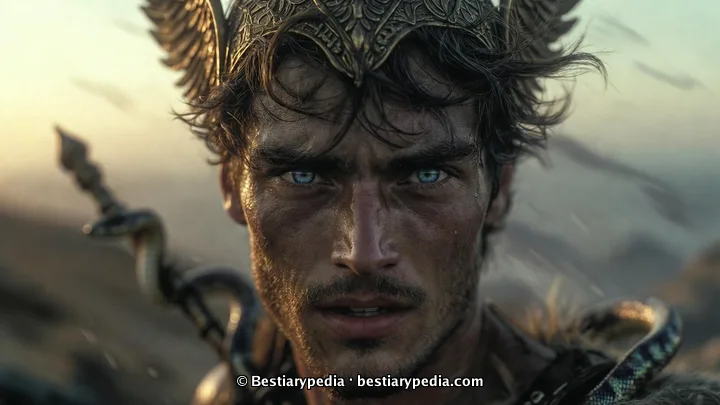
Hermes
Hermes, messenger of the Olympian gods and guide of souls
Hera
Hera, queen of the Olympian gods and goddess of marriage
Athena
Athena, Greek goddess of wisdom, military strategy, arts and justice