Zeus
Zeus, supreme god of Olympus and ruler of the sky, thunder and divine justice
Curated byBestiarypediaUpdated on
 Ancient Greece(Greece)
⇄ Cultural variants (1)
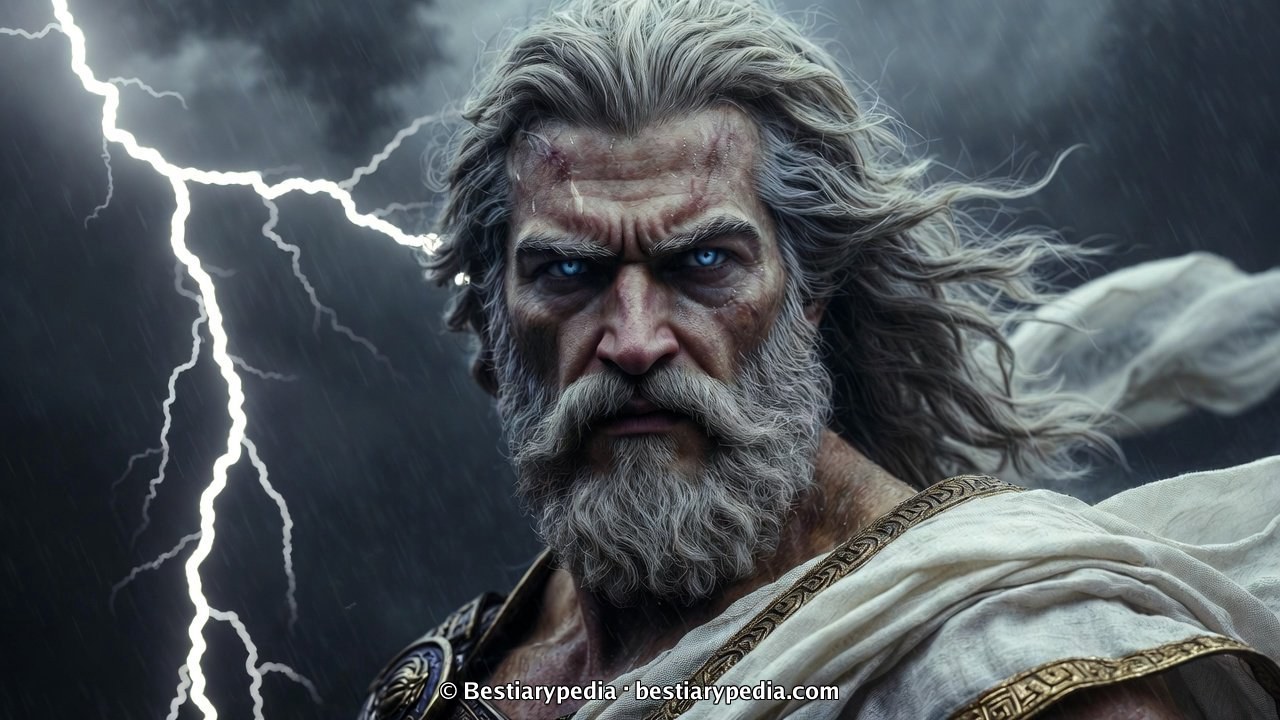
Mythical Origins of Zeus
Zeus was born to Cronus and Rhea as the youngest of the Titans in Greek mythology. To protect him from being devoured by his father Cronus Rhea hid him on the island of Crete where he was nursed by the goat Amalthea and raised by nymphs. Upon reaching maturity Zeus forced Cronus to regurgitate his brothers and sisters freeing them from his interior and thus initiating the rebellion against the Titans. This narrative appears detailed in ancient sources that describe his hidden childhood and the subsequent cosmic confrontation that established the Olympian order.
Titanomachy and Division of the Cosmos
Zeus led the ten-year war against the Titans alongside his brothers Poseidon and Hades wielding the thunderbolt forged by the Cyclopes. After victory he divided the universe assigning the sky to himself the sea to Poseidon and the underworld to Hades establishing Olympian rule. This conflict symbolizes the triumph of the new order over the old and consolidates Zeus as supreme sovereign according to ancient epic accounts.
Attributes Powers and Legacy of Zeus
Zeus is depicted as a mature muscular man with a beard holding the thunderbolt that controls storms thunder and lightning. He can change shape to seduce and upholds cosmic order punishing perjurers. His cult dominated ancient Greece with temples like Olympia and was identified with Roman Jupiter influencing Western art literature and philosophy as an eternal symbol of sovereign power and divine justice according to classical sources.
Also known as
Relics
🏺 Thunderbolt of Zeus
Supreme weapon forged by the Cyclopes, symbol of his thunder power.
🏺 Aegis
Invincible shield or mantle with Medusa's head, instilling terror.
Symbology
Element
Thunder
Number
Six
Color
Sky Blue
Animals
Eagle, Bull
Sigils:
🏷️ Traits
Powers
Weaknesses
Behavioral
Resistances
🔗 Relations with other beings
Cultural variant of
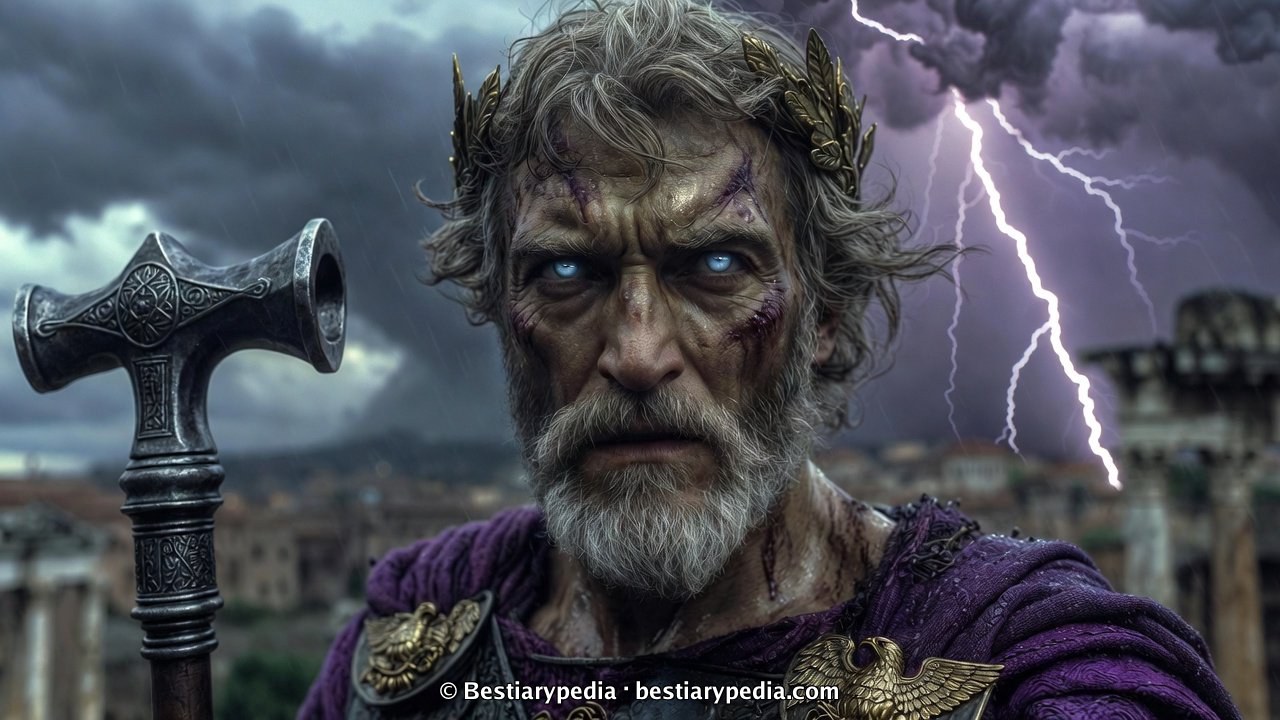
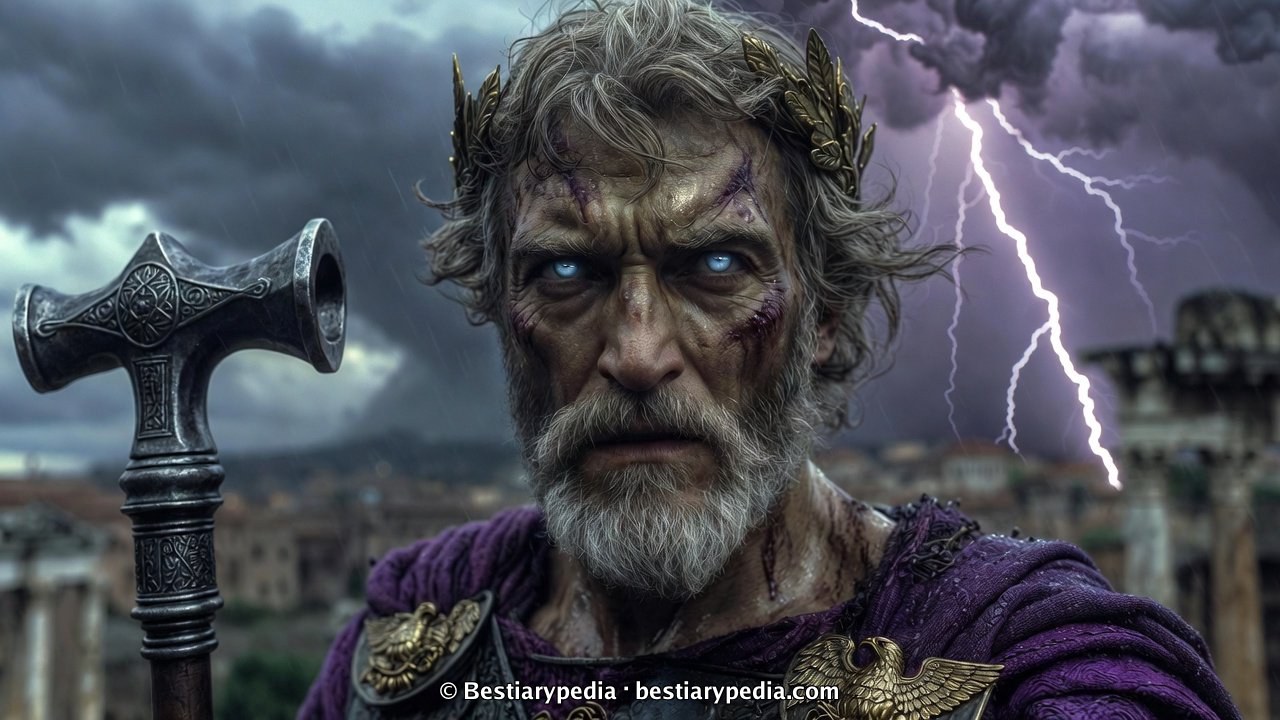
The Greek deity Zeus is identified with the Roman deity Jupiter by the classical Hellenistic-Roman tradition. Syncretism documented in the interpretatio romana from the 3rd century BCE to the 2nd century CE.
Cultural parallel of
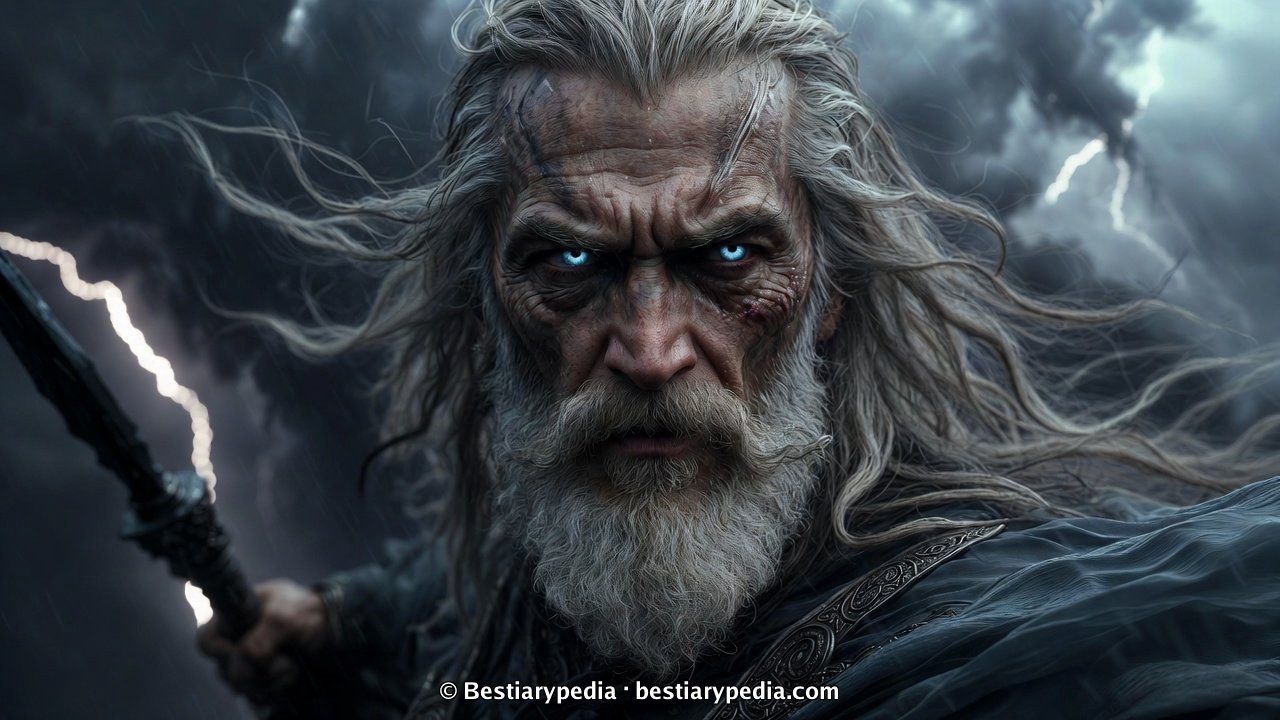
Supreme kings of Indo-European pantheons, both lords of thunder and sovereignty.
🗺️In the Atlas
Travel the beings’ world of origin and the cosmos of their dimensions.
📜 Mythologies
Post-classical Greek folklore includes kallikantzaroi winter goblins, nereids water nymphs, orei mountain spirits, kaloi ghosts, nepheles cloud beings, vrykolakas vampires, rooted in Byzantine and Ottoman-era traditions across Aegean islands and Peloponnese.
Sources
Hesiod's Theogony
Hesiod · -700
Greek epic poem describing the origin of the gods and the cosmos.
Homer's Iliad
Homero · -750
Greek epic attributed to Homer (8th century BCE) about an episode of the Trojan War and the wrath of Achilles. With the constant intervention of the Olympian gods, it is one of the primary sources of the divinities and heroes of Greek mythology.
🔖Cite this entry▾
If you cite this article in an academic, journalistic or editorial publication, use any of these formats:
Bestiarypedia. (2026). Zeus. Bestiarypedia. https://bestiarypedia.com/en/beings/zeus
Free citation with attribution and canonical link for editorial, academic or journalistic use. Full commercial reuse or creation of derivative products requires prior agreement.