Persephone
Persephone, goddess of rebirth, vegetation and queen of the underworld
Curated byBestiarypediaCreated onUpdated on
 Ancient Greece(Greece)







The abduction of Perséfone
Persephone is the daughter of Zeus and Demeter, and in her virginal aspect she is simply called Kore, the Maiden. The Homeric Hymn to Demeter recounts that she was gathering flowers in the plain of Nisa with the daughters of Ocean when she bent down to pick a narcissus that the Earth had made sprout as a trap: the ground opened and Hades emerged with his chariot to take her away, with the consent of Zeus, who had promised his brother the girl without telling her mother. Demeter searched for her for nine days with lit torches, without eating or washing, until Helios revealed what had happened to her. The location of the abduction in Enna, in Sicily, is a later tradition, spread especially by the Latin poets.
The pomegranate and the distribution of the year
Faced with Demeter's refusal to let the grain grow, Zeus ordered the girl to be returned. But Hades gave her some pomegranate seeds to eat before releasing her, and whoever tastes the food of the underworld remains bound to it: therefore Persephone must return every year to her husband. The sources disagree on the number of seeds and the resulting distribution, between a third of the year and half. The popular equation between her absence and winter owes much to the rereading of the Roman poets; in Mediterranean Greece the dead time of the field is the dry summer, when the grain is already stored. Her emblems are the pomegranate, the torch, the narcissus and the ear of wheat.
Queen of the underworld and the mysteries of Eleusis
Next to Hades she rules the dead, and she does so with her own authority: it is she who grants Orpheus to take Eurydice with him, and before whom Psyche must present herself in the myth of Apuleyo. In the Mysteries of Eleusis, celebrated for almost two millennia, mother and daughter were the two goddesses, and the central revelation was offered to the initiates as a promise about the destiny after death; the secret was kept so well that even today it is unknown what it consisted of. The Orphic gold lamellae found in tombs in Italy and Crete instruct the deceased on what to say to the queen to be admitted among her own. This double nature, the Maiden who returns and the Sovereign who judges, explains that her figure survived Antiquity as an image of the cycle between life and death.
Also known as
Relics
🏺 Underworld Pomegranate
The fruit Persephone ate, binding her to the Underworld for six months a year.
Symbology
Element
Earth and Seeds
Number
Six
Color
Pomegranate Red and Spring Green
Animals
Sacred Pigs
Sigils:
🏷️ Traits
Powers
Weaknesses
Behavioral
Resistances
🗺️In the Atlas
Travel the beings’ world of origin and the cosmos of their dimensions.
📜 Mythologies
Greek mythology developed in Ancient Greece from the Late Bronze Age and reached its most elaborate form during the archaic and classical periods, between the 8th and 4th centuries BCE. It emerged among the Hellenic peoples who inhabited the Greek peninsula, the Aegean islands and the coasts of Asia Minor, and was transmitted mainly through the oral poetry of Homer and Hesiod, as well as local traditions collected in sanctuaries and festivals. Its worldview presents a universe ordered by a hierarchy of divinities that intervene in human and natural affairs, with Olympus as the dwelling of the principal gods and Hades as the destination of the deceased. The central deities include the twelve Olympians, headed by Zeus, god of the sky and sovereign, together with Hera, Poseidon, Athena, Apollo, Artemis, Aphrodite, Ares, Hephaestus, Hermes, Demeter and Dionysus. Before them, the Titans, among whom Cronus and Rhea stand out, ruled the cosmos until they were deposed by the Olympians in the Titanomachy. Other important entities are the Muses, the nymphs, the Cyclopes and the Moirai, who embody cosmic forces and destinies. This tradition exerted a lasting influence on the literature, art and thought of Rome, the European Renaissance and subsequent Western culture, supplying motifs, characters and narrative structures that have endured in philosophy, astronomy and the arts to the present day.
Sources
Theogony
Hesiod · -700
Poem by Hesiod detailing the origin of Greek gods and Titans.
Homeric Hymn to Demeter
Anonymous · c. 600 BCE
Epic poem narrating the abduction of Persephone and the origin of the Eleusinian Mysteries.
Pausanias' Description of Greece
Pausanias · ca. 150 CE
Pausanias’ "Description of Greece" (2nd century), a geographical and religious guide to the Greek world. It tours sanctuaries, monuments and local cults, preserving myths, heroes and divinities that would otherwise have been lost.
Frequently asked questions
Who is Perséfone and why is she also called Core?
She is the daughter of Zeus and Deméter, and queen of the underworld alongside Hades. Core means simply «the Maiden» and it is how she is named in her virginal facet, before the abduction; Perséfone is the name of the sovereign of the dead. The two faces coexist in the same cult.
Why did she have to return to the underworld if Zeus ordered her to be freed?
Because before releasing her, Hades gave her some pomegranate seeds to eat, and whoever tastes the food of the dead remains bound to that world. The detail is the key of the myth: not the force retains her, but having eaten there. The sources disagree on how many seeds there were and on whether a third or half of the year corresponds to her.
Is it true that his/her absence causes the winter?
It is the popular version, but it owes much to the Latin poets. In the Mediterranean climate the dead time of the countryside is not winter, but the dry summer, when the grain is already in the silos. The myth explains the agricultural cycle of the seed that goes down under the earth and sprouts again, more than the cold seasons.
What were the Mysteries of Eleusis?
The initiatory cult of Demeter and Persephone, celebrated during almost two millennia near Athens. To the initiates something was revealed about the destiny after death that left them without fear to die. The secret was kept so well that still today we do not know in what it consisted: it is one of the great silences of Antiquity.
🔖Cite this entry▾
If you cite this article in an academic, journalistic or editorial publication, use any of these formats:
Bestiarypedia. (2026, July 20). Persephone. Bestiarypedia. https://bestiarypedia.com/en/beings/persephone
Free citation with attribution and canonical link for editorial, academic or journalistic use. Full commercial reuse or creation of derivative products requires prior agreement.
Similar beings
Ares
Ares, the Olympian Greek god of war, violence and martial ardor
Demeter
Demeter, Greek goddess of agriculture, grain and harvests
Hestia
Hestia, goddess of the home, sacred fire, and family in Greek mythology
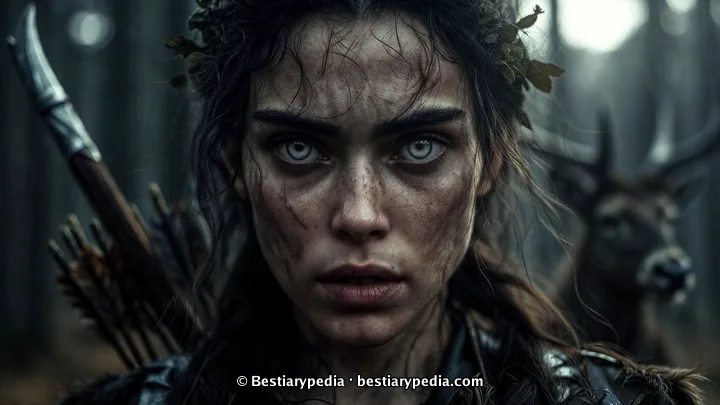
Artemis
Artemis, Greek goddess of the hunt, the moon and chastity
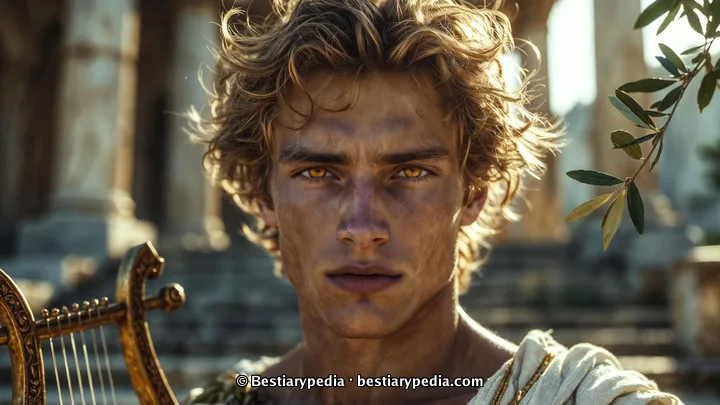
Apollo
Apollo, Greek god of music, prophecy, healing, the sun and the arts
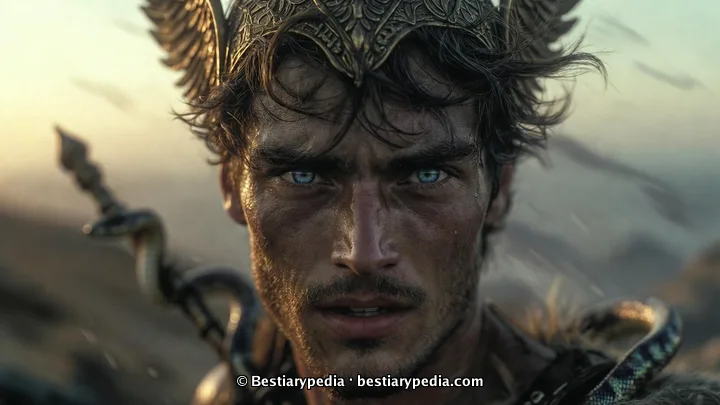
Hermes
Hermes, messenger of the Olympian gods and guide of souls
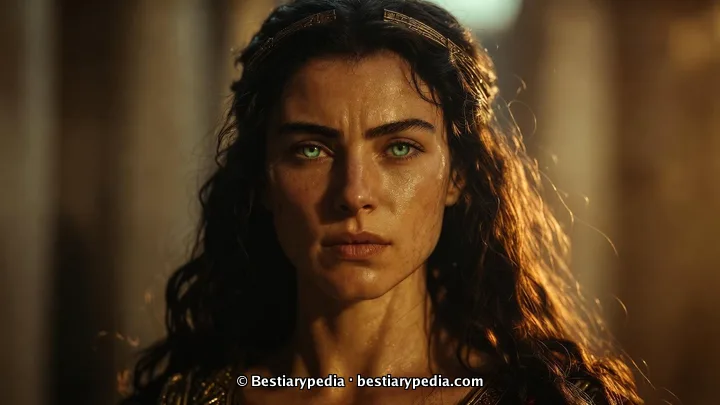
Hera
Hera, queen of the Olympian gods and goddess of marriage
Athena
Athena, Greek goddess of wisdom, military strategy, arts and justice