Mars
Mars, the Roman god of war, agriculture, and fertility
Curated byBestiarypediaCreated onUpdated on
 Ancient Rome(Italy)
Family Tree



Mythical Origins of Mars
Mars was born of Jupiter and Juno as a primordial deity of manly war and agricultural fertility in ancient Roman mythology. A tradition recorded by Ovid has him born of Juno alone, made fertile by a flower that Flora gave her, without Jupiter's intervention. Initially an Italic god of vegetation and protection, whose archaic name was Mavors, he evolved to become the patron of Roman armies. His early cult emphasized the defense of crops and the founding of Rome through his sons Romulus and Remus. Classical sources such as Ovid in the Fasti describe his role in the agricultural and military cycle. This duality distinguishes him from the more destructive Greek Ares.
Attributes and Symbolism of Mars
Mars represents just and disciplined war in contrast to destructive fury. Associated with wolves, woodpeckers, and the sacred spear, his cult involved sacrifices in March and October, months of military campaigns. The Salii priests guarded the twelve ancile shields and moved through the city dancing in his honor to open and close the war season. These symbols emphasize his protective role in both agriculture and battle. The spear represents military authority while the animals denote vigilance and controlled ferocity. His Roman iconography links him to martial virtue and cosmic order.
Main Myths and Legacy of Mars
Father of Romulus and Remus with Rhea Silvia, founders of Rome. In Virgil's Aeneid he inspires the Trojans. His temple in the Campus Martius was a center for military oaths, and Augustus dedicated to him the temple of Mars Ultor (the Avenger) after punishing Caesar's assassins. He symbolizes Roman martial virtue and his influence endures in planetary names and modern military culture. The narratives link him to state protection and imperial order. This legacy integrates agrarian and warrior elements into Roman identity.
Also known as
Relics
🏺 Sacred Spear of Mars
Ancestral divine weapon used in rituals and military oaths.
🏺 Ancile Shield
Shield fallen from the sky, symbol of Rome's protection.
Symbology
Element
Fire and Iron
Number
Three
Color
Blood Red
Animals
Wolf, Woodpecker
Sigils:
🏷️ Traits
Powers
Weaknesses
Behavioral
Resistances
🗺️In the Atlas
Travel the beings’ world of origin and the cosmos of their dimensions.
📜 Mythologies
Roman mythology was formed from the beliefs and religious practices of the Italic peoples, especially the Latins, between the 8th and 1st centuries BCE in the Italian peninsula. Its origins lie in local agrarian and familial traditions which, with the expansion of Rome and contact with Etruria and the Greek colonies of southern Italy, incorporated Hellenic divinities and narratives. The principal divinities included Jupiter, Juno and Minerva, together with Mars, Venus and other deities linked to civil and state functions, many of them assimilated to Greek figures without a complete substitution of the autochthonous cults. The Roman religious system was characterized by a pragmatic vision of the world in which the maintenance of the pax deorum was essential for the prosperity of the community. Rituals, auguries and the cult of the lares and manes formed part of a structure in which religion was closely linked to political and family life. Over time, the pantheon was enriched through the interpretatio romana of foreign gods and the introduction of Eastern cults. Its legacy is perceived in Latin literature, in the organization of the calendar and in the survival of numerous divine names in the Romance languages and in later Western iconography. Elements of Roman mythology influenced Renaissance art and European culture up to the contemporary era, preserving their mark in toponyms, festivities and the transmission of mythological narratives through authors such as Ovid and Virgil.
Sources
Aeneid
Virgil · -19
Epic by Virgil narrating Aeneas's journey and the mythical foundation of Rome.
Ab urbe condita
Titus Livius · -27
Livy's monumental history of Rome (1st century BC-1st century AD) from the city's foundation. Its early books preserve Rome's foundational legends and archaic religion.
Fasti
Ovid · 8
Poem by Ovid describing Roman festivals and myths associated with the calendar.
Frequently asked questions
From which Roman deities does Mars descend according to classical sources?
Mars was born of Jupiter and Juno as a primordial deity of manly war and agricultural fertility. Initially an Italic god of vegetation and protection, he evolved to become the patron of Roman armies. This duality distinguishes him from the more destructive Greek Ares.
Who were the Salii and what role did they have in the cult of Mars?
They were twelve priests who guarded the ancilia, the twelve sacred shields: one fallen from the sky, according to the legend, in times of Numa Pompilio, and eleven copies made so that no one could steal the authentic one. In March and October they toured Rome dancing and striking the shields, opening and closing the campaign season. Their animals are the wolf and the woodpecker, and their weapon, the spear kept in the Regia.
How did Mars father Romulus and Remus?
Rea Silvia, daughter of the deposed king of Alba Longa, had been forced to become a vestal so that she would not have descendants. Mars left her pregnant and from that union the twins were born, thrown into the Tiber and suckled by a she-wolf, animal of the god himself. That Rome descends from Mars and not from a mortal is the basis of its warrior identity: Augustus consecrated him as Mars Ultor, the Avenger, after punishing the assassins of Caesar.
What place does Mars occupy in the hierarchy of the Roman pantheon?
Son of Jupiter, king of the Roman gods, and Juno, queen of the Roman gods. Brother of Vulcan and nephew of Neptune, the Roman sea god. His rank corresponds to the principal war god in the Roman pantheon.
🔖Cite this entry▾
If you cite this article in an academic, journalistic or editorial publication, use any of these formats:
Bestiarypedia. (2026, July 26). Mars. Bestiarypedia. https://bestiarypedia.com/en/beings/mars
Free citation with attribution and canonical link for editorial, academic or journalistic use. Full commercial reuse or creation of derivative products requires prior agreement.
Similar beings

Diana
Diana, Roman goddess of hunting, the moon, nature and childbirth

Mercury
Mercury, Roman god of commerce, travelers, thieves and eloquence

Minerva
Minerva, Roman goddess of wisdom, strategic war and the arts

Neptune
Neptune, Roman god of the sea, earthquakes and horses
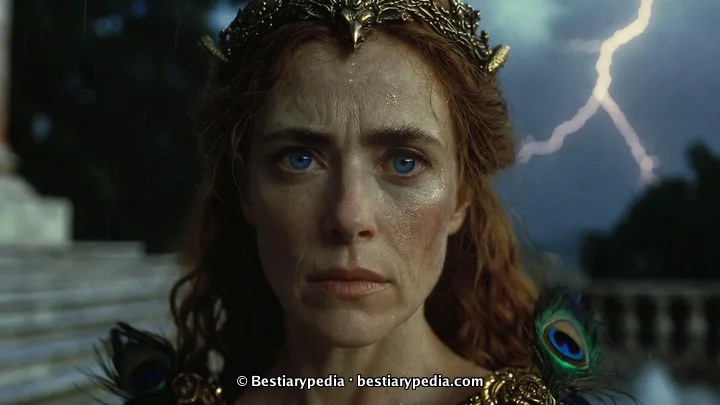
Juno
Juno, Roman goddess of marriage, the state and the protection of women

Pluto
Pluto, Roman god of the underworld and lord of subterranean riches
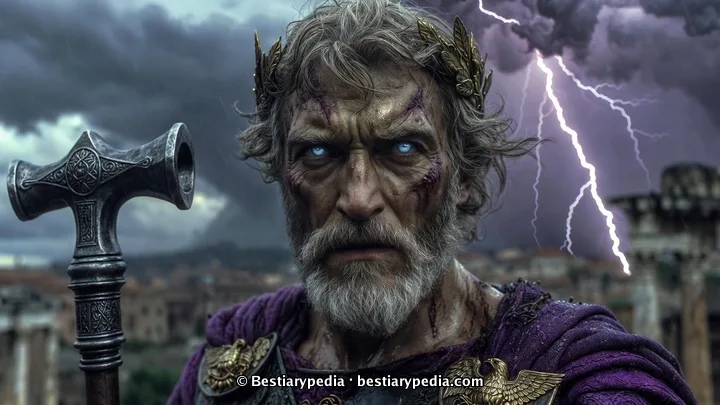
Jupiter
Jupiter, supreme god of the Roman pantheon, lord of the sky, thunder, and divine justice