Mercury
Mercury, Roman god of commerce, travelers, thieves and eloquence
Curated byBestiarypediaCreated onUpdated on
 Ancient Rome(Italy)
Family Tree



Origins of Mercury
Mercury (*Mercurius*) is the Roman god of commerce, travelers, messages and eloquence, and the messenger of the gods. His name probably derives from *merx* («merchandise») or *mercari* («to trade»), which reveals his original character: an Italic divinity of commerce and profits, whose temple on the Aventine was dedicated in 495 BC, associated with the college of merchants. By effect of the *interpretatio romana* he was identified with the Greek **Hermes** and absorbed all his mythology: son of **Jupiter** and the nymph **Maia**, born in a cave on Mount Cyllene, it is said that on the very day of his birth he stole the cattle of **Apollo** and, with the shell of a turtle, invented the lyre, which he later gave to Apollo to reconcile with him.
Attributes and functions
Mercury is represented as an agile young man provided with his characteristic attributes: the **caduceo**, staff with two intertwined snakes that grants peace and sleep; the **talaria**, winged sandals that allow him to fly with the speed of the wind; and the **pétaso**, wide-brimmed hat, often also winged. Sometimes he carries a purse, symbol of his link with commerce and profit. His functions are multiple: messenger of Jupiter, protector of merchants and travelers (and also of thieves and tricksters, for his cunning), god of eloquence and guide of the dead to the underworld, role for which he receives the title of *psychopompos*. He embodies movement, exchange and wit.
Myths, cult and legacy
Among his most famous exploits figures the death of **Argos**, the hundred-eyed giant whom Juno had set to watch the nymph **Ío**: Mercury put him to sleep with his story and his wand before killing him, for which he received the epithet of *Argifonte*. In Virgil's *Aeneid* it is he who descends to Carthage to transmit to **Aeneas** Jupiter's order to abandon Dido and proceed to Italy, decisive scene of the poem. His feast, the **Mercuralia**, was celebrated on May 15, when merchants sprinkled with water from his sacred spring their goods and their heads to purify the gains. His legacy is immense: it gives name to the fastest planet, to the chemical element *mercury* (azogue) and to Wednesday (*Mercurii dies*), and his caduceus continues to be used as an emblem of commerce.
Also known as
Relics
🏺 Caduceus
Winged staff entwined with two serpents, symbol of peace, commerce, and soul guidance.
🏺 Talaria (Winged Sandals)
Sandals with wings enabling supersonic flight and instantaneous travel.
Symbology
Element
Air and Mercury
Number
Four
Color
Silver and Gold
Animals
Rooster, Turtle
Sigils:
🏷️ Traits
Powers
Weaknesses
Behavioral
Resistances
🗺️In the Atlas
Travel the beings’ world of origin and the cosmos of their dimensions.
📜 Mythologies
Roman mythology was formed from the beliefs and religious practices of the Italic peoples, especially the Latins, between the 8th and 1st centuries BCE in the Italian peninsula. Its origins lie in local agrarian and familial traditions which, with the expansion of Rome and contact with Etruria and the Greek colonies of southern Italy, incorporated Hellenic divinities and narratives. The principal divinities included Jupiter, Juno and Minerva, together with Mars, Venus and other deities linked to civil and state functions, many of them assimilated to Greek figures without a complete substitution of the autochthonous cults. The Roman religious system was characterized by a pragmatic vision of the world in which the maintenance of the pax deorum was essential for the prosperity of the community. Rituals, auguries and the cult of the lares and manes formed part of a structure in which religion was closely linked to political and family life. Over time, the pantheon was enriched through the interpretatio romana of foreign gods and the introduction of Eastern cults. Its legacy is perceived in Latin literature, in the organization of the calendar and in the survival of numerous divine names in the Romance languages and in later Western iconography. Elements of Roman mythology influenced Renaissance art and European culture up to the contemporary era, preserving their mark in toponyms, festivities and the transmission of mythological narratives through authors such as Ovid and Virgil.
Sources
Aeneid
Virgil · -19
Epic by Virgil narrating Aeneas's journey and the mythical foundation of Rome.
Fasti
Ovid · 8
Poem by Ovid describing Roman festivals and myths associated with the calendar.
Metamorphoses
Ovid · 8
Work by Ovid narrating mythological transformations including marine interventions.
Frequently asked questions
Whose son is Mercurio and what did he do at birth?
He is the son of Jupiter and the nymph Maia, born in a cave on Mount Cilene. It is said that on the same day of his birth he stole Apollo's cattle and, with the shell of a tortoise, invented the lyre, which he later handed over to him to reconcile with him.
What is the origin of his name and of his cult?
His name probably derives from merx («merchandise»): in origin it was an Italic divinity of commerce, with temple in the Aventine dedicated in the 495 a. C. and linked to the college of the merchants, before identifying with the Greek Hermes.
What attributes does Mercury carry?
The caduceus, staff with two intertwined serpents; the talaria, winged sandals that give him the speed of the wind; and the petasos, wide-brimmed hat. He often also carries a purse, symbol of his link with commerce and gain.
What role does Mercurio play in the Eneida?
He descends to Cartago to transmit to Eneas the order of Jupiter to abandon Dido and proceed towards Italia, decisive scene of the poem. It is not he who guides Eneas to the underworld: that role corresponds to the Sibila de Cumas.
🔖Cite this entry▾
If you cite this article in an academic, journalistic or editorial publication, use any of these formats:
Bestiarypedia. (2026, July 26). Mercury. Bestiarypedia. https://bestiarypedia.com/en/beings/mercury
Free citation with attribution and canonical link for editorial, academic or journalistic use. Full commercial reuse or creation of derivative products requires prior agreement.
Similar beings
Diana
Diana, Roman goddess of hunting, the moon, nature and childbirth
Minerva
Minerva, Roman goddess of wisdom, strategic war and the arts
Neptune
Neptune, Roman god of the sea, earthquakes and horses
Mars
Mars, the Roman god of war, agriculture, and fertility
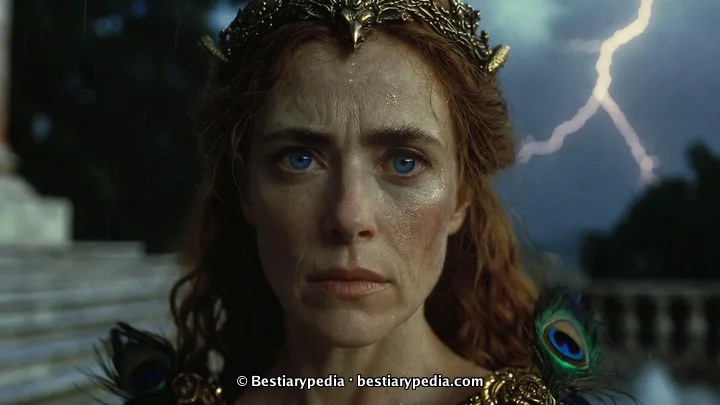
Juno
Juno, Roman goddess of marriage, the state and the protection of women
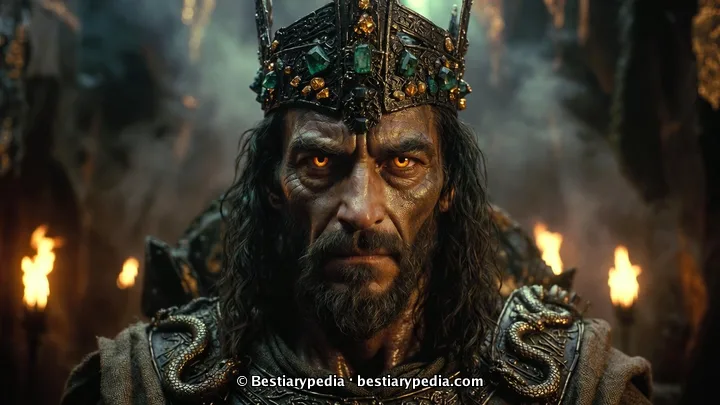
Pluto
Pluto, Roman god of the underworld and lord of subterranean riches
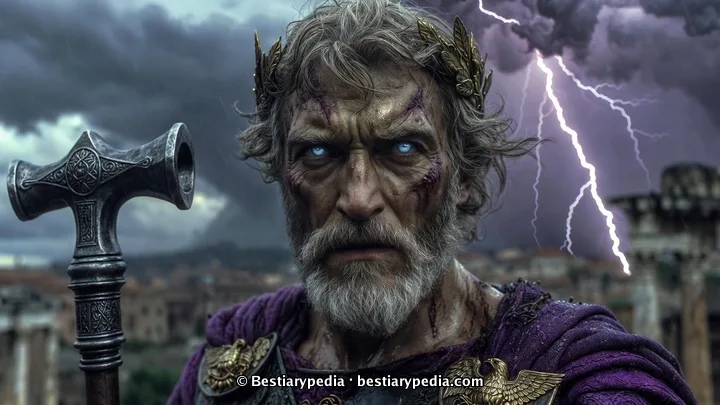
Jupiter
Jupiter, supreme god of the Roman pantheon, lord of the sky, thunder, and divine justice