Ragnar Lodbrok
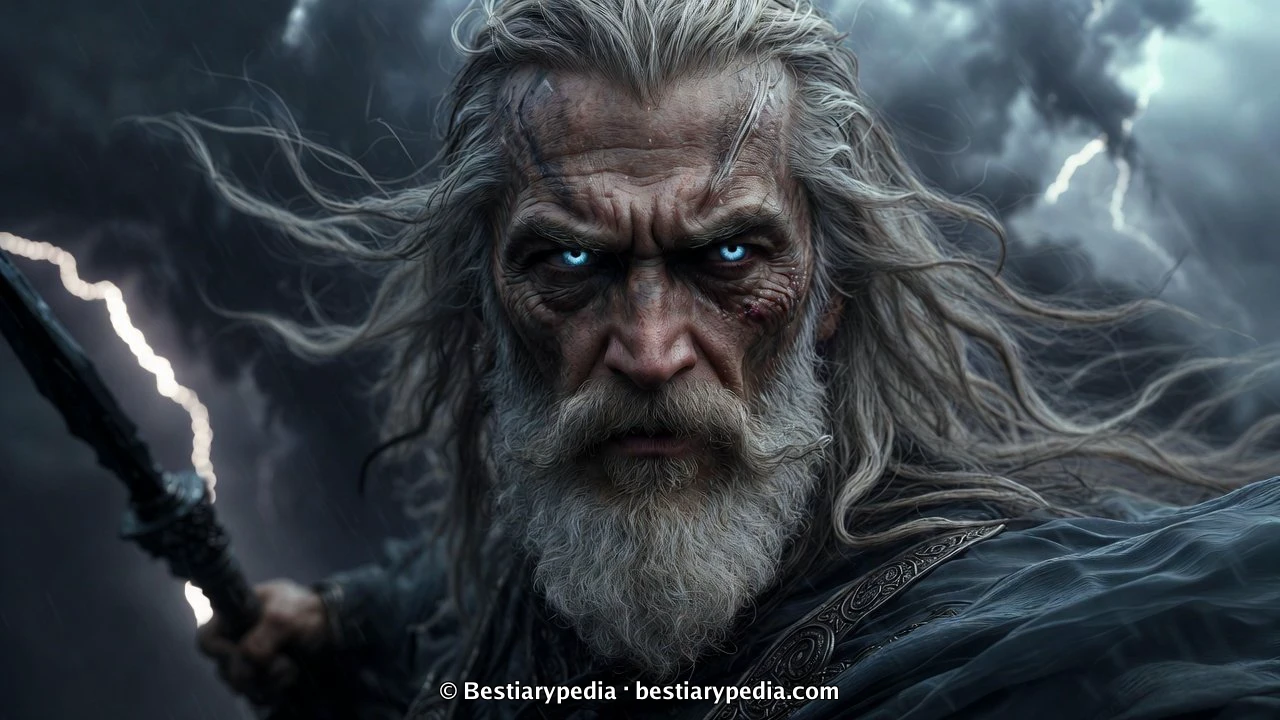
Ragnar Lodbrok, legendary 9th-century Viking chieftain
Curated byBestiarypediaCreated onUpdated on


 Scandinavia(Denmark, Norway, Sweden)
Origins of Ragnar Lodbrok
Ragnar Lodbrok is a legendary king and Viking chieftain whose figure, between history and myth, stars in several Icelandic Nordic sagas, especially the Saga of Ragnar Lodbrok, and appears in the work of the Danish chronicler Saxo Grammaticus. Tradition makes him the son of King Sigurd Hring and links him to the royalty of Denmark and Sweden. His nickname, Loðbrók («hairy pants» or «shaggy breeches»), comes, according to the saga, from the boiled skin garments he made to protect himself when killing a great serpent and thus winning the hand of his wife Thóra Borgarhjörtr. Other of his legendary wives were the shieldmaiden Lagertha and, above all, Áslaug, mother of several of his famous sons. His historicity is debated: he probably combines traits of several Viking chieftains from the 8th and 9th centuries.
Raids and Exploits
The sagas present Ragnar as the greatest of the Vikings, a fearsome leader who directed incursions and raids along the coasts of the British Isles and the Frankish kingdom. Tradition attributes bold pillaging campaigns to him, and his legend is associated with the great Viking attacks of the 9th century, such as the sack of Paris sailing up the Seine. According to the accounts, he combined strength and daring with strategic cunning, and his prestige earned him the loyalty of warriors and the fame of invincible. These feats made him the archetype of the Viking warrior king, whose shadow is projected over the great Scandinavian expansion of the era.
Death and Revenge
The end of Ragnar is one of the most famous episodes of his legend: captured by King Ælla of Northumbria, in England, he was thrown into a pit of snakes, where he died chanting, according to tradition, a death song while the snakes bit him. His death triggered the revenge of his sons (among them Ivar the Boneless, Björn Ironside, Sigurd Snake-in-the-Eye and Hvitserk), who, according to the chronicles, led the Great Heathen Army in the invasion of England from the year 865. Thus, the figure of Ragnar remained linked both to the heroic age of the Vikings and to the legendary origin of the great Danish campaigns against the Anglo-Saxon kingdoms, and his legend has known enormous diffusion in contemporary popular culture.
Also known as
Relics
🏺 Ragnar's Axe
Legendary weapon used in his Viking raids.
Symbology
Element
Fire and sea
Number
Nine
Color
Storm blue
Animals
Raven, Serpent
Sigils:
🏷️ Traits
Powers
Weaknesses
Behavioral
Resistances
🔗 Relations with other beings
🗺️In the Atlas
Travel the beings’ world of origin and the cosmos of their dimensions.
📜 Mythologies
Norse mythology developed among the Germanic peoples of northern Europe, especially in Scandinavia, from the late Iron Age until the progressive Christianization between the 8th and 11th centuries. Its stories are preserved mainly in medieval Icelandic sources such as the Poetic Edda and the Prose Edda of Snorri Sturluson, which collect earlier oral traditions. The universe is conceived as a set of nine worlds connected by the cosmic tree Yggdrasil, in which gods, giants, humans and other beings coexist, and where the destiny of all is ruled by the Norns. The main gods are divided into two groups: the æsir, among whom Odin, Thor and Tyr stand out, and the vanir, represented by Njörðr, Freyr and Freyja, although both groups eventually integrated after a mythical war. Odin, associated with wisdom, war and poetry, occupies a central place, while Thor, god of thunder, protects humans from the giants. The end of the world, known as Ragnarök, involves a catastrophic battle in which most of the gods perish, although a later rebirth is foreseen. This tradition has exerted a lasting influence on literature, art and popular culture in Europe and America, from medieval sagas to modern representations in operas, novels and audiovisual media. Elements such as Valhalla or the valkyries have become part of the Western collective imagination, although often reinterpreted outside their original context.
Sources
Gesta Danorum by Saxo Grammaticus
Saxo Grammaticus · c. 1200
Saxo Grammaticus’ "Gesta Danorum" (c. 1200), a history of the Danes in Latin. It blends chronicle and legend, preserving euhemerized versions of Norse gods such as Odin and heroes such as Amleth, a key source of medieval Germanic myth.
Ragnar's Saga Lodbrok
Icelandic Anonymous · c. 1250-1400
Icelandic saga (13th-14th century) recounting the life of the legendary Viking chieftain Ragnar Lodbrok and his sons. Amid battles, dragons and prophecies, it preserves the heroic and supernatural imagination of Norse tradition.
Frequently asked questions
How do the Norse sagas describe Ragnar Lodbrok's lineage and origin?
Ragnar Lodbrok was born in the ninth century as the son of King Sigurd Hring and Queen Thora in Denmark. The sagas present him as a descendant of legendary heroes. This origin reinforced his authority among the Nordic clans.
What military strategies characterized Ragnar Lodbrok's campaigns according to the sagas?
Ragnar led raids into England and France, sacking Paris and forging alliances. He combined brute strength with tactical intelligence to overcome enemy defenses. These campaigns expanded Nordic influence.
What role did Ragnar Lodbrok's sons play after his legendary death?
Ragnar died in a pit of snakes on the orders of King Ælla of Northumbria. His death inspired his sons such as Ivar the Boneless and Björn Ironside. They led the Great Heathen Army invasion against England.
🔖Cite this entry▾
If you cite this article in an academic, journalistic or editorial publication, use any of these formats:
Bestiarypedia. (2026, July 26). Ragnar Lodbrok. Bestiarypedia. https://bestiarypedia.com/en/beings/ragnar-lodbrok
Free citation with attribution and canonical link for editorial, academic or journalistic use. Full commercial reuse or creation of derivative products requires prior agreement.