Mormo
Mormo, spectre of Hecate's retinue and Greek bogey
Curated byBestiarypediaCreated onUpdated on
 Ancient Greece(Greece)
Origins and nature of Mormo
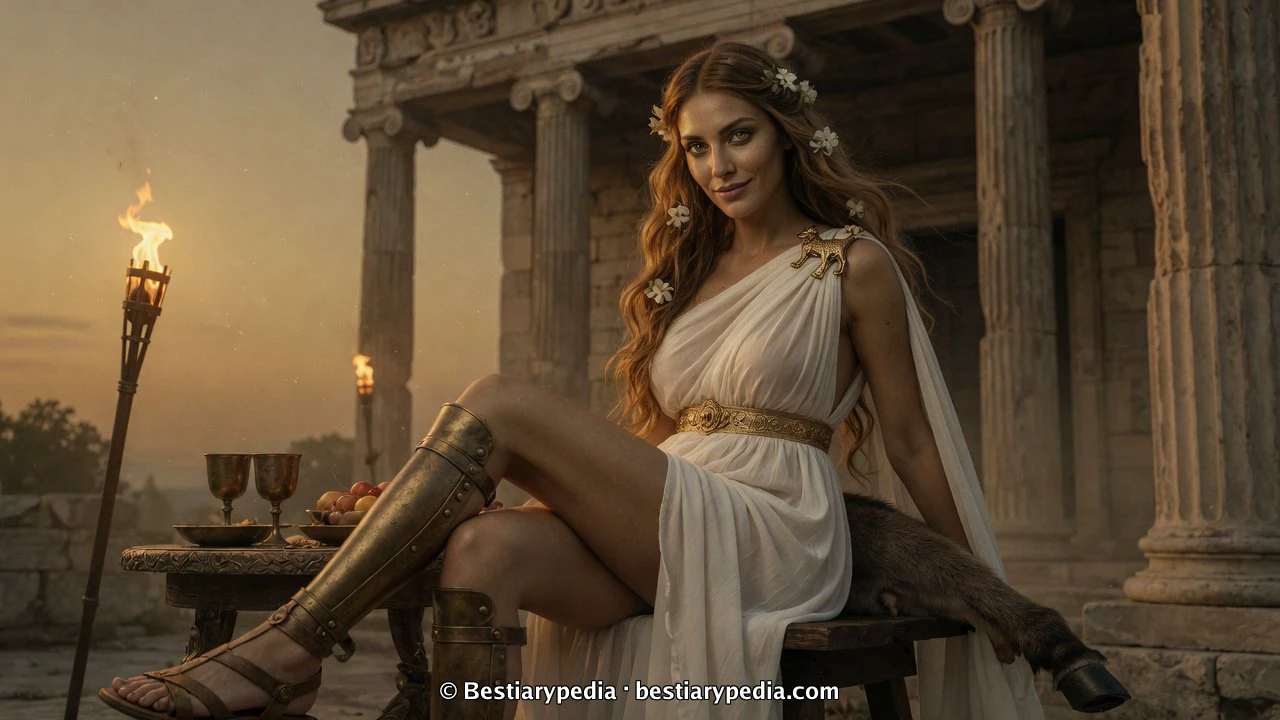
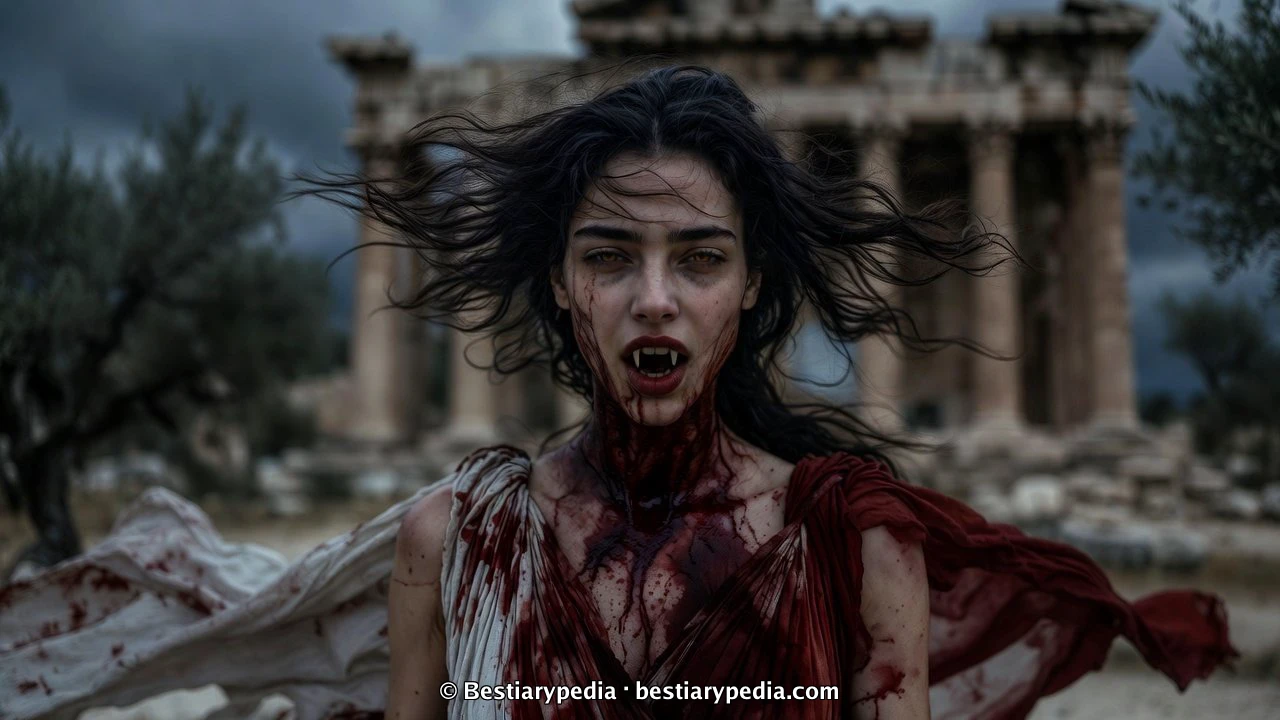
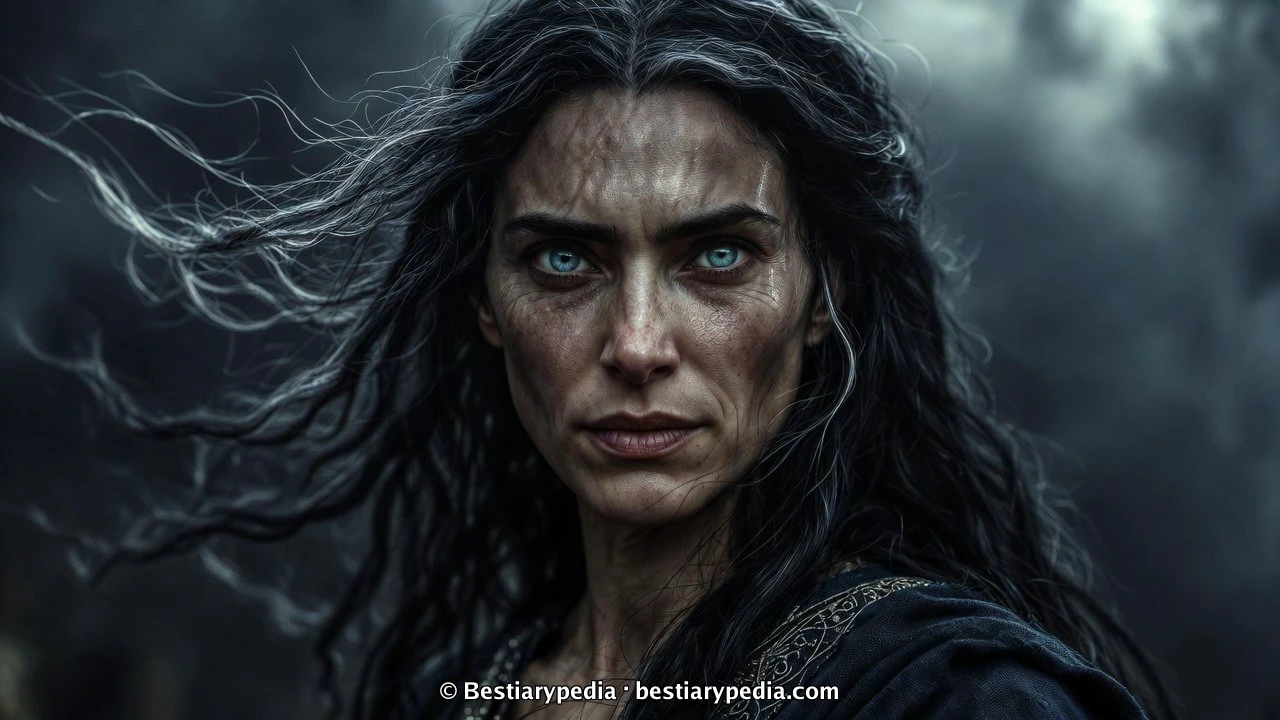
Mormo (Mormṓ) constitutes the third member of the trio of child-scarers of ancient Greece, together with Lamia and Empusa, all of them linked to the nocturnal retinue of Hecate. Greek wet nurses and mothers invoked her name to terrorize small children and force their obedience, to the point that the derived term mormolýkeion came to designate any frightening mask or bogeyman. Tradition attributes to her a tragic origin: she would have been a queen of the Laestrygonians who, after losing her own children, went mad with grief and began to devour those of others, repeating the pattern of Lamia. Aristophanes, Theocritus in Idyll XV, Erinna in The Distaff and Lucian of Samosata in Philopseudes mention her as a domestic threat.
Representation and symbology of Mormo
Mormo is represented biting, with deformed features, and his face was painted on ritual masks used to scare children. His symbology gathers the mask as an element of concealment and terror, the bite as an act of devouring, and the darkness of the children's room as the scene of his appearance. More than an entity with its own biography, it functioned as a domestic warning transmitted by nurses and mothers to impose obedience. The generic use of mormolýkeion for any terrifying figure demonstrates to what extent his name overflowed the concrete creature.
Legacy in the Greek and modern tradition
The name of Mormo survives in modern Greek as designation of any terrifying figure. Its linguistic survival shows how an entity almost without myths of its own could mold everyday language and child-rearing practices for centuries. From Theocritus comes the formula with which mothers conjured it before the reluctant child, warning him that Mormo bit, and from that gesture its figure remained united forever to the bite. Unlike Lamia and Empusa, to whom tradition endowed biographies, adventures and transformations, Mormo remained as pure threat without tale, which makes it the clearest example of a collective fear crystallized in a single name. Its association with the retinue of Hecate and its functional kinship with those two companions integrate it fully into the cast of female specters of the Greek night, direct antecedent of the coco and the sack man of later cultures.
Relics
🏺 Ritual mask
Terrifying mask used to evoke Mormo and frighten disobedient children.
Symbology
Element
Mask
Number
1
Color
Black
Animals
Wolf
Sigils:
🏷️ Traits
Powers
Weaknesses
Behavioral
Resistances
🔗 Relations with other beings
🗺️In the Atlas
Travel the beings’ world of origin and the cosmos of their dimensions.
📜 Mythologies
Greek mythology developed in Ancient Greece from the Late Bronze Age and reached its most elaborate form during the archaic and classical periods, between the 8th and 4th centuries BCE. It emerged among the Hellenic peoples who inhabited the Greek peninsula, the Aegean islands and the coasts of Asia Minor, and was transmitted mainly through the oral poetry of Homer and Hesiod, as well as local traditions collected in sanctuaries and festivals. Its worldview presents a universe ordered by a hierarchy of divinities that intervene in human and natural affairs, with Olympus as the dwelling of the principal gods and Hades as the destination of the deceased. The central deities include the twelve Olympians, headed by Zeus, god of the sky and sovereign, together with Hera, Poseidon, Athena, Apollo, Artemis, Aphrodite, Ares, Hephaestus, Hermes, Demeter and Dionysus. Before them, the Titans, among whom Cronus and Rhea stand out, ruled the cosmos until they were deposed by the Olympians in the Titanomachy. Other important entities are the Muses, the nymphs, the Cyclopes and the Moirai, who embody cosmic forces and destinies. This tradition exerted a lasting influence on the literature, art and thought of Rome, the European Renaissance and subsequent Western culture, supplying motifs, characters and narrative structures that have endured in philosophy, astronomy and the arts to the present day.
Sources
Philopseudes
Luciano de Samósata · c. 170 CE
Satirical dialogue by Lucian of Samosata that mentions Mormo among other Greek folklore figures as a childish threat.
Peace by Aristophanes
Aristophanes · -421
Aristophanes' play 'Peace' (421 BCE) mentions Lamia as a child-devouring specter, first major literary reference to the Greek monster.
Idylls
Teócrito · c. 270 BC
Collection of bucolic poems by the Hellenistic poet Theocritus that includes references to Greek folklore figures such as Mormo.
Frequently asked questions
How is Mormo related to Hecate?
Mormo belongs to Hecate's retinue as a spectre. Nurses invoked her along with other figures of her court to frighten children.
What tragic origin is attributed to Mormo?
She is considered queen of the Laestrygonians who lost her children and, maddened, devoured others', repeating Lamia's pattern.
Why does Mormo lack extensive own myths?
Her existence is reduced almost entirely to a domestic warning word used by nurses without developed narratives.
🔖Cite this entry▾
If you cite this article in an academic, journalistic or editorial publication, use any of these formats:
Bestiarypedia. (2026, August 3). Mormo. Bestiarypedia. https://bestiarypedia.com/en/beings/mormo-hecate-spectre
Free citation with attribution and canonical link for editorial, academic or journalistic use. Full commercial reuse or creation of derivative products requires prior agreement.
Similar beings
Lamia
Lamia, the seductive mythological Greek serpent devourer of children
Eurynomos
Eurynomos, chthonic daemon corpse-devourer of the Greek Hades
Naiads
Naiads, water nymphs guardians of rivers, springs, and fountains in Greek mythology
Lernaean Hydra
Lernaean Hydra, the multi-headed water serpent that regenerates in Greek mythology
Lycaon
Lycaon, Arcadian king turned into a wolf by Zeus
Medusa
Medusa, the petrifying gorgon with snakes for hair in Greek mythology