Lycaon
Lycaon, Arcadian king turned into a wolf by Zeus
Curated byBestiarypediaCreated onUpdated on
 Ancient Greece(Greece)
🔄 Transformation line (Phase 2 of 2)
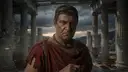
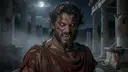
Origins of Lycaon
Licaón was, in Greek mythology, a primitive king of Arcadia, son of Pelasgo (the first man according to the Arcadian tradition) and father of a numerous offspring, famous for his impiety. The foundation of the city of Licosura, considered the oldest in the world, and the institution of the cult of Zeus Liceo on Mount Liceo are attributed to him. To this cult were associated archaic and somber rites: Pausanias collects the belief that in the sacrifices of Mount Liceo whoever tasted the human entrails mixed with those of the animal victims transformed into a wolf during nine years, recovering the human form only if in that time he abstained from eating human flesh. These accounts linked Arcadia, a mountainous and pastoral region, with an ancient terror to the wild and with the border between civilization and the beast.
The transformation into a wolf
The most famous myth of Lycaon tells how Zeus, disguised as a traveler, appeared in his palace to test the king's reputation for impiety. To check if his guest was really a god, Lycaon served him a terrible banquet prepared with the flesh of a human being, according to the most widespread version that of his own son Nyctimus. Zeus, who discovered the sacrilege instantly, knocked down the table horrified, struck the sons of Lycaon with lightning and transformed the king into a wolf, preserving in him traits of his former nature: the fierce gaze, the gray fur and the thirst for blood. Ovid narrates this episode at the beginning of his Metamorphoses, and in it critics have seen the first account of lycanthropy in Western literature, a divine punishment for the violation of sacred hospitality and for the abomination of cannibalism.
The Werewolf's Curse
Turned into a wolf, Lycaon embodied the irruption of the beast in the human being, the loss of reason under the dominion of the instincts. The tradition extended the curse to his lineage and to the cult of Mount Lycaeus, where it was believed that certain men transformed temporarily into wolves and returned to their form if they respected the prescribed abstinence. This Arcadian background, with its sacrifices and its ritual metamorphoses, made the myth of Lycaon the ancient model of the werewolf, the figure of the human being who, due to his transgression, remains condemned to alternate between humanity and the beast. Unlike the modern versions of the lycanthrope, linked to the full moon and to silver, the Greek tradition centered the transformation on the sacrifice, cannibalism and the will of the gods.
Legacy
Licaón passed into posterity as the original archetype of the werewolf, and his name is at the very origin of the word «licantropía» (from the Greek lykos, «wolf», and anthropos, «man»). His myth, transmitted by Ovidio, Pausanias and Apolodoro, influenced European legends of metamorphosis from Antiquity to the Middle Ages and the Renaissance, and laid the foundations of the tale of the man condemned to become a beast. The cult of Mount Liceo, with its fame of human sacrifices, endured until Roman times. In modern culture, the figure of Licaón remains alive as the classical root of the lycanthrope myth and as a symbol of the wild and repressed side of human nature.
Also known as
Relics
🏺 Throne of Lycaon
Arcadian throne where he offered the sacrilegious banquet to Zeus.
Symbology
Element
Earth and Moon
Number
50
Color
Wolf Grey and Silver
Animals
Wolf
Sigils:
🏷️ Traits
Powers
Weaknesses
Behavioral
Resistances
🗺️In the Atlas
Travel the beings’ world of origin and the cosmos of their dimensions.
📜 Mythologies
Greek mythology developed in Ancient Greece from the Late Bronze Age and reached its most elaborate form during the archaic and classical periods, between the 8th and 4th centuries BCE. It emerged among the Hellenic peoples who inhabited the Greek peninsula, the Aegean islands and the coasts of Asia Minor, and was transmitted mainly through the oral poetry of Homer and Hesiod, as well as local traditions collected in sanctuaries and festivals. Its worldview presents a universe ordered by a hierarchy of divinities that intervene in human and natural affairs, with Olympus as the dwelling of the principal gods and Hades as the destination of the deceased. The central deities include the twelve Olympians, headed by Zeus, god of the sky and sovereign, together with Hera, Poseidon, Athena, Apollo, Artemis, Aphrodite, Ares, Hephaestus, Hermes, Demeter and Dionysus. Before them, the Titans, among whom Cronus and Rhea stand out, ruled the cosmos until they were deposed by the Olympians in the Titanomachy. Other important entities are the Muses, the nymphs, the Cyclopes and the Moirai, who embody cosmic forces and destinies. This tradition exerted a lasting influence on the literature, art and thought of Rome, the European Renaissance and subsequent Western culture, supplying motifs, characters and narrative structures that have endured in philosophy, astronomy and the arts to the present day.
Sources
Library
Apollodorus · 100
Mythological compendium attributed to Apollodorus summarizing Greek legends.
Metamorphoses
Ovid · 8
Work by Ovid narrating mythological transformations including marine interventions.
Pausanias' Description of Greece
Pausanias · ca. 150 CE
Pausanias’ "Description of Greece" (2nd century), a geographical and religious guide to the Greek world. It tours sanctuaries, monuments and local cults, preserving myths, heroes and divinities that would otherwise have been lost.
Frequently asked questions
What does tradition attribute to Lycaon on Mount Lycaeus?
Licaón, son of Pelasgo or of Ares according to the version, founded Licorea on the mount Liceo, in Arcadia. He governed with fifty sons known for their ferocity and impiety, and presided over ancestral rites with human sacrifices in the sanctuary of Zeus Liceo.
What characteristic attributes define Lycaon's transformation into a wolf according to Ovid's account?
Zeus transformed Lycaon into a ferocious wolf retaining his human cunning and murderous desire. The king served the flesh of his son Nyctimus at a sacrilegious banquet. This event represents the first known case of lycanthropy in Western literature.
What relationship does Lycaon maintain with Zeus in the hierarchy of Greek mythology?
Zeus punished Lycaon for impiety and cannibalism by turning him into a wolf. The Arcadian king rivaled the god by offering him his son's flesh at a banquet. This relationship places him as a punished antagonist within the Olympian hierarchy.
What symbolism does Lycaon's curse represent in mythological iconography?
The curse symbolizes the repressed inner beast in every human being. His hybrid form and vulnerability to silver and the lunar cycle embody divine punishment for hubris. Lycaon is presented as the father of all werewolves in later tales.
🔖Cite this entry▾
If you cite this article in an academic, journalistic or editorial publication, use any of these formats:
Bestiarypedia. (2026, July 26). Lycaon. Bestiarypedia. https://bestiarypedia.com/en/beings/lycaon
Free citation with attribution and canonical link for editorial, academic or journalistic use. Full commercial reuse or creation of derivative products requires prior agreement.
Similar beings
Naiads
Naiads, water nymphs guardians of rivers, springs, and fountains in Greek mythology
Lernaean Hydra
Lernaean Hydra, the multi-headed water serpent that regenerates in Greek mythology
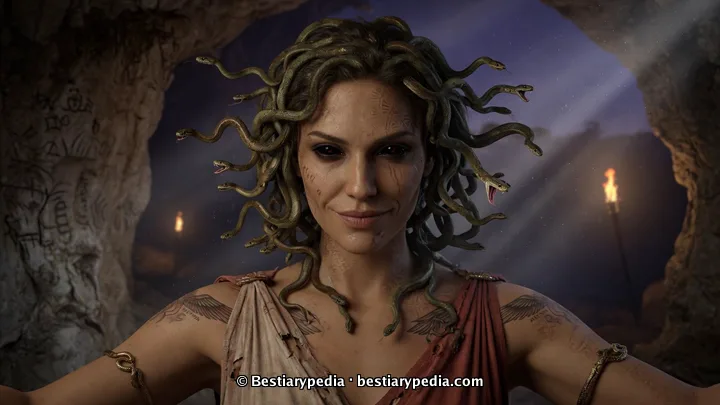
Medusa
Medusa, the petrifying gorgon with snakes for hair in Greek mythology