Sobek
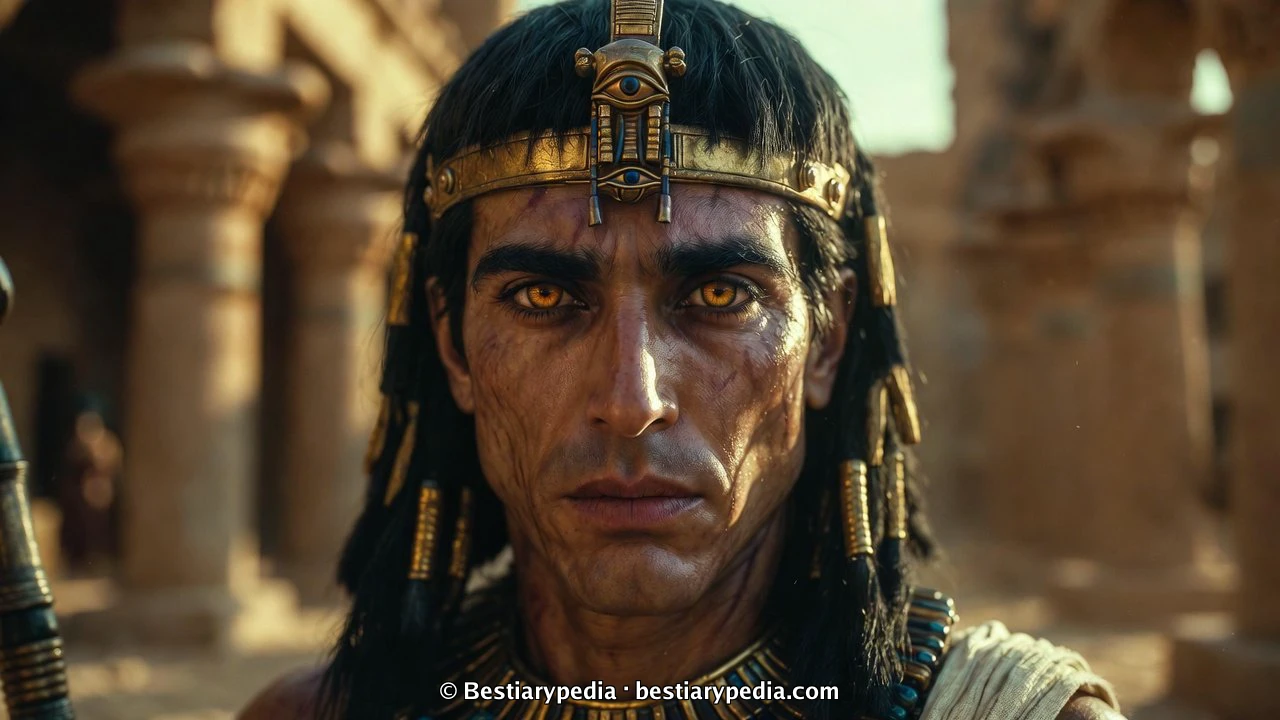
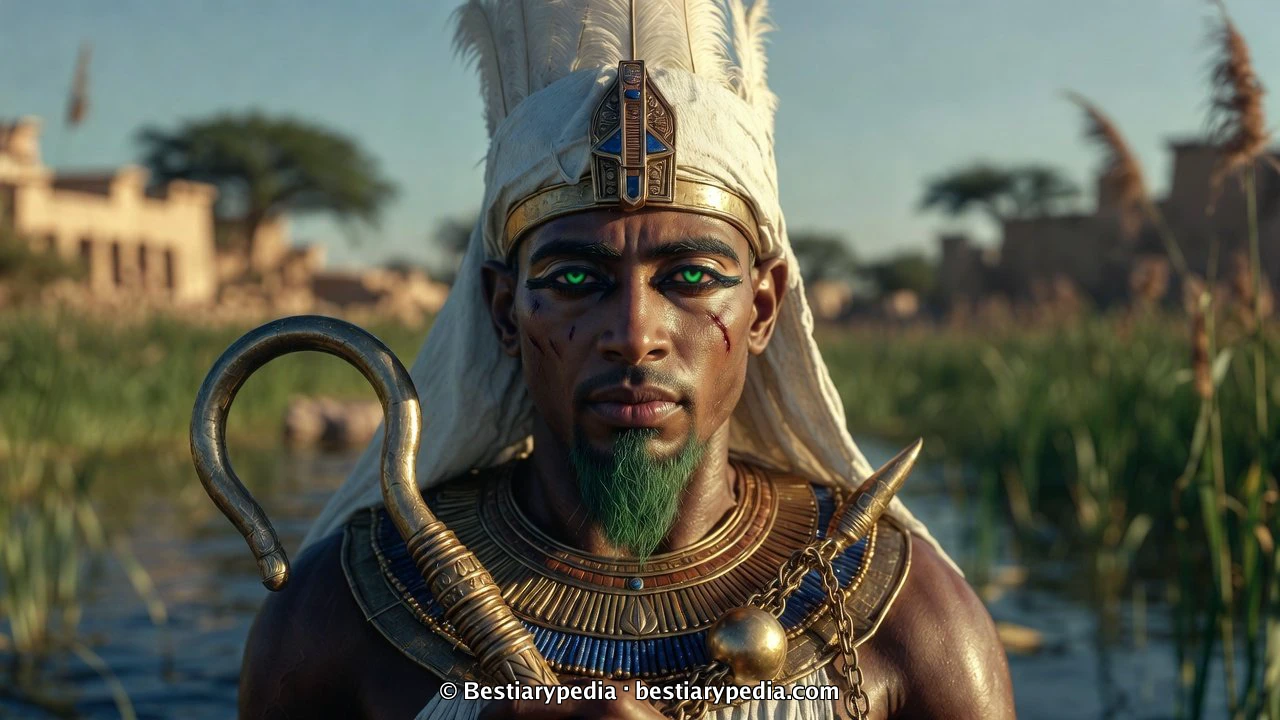
Sobek, god of the Nile, fertility and protection in Egyptian mythology
Curated byBestiarypediaCreated onUpdated on
 Ancient Egypt(Egypt)
Mythical Origins of Sobek in the Pyramid Texts
Sobek emerges in the Pyramid Texts as a primordial deity associated with the Nile and cosmic creation. Depicted as a crocodile or a man with a crocodile head, he embodies the ferocity of the river and its fertilizing power that gives life to the flooded lands. His early appearance links him to the chaotic forces of the primordial water before the ordering of the world by the creator gods. Ancient hymns describe him as lord of the waters who controls the annual floods essential for Egyptian agriculture. This initial form highlights his role in the cycle of destruction and renewal that sustains the cosmic order maat.
Nature and Powers of Sobek as Lord of the Nile
Sobek controls the Nile's floods bringing fertility to Egyptian fields and is patron of the armies that protect the kingdom. His destructive wrath manifests like that of a fierce crocodile capable of devouring enemies but his blessing ensures agricultural prosperity and military victories. Associated with the vital force of water and regeneration he balances aquatic chaos with divine order. Pharaohs invoked his power to strengthen their reign and defend against external threats. This duality between destroyer and protector defines his mythological essence in the Egyptian pantheon.
Cult Temples and Mythological Relations of Sobek
Worshipped in the Fayum and Kom Ombo where dedicated temples were erected Sobek receives offerings from pharaohs who identified with him to invoke protection in battles and harvests. Ally of Horus and the rulers he aided in vengeance against Set and is associated with creation alongside other Nile gods like Hapi. His cult attracted devotees seeking fertility and military security. Rituals included processions with statues of live crocodiles in sacred ponds symbolizing the regenerative power of the river. This veneration endured through dynasties reinforcing the bond between royalty and the natural forces of the Nile.
Sobek-Ra and the crocodile mummies
In time Sobek merged with the sun god in the figure of Sobek-Ra, drawing the lord of the waters into the cosmic cycle of the sun. At his cult centers (above all the Faiyum, ancient Shedet, the Greeks' Crocodilopolis, and Kom Ombo) sacred crocodiles were raised in temple pools, adorned with gold; at their death they were mummified by the thousand as offerings, and many of those mummies survive today. At Kom Ombo, a double temple venerated him alongside Horus the Elder, setting the river's protector and its predator face to face in a single sanctuary.
Also known as
Relics
🏺 Sobek Statue
Statue of the crocodile god Sobek, venerated at Kom Ombo as source of the Nile's fertility.
Symbology
Element
Water
Number
7
Color
Green
Animals
Nile Crocodile
Sigils:
🏷️ Traits
Powers
Weaknesses
Behavioral
Resistances
🔗 Relations with other beings
🗺️In the Atlas
Travel the beings’ world of origin and the cosmos of their dimensions.
📜 Mythologies
Egyptian mythology developed in ancient Egypt over more than three millennia, from the predynastic period to the Roman era, and was closely linked to the civilization that inhabited the banks of the Nile. Its beliefs were based on a worldview in which cosmic order, represented by the concept of maat, was maintained through the action of the gods and the performance of rituals by humans. The Egyptian pantheon included numerous local and national deities, among which Ra stood out, associated with the sun and creation, and Osiris, god of resurrection and the underworld, along with other figures such as Isis, Horus, Seth and Amun. Mythological narratives explained the origin of the world, the daily cycle of the sun and the fate of the soul after death, integrating elements of the nature of the Nile valley and astronomical observation. Funerary texts, such as the Book of the Dead, and temple reliefs constitute the main sources for the knowledge of these beliefs. Although official worship declined with the Christianization of Egypt, Egyptian mythology has exerted a lasting influence on art, literature and the Western imagination, and continues to be the subject of study in Egyptology.
Sources
The Gods of the Egyptians
E. A. Wallis Budge · 1904
Two-volume study by the Egyptologist E. A. Wallis Budge (1904) on the gods of ancient Egypt, their mythology and cult.
Pyramid Texts
Unknown · -2400
Collection of ancient Egyptian funerary texts inscribed in the pyramids of the Fifth and Sixth Dynasties.
Fayum Inscriptions
Several Ptolemaic scribes · 250 BCE
Greek and Demotic inscriptions from the Egyptian Fayum, around 250 BCE, in the oasis region colonized under the Ptolemies. They document the cult of the crocodile-god Sobek (Soknopaios, Petesuchos) and of syncretic Greco-Egyptian deities worshipped in its temples.
Frequently asked questions
How is the mythical origin of Sobek described in the Pyramid Texts?
Sobek emerges in the Pyramid Texts as a primordial deity linked to the Nile and cosmic creation. Depicted as a crocodile or man with crocodile head, he embodies the river's ferocity and fertilizing power. His initial form highlights the cycle of destruction and renewal sustaining the cosmic order maat.
What characteristic powers and attributes are attributed to Sobek as lord of the Nile?
Sobek controls the Nile's floods, bringing fertility to Egyptian fields and serving as patron of the armies. His destructive wrath manifests as a fierce crocodile capable of devouring enemies, while his blessing ensures agricultural prosperity and military victories. He balances aquatic chaos with divine order.
What mythological relations does Sobek maintain with Horus and Set?
Sobek is an ally of Horus and the rulers, aiding in the vengeance against Set. As protector of kings, he opposes Set's chaos. His support for Horus reinforces the protection of the divine king and cosmic order.
Where did the cult of Sobek develop and what ritual practices were associated with it?
Sobek was worshipped in the Fayum and Kom Ombo, where dedicated temples were erected. He received offerings from pharaohs to invoke protection in battles and harvests. Rituals included processions with statues of live crocodiles in sacred ponds symbolizing the river's regenerative power.
🔖Cite this entry▾
If you cite this article in an academic, journalistic or editorial publication, use any of these formats:
Bestiarypedia. (2026, August 3). Sobek. Bestiarypedia. https://bestiarypedia.com/en/beings/sobek
Free citation with attribution and canonical link for editorial, academic or journalistic use. Full commercial reuse or creation of derivative products requires prior agreement.
Similar beings
Sekhmet
Sekhmet, Egyptian goddess of war, vengeance and healing
Nephthys
Nephthys, Egyptian funerary goddess, sister of Isis, wife of Set and mother of Anubis
Geb
Geb, Egyptian god of the Earth, son of Shu and Tefnut
Nut
Nut, Egyptian goddess of the sky who arches over the Earth
Hathor
Hathor, goddess of love, beauty, music and motherhood in Egyptian mythology
Set
Set, god of chaos, storm and violence in Egyptian mythology