Nephthys
Nephthys, Egyptian funerary goddess, sister of Isis, wife of Set and mother of Anubis
Curated byBestiarypediaCreated onUpdated on
 Ancient Egypt(Egypt)



Mythical origins of Neftis
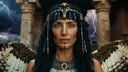
Neftis is the youngest of the children of Geb and Nut, born according to Plutarch on the last of the five days that Thot added to the year. Her Egyptian name, Nebet-Het, means lady of the house or of the enclosure, and that hieroglyph crowns her head in art. The Pyramid Texts always place her next to her sister Isis, forming with her an inseparable couple: if Isis is the day, the word and visible magic, Neftis is the night, silence and the hidden. Married to Set, she does not however share his destructive nature, and in the conflict over Osiris she takes sides against her own husband.
Funerary role and powers of Neftis
When Set dismembers Osiris, Neftis accompanies Isis in the search and reconstruction of the body: the two sisters, in the form of kites, hover over the corpse and mourn it until they restore its breath. That ritual lament was reproduced for centuries by two priestesses in Egyptian funerals, embodying the goddesses before the deceased. Neftis guards the canopic jar of Hapy, which holds the lungs, and protects the coffin from the headboard while Isis watches at the feet. The Coffin Texts invoke her to shelter the soul in its nocturnal journey through the Duat.
Family relations and legacy of Neftis
The most famous myth of Neftis explains the birth of Anubis. According to Plutarch, the goddess impersonated Isis and conceived from Osiris himself the jackal that would embalm him; fearing Set's wrath, she abandoned the newborn, and Isis found him and raised him as her own son. Other Egyptian traditions make Anubis a son of Ra or Set, but Plutarch's version is the one that links the embalmer's lineage with the body he embalms. Sister of Osiris and Isis, wife of Set and mother of Anubis, Neftis is related to the four vertices of the conflict and betrays none except her husband.
Relics
🏺 Sistrum
Symbology
Element
Air
Number
2
Color
Black
Animals
Red kite
Sigils:
🏷️ Traits
Powers
Weaknesses
Behavioral
Resistances
🗺️In the Atlas
Travel the beings’ world of origin and the cosmos of their dimensions.
📜 Mythologies
Egyptian mythology developed in ancient Egypt over more than three millennia, from the predynastic period to the Roman era, and was closely linked to the civilization that inhabited the banks of the Nile. Its beliefs were based on a worldview in which cosmic order, represented by the concept of maat, was maintained through the action of the gods and the performance of rituals by humans. The Egyptian pantheon included numerous local and national deities, among which Ra stood out, associated with the sun and creation, and Osiris, god of resurrection and the underworld, along with other figures such as Isis, Horus, Seth and Amun. Mythological narratives explained the origin of the world, the daily cycle of the sun and the fate of the soul after death, integrating elements of the nature of the Nile valley and astronomical observation. Funerary texts, such as the Book of the Dead, and temple reliefs constitute the main sources for the knowledge of these beliefs. Although official worship declined with the Christianization of Egypt, Egyptian mythology has exerted a lasting influence on art, literature and the Western imagination, and continues to be the subject of study in Egyptology.
Sources
Pyramid Texts
Unknown · -2400
Collection of ancient Egyptian funerary texts inscribed in the pyramids of the Fifth and Sixth Dynasties.
On Isis and Osiris
Plutarch · 100
Treatise by Plutarch (1st-2nd century AD) preserving the most complete account of the Osirian cycle and the Egyptian divine family, interpreted for the Greco-Roman world. A key classical source on Egyptian religion.
Coffin Texts
Unknown · c. 2000 BCE
Egyptian funerary texts inscribed on coffins from the Middle Kingdom.
Frequently asked questions
Who is Neftis and what does her name mean?
She is the youngest of the children of Geb and Nut, and the fourth sister of the generation of Osiris. Her Egyptian name, Nebet-Het, means lady of the house or of the enclosure; the hieroglyph that writes it crowns her head in the representations and identifies her immediately.
Who is Anubis's father?
The most widespread version is that of Plutarch: Nephthys passed herself off as Isis and conceived Anubis from Osiris himself; fearing Set, she abandoned the child, and Isis found him and raised him. Other Egyptian traditions make Anubis son of Ra or of Set, but that of Plutarch is the one that explains why the embalmer ends up embalming his father.
Why does Neftis, wife of Set, help Isis against him?
Although married to Set, Neftis does not share his destructive nature. When he dismembers Osiris, she accompanies Isis in the search for the body and cries over it until she returns his breath to him. She is related to the four vertices of the conflict and does not betray any except her husband.
What is its function in the funerary rites?
Next to Isis she embodies the ritual lament: two priestesses represented them in the Egyptian funerals, hovering over the deceased like kites. Nephthys guards the canopic jar of Hapy, which holds the lungs, and protects the coffin from the headboard while Isis watches at the feet.
🔖Cite this entry▾
If you cite this article in an academic, journalistic or editorial publication, use any of these formats:
Bestiarypedia. (2026, July 26). Nephthys. Bestiarypedia. https://bestiarypedia.com/en/beings/nephthys
Free citation with attribution and canonical link for editorial, academic or journalistic use. Full commercial reuse or creation of derivative products requires prior agreement.
Similar beings
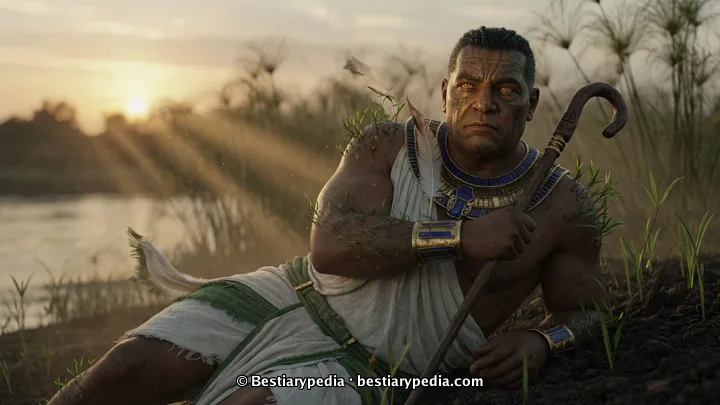
Geb
Geb, Egyptian god of the Earth, son of Shu and Tefnut
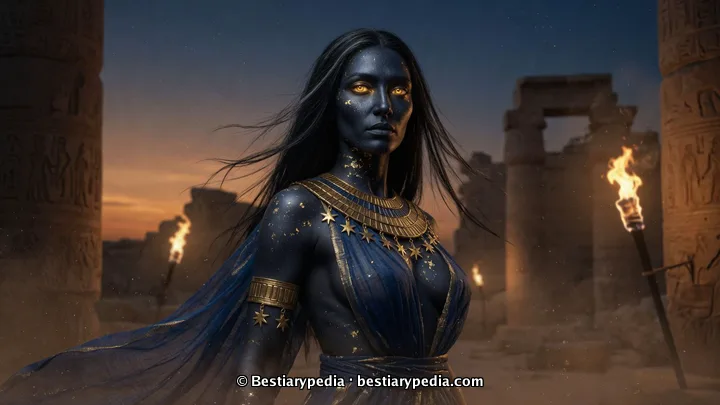
Nut
Nut, Egyptian goddess of the sky who arches over the Earth
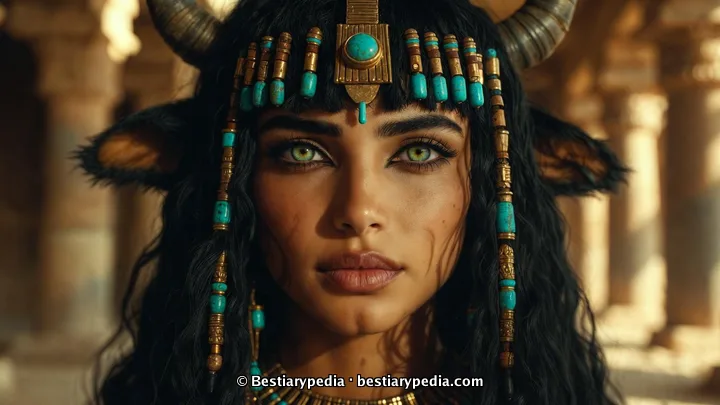
Hathor
Hathor, goddess of love, beauty, music and motherhood in Egyptian mythology
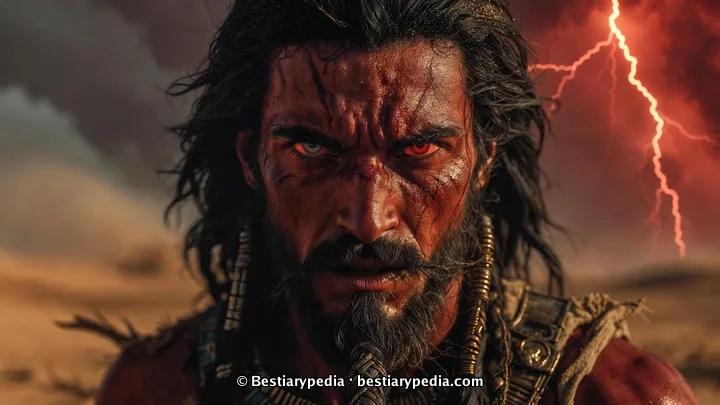
Set
Set, god of chaos, storm and violence in Egyptian mythology
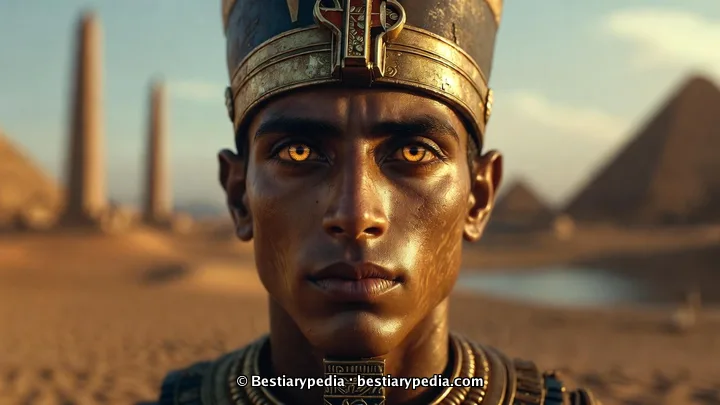
Ra
Ra, Egyptian god of the sun, creator of the world and father of the gods
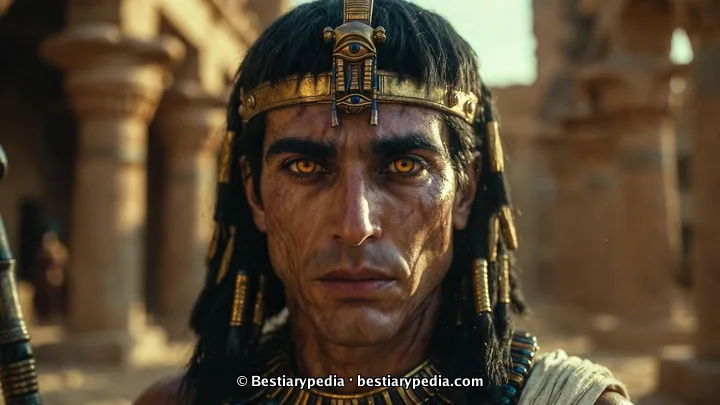
Horus
Horus, god of the sky, kingship and war in Egyptian mythology
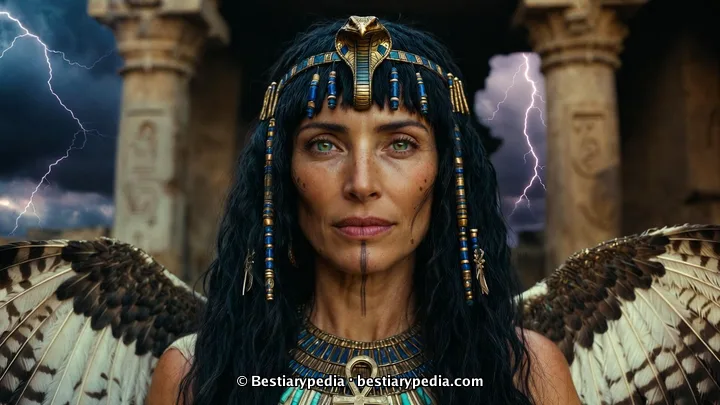
Isis
Isis, Egyptian goddess of motherhood, magic and resurrection
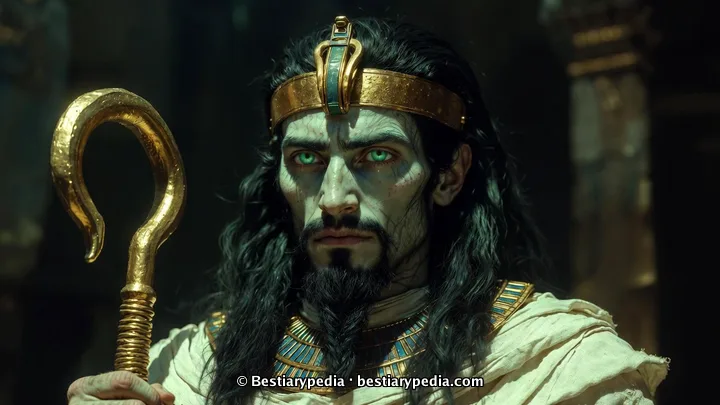
Osiris, Lord of the Dead
Osiris, Lord of the Dead and god of resurrection in Egyptian mythology