Horus
Horus, god of the sky, kingship and war in Egyptian mythology
Curated byBestiarypediaCreated onUpdated on
 Ancient Egypt(Egypt)
Family Tree
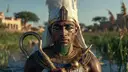
Mythical origins and divine birth of Horus
Horus was born to Isis through magical conception after the murder of Osiris by Set. Protected in the Nile Delta marshes as Harpocrates, he symbolizes eternal renewal and divine protection against primordial chaos. The Pyramid Texts describe his emergence as the legitimate heir who restores cosmic order after his father's death. This narrative emphasizes initial vulnerability transformed into sovereign power, establishing the archetype of the divine king who unites heaven and earth. His non-anthropomorphic origin highlights Isis's intervention as goddess of magic and protective motherhood, founding the Egyptian royal lineage.
The epic battle against Set and recovery of the eye
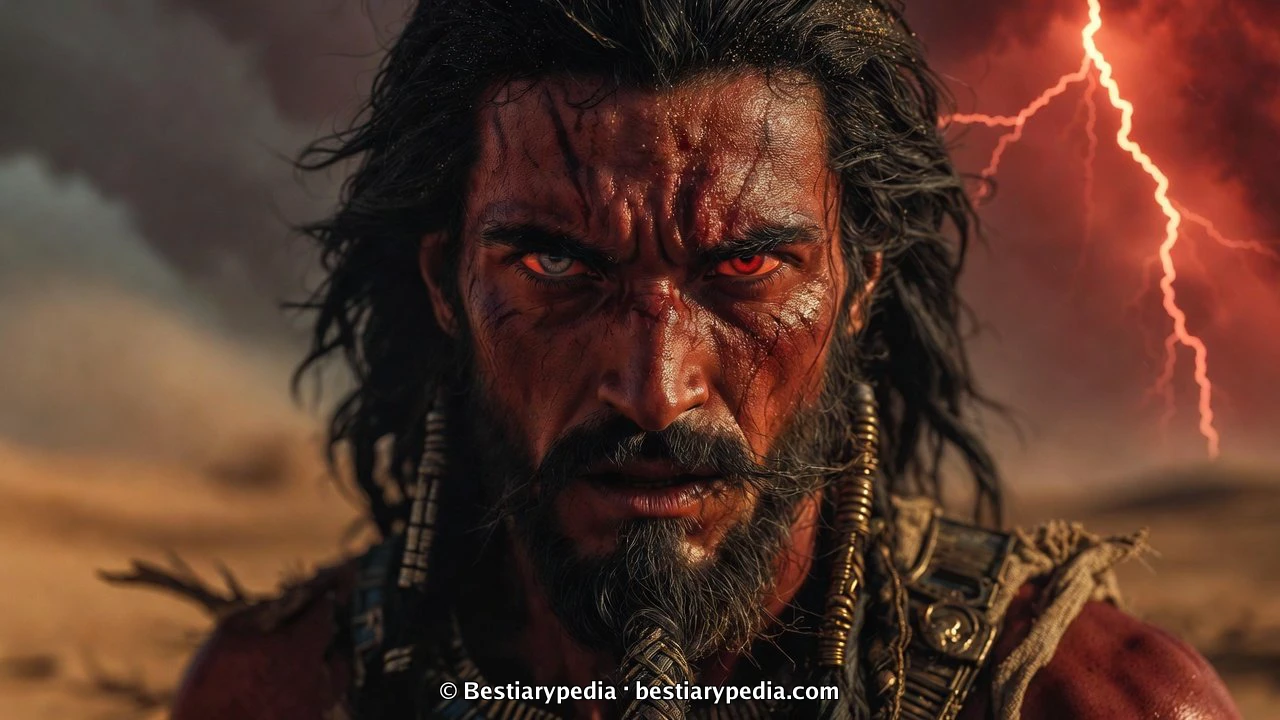
Horus waged legendary battles against Set for Egypt's throne. In intense duels he lost his left eye which he later recovered through divine intervention, symbolizing complete healing and restoration of order. The Coffin Texts recount how this eye became the universal protection symbol known as the Eye of Horus or Wadjet. After final victory the gods proclaimed Horus legitimate king uniting Upper and Lower Egypt under his scepter. This conflict represents the triumph of ma'at over isfet and consolidates the model of divine royal succession that endured for millennia in pharaonic culture.
Falcon symbolism and royal legacy in Egyptian culture
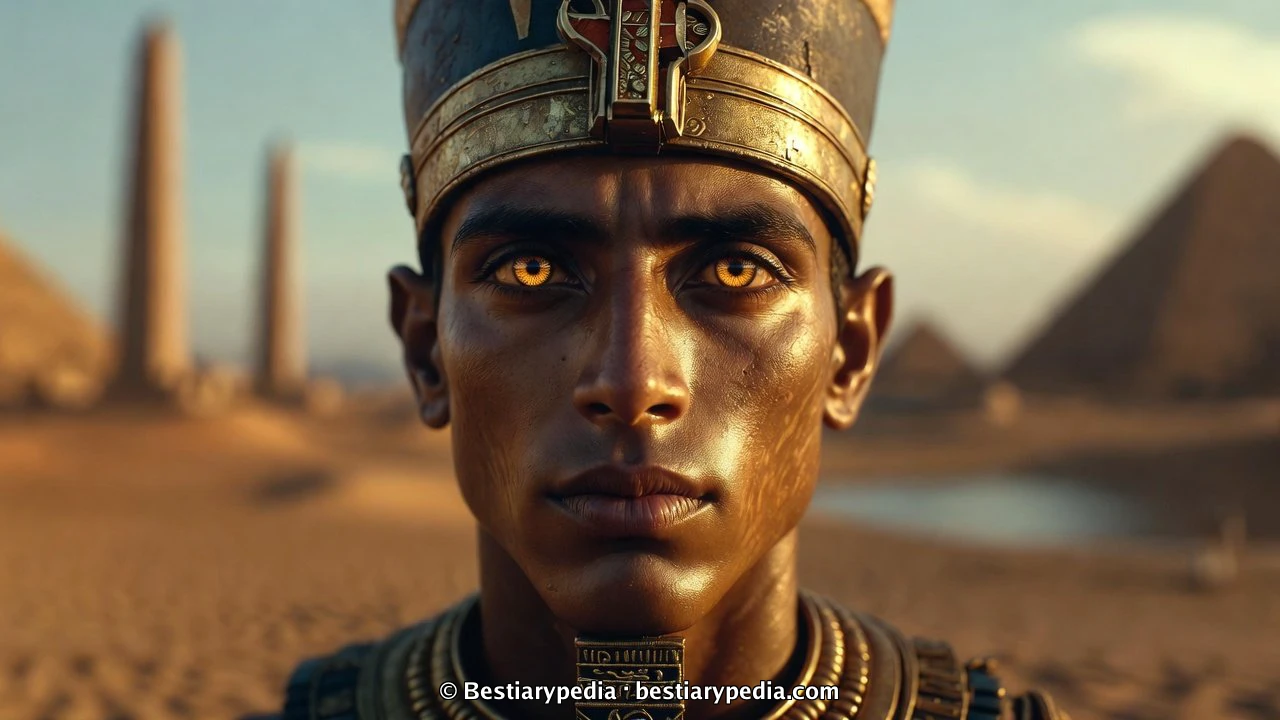
Depicted as a falcon or falcon-headed man Horus embodies divine kingship and celestial vigilance. The Eye of Horus protects against evil and restores health according to Edfu inscriptions and the Pyramid Texts. Every pharaoh incarnated the living Horus legitimizing his authority. His cult in temples like Edfu merged with Ra forming Ra-Harakhti influencing the eternal iconography of ancient Egypt. This legacy endures as a model of sacred monarchy that connects the human with the divine and ensures continuity of cosmic order through the dynasties.
Also known as
Relics
🏺 Eye of Horus (Wadjet)
Protective amulet that restores health and repels evil; mathematical symbol of fractions and wholeness.
🏺 Crook and Flail
Royal symbols of herding and authority, used by pharaohs as incarnations of Horus.
Symbology
Element
Sky
Number
Two (eyes: sun and moon)
Color
Blue and gold
Animals
Falcon
Sigils:
🏷️ Traits
Powers
Weaknesses
Behavioral
Resistances
🔗 Relations with other beings
🗺️In the Atlas
Travel the beings’ world of origin and the cosmos of their dimensions.
📜 Mythologies
Egyptian mythology developed in ancient Egypt over more than three millennia, from the predynastic period to the Roman era, and was closely linked to the civilization that inhabited the banks of the Nile. Its beliefs were based on a worldview in which cosmic order, represented by the concept of maat, was maintained through the action of the gods and the performance of rituals by humans. The Egyptian pantheon included numerous local and national deities, among which Ra stood out, associated with the sun and creation, and Osiris, god of resurrection and the underworld, along with other figures such as Isis, Horus, Seth and Amun. Mythological narratives explained the origin of the world, the daily cycle of the sun and the fate of the soul after death, integrating elements of the nature of the Nile valley and astronomical observation. Funerary texts, such as the Book of the Dead, and temple reliefs constitute the main sources for the knowledge of these beliefs. Although official worship declined with the Christianization of Egypt, Egyptian mythology has exerted a lasting influence on art, literature and the Western imagination, and continues to be the subject of study in Egyptology.
Sources
Edfu Temple Inscriptions
Priests of Edfu · c. 237–57 BCE
Hieroglyphic inscriptions of the Ptolemaic temple of Edfu, carved between c. 237 and 57 BCE and dedicated to the falcon-god Horus. They preserve the myth of Horus' victory over Seth and the ritual drama of the enemy's punishment, a source for the cult of the solar god of Behdet.
Pyramid Texts
Unknown · -2400
Collection of ancient Egyptian funerary texts inscribed in the pyramids of the Fifth and Sixth Dynasties.
On Isis and Osiris
Plutarch · 100
Treatise by Plutarch (1st-2nd century AD) preserving the most complete account of the Osirian cycle and the Egyptian divine family, interpreted for the Greco-Roman world. A key classical source on Egyptian religion.
Coffin Texts
Unknown · c. 2000 BCE
Egyptian funerary texts inscribed on coffins from the Middle Kingdom.
Frequently asked questions
How was Horus conceived if Osiris was already dead?
Isis gathered the pieces of the dismembered body of her husband and, transformed into a kite, perched on him to conceive Horus from a dead man. She gave birth to him and raised him in hiding in the swamps of Jemis, in the Delta, fearing Set. There the child (Harpocrates) suffered all kinds of dangers, including the sting of a scorpion from which Thot saved him: that's why the magical stelae invoke him against the poison.
What role does the recovery of the left eye play in Horus's battle against Set according to the Coffin Texts?
In intense duels Horus lost his left eye which he later recovered through divine intervention, symbolizing complete healing and restoration of order. The Coffin Texts recount how this eye became the universal protection symbol known as the Eye of Horus or Wadjet. After final victory the gods proclaimed Horus legitimate king.
Why was each pharaoh «a living Horus»?
Because the throne of Egypt was understood as the one that Geb awarded to Horus facing Set: whoever reigns does so as his heir. The first of the five names of the pharaoh was, in fact, his name of Horus, written inside the serekh and crowned by the falcon. The living king was Horus; upon dying, he became Osiris and his successor passed to be the new Horus, so that the myth was repeated in each succession.
🔖Cite this entry▾
If you cite this article in an academic, journalistic or editorial publication, use any of these formats:
Bestiarypedia. (2026, July 20). Horus. Bestiarypedia. https://bestiarypedia.com/en/beings/horus
Free citation with attribution and canonical link for editorial, academic or journalistic use. Full commercial reuse or creation of derivative products requires prior agreement.
Similar beings
Nephthys
Nephthys, Egyptian funerary goddess, sister of Isis, wife of Set and mother of Anubis
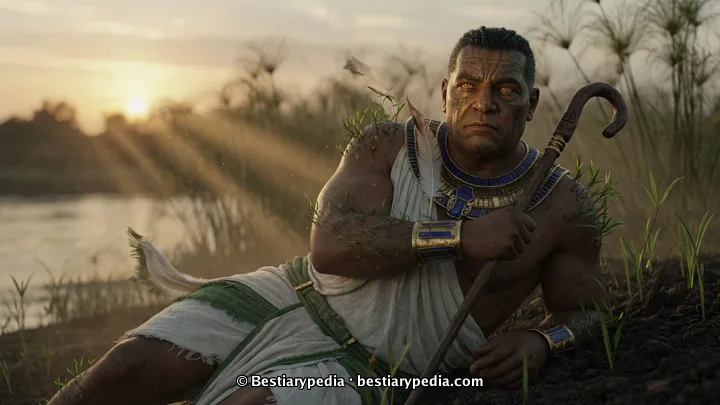
Geb
Geb, Egyptian god of the Earth, son of Shu and Tefnut
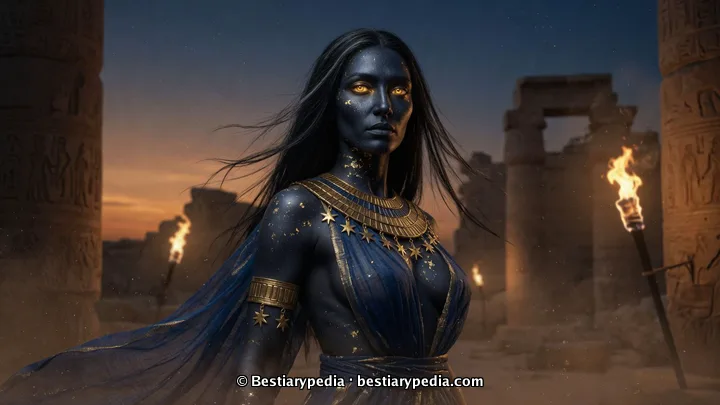
Nut
Nut, Egyptian goddess of the sky who arches over the Earth
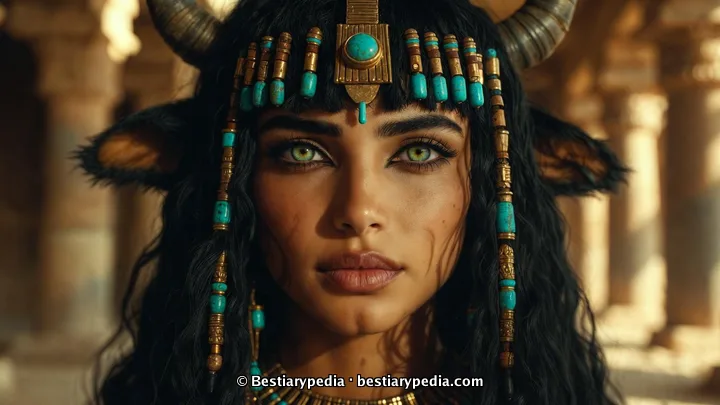
Hathor
Hathor, goddess of love, beauty, music and motherhood in Egyptian mythology
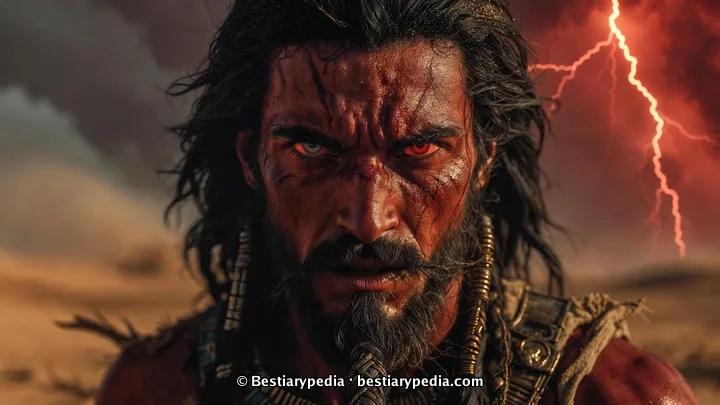
Set
Set, god of chaos, storm and violence in Egyptian mythology
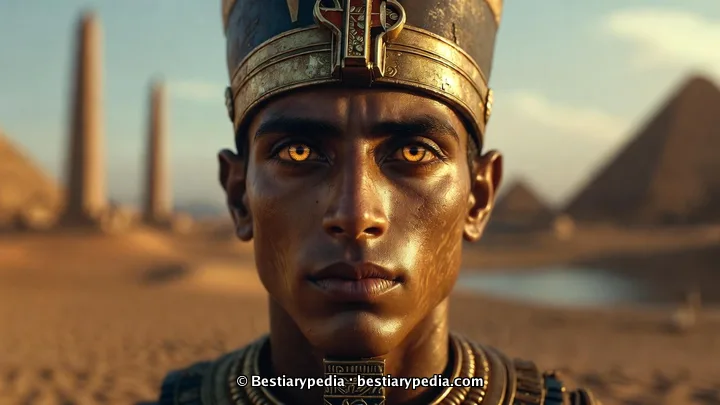
Ra
Ra, Egyptian god of the sun, creator of the world and father of the gods
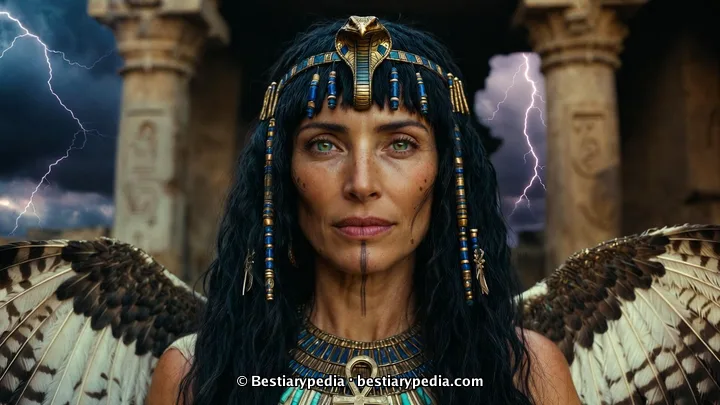
Isis
Isis, Egyptian goddess of motherhood, magic and resurrection
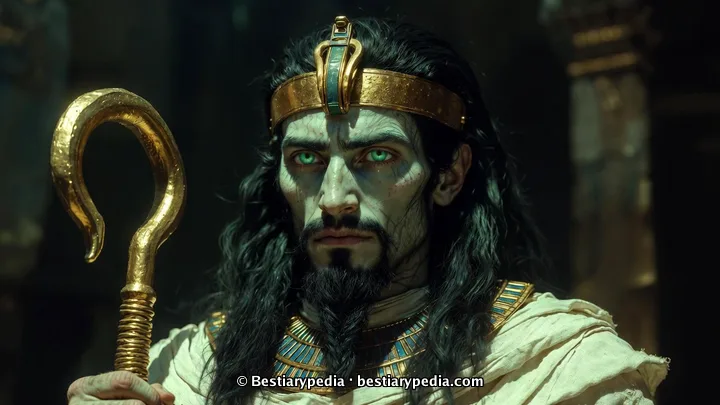
Osiris, Lord of the Dead
Osiris, Lord of the Dead and god of resurrection in Egyptian mythology