Set
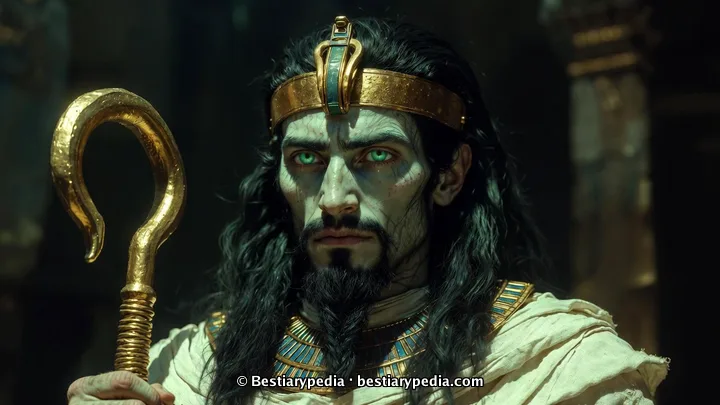
Set, god of chaos, storm and violence in Egyptian mythology
Curated byBestiarypediaCreated onUpdated on
 Ancient Egypt(Egypt)
Genealogy and nature of Set
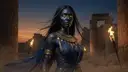
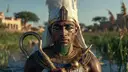
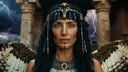
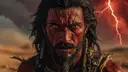
Set (also Seth or Sutekh) is the Egyptian god of the desert, storms, chaos, violence and foreigners. Son of Geb, the earth, and of Nut, the sky, he belongs to the Heliopolitan Ennead together with his siblings Osiris, Isis and Nephthys, the last of whom is his wife. The Pyramid Texts present him as a primordial and turbulent force; according to Plutarch, he was born by tearing himself from his mother's side before his time, a violent origin that foreshadows his character. He embodies the red desert and the tempests, the powers that oppose the cosmic order of Maat, without which, nonetheless, the balance of the world would not be possible.
The conflict with Osiris and Horus
The Osirian myth defines the figure of Set. Envious of the throne of his brother Osiris, he murders him through deceit: he has him lie down in a chest made to his measure, seals it with molten lead and casts it into the Nile. When Isis manages to recover the body, Set tears it into fourteen pieces and scatters the fragments throughout Egypt. From this outrage arises the vengeance of Horus, son of Osiris, in the long dispute known as the Contendings of Horus and Set: an eighty-year lawsuit before the divine tribunal, with combats, ruses and mutual mutilations, which ends with the enthronement of Horus as legitimate king and the defeat of Set.
Defender of Ra's barque
Despite his destructive facet, Set performs an indispensable function in Egyptian cosmology. Each night he travels in the solar barque of Ra through the Duat and, with his spear, strikes down Apophis (Apep), the great serpent of chaos that threatens to devour the sun and prevent its rebirth at dawn. His prodigious strength, the very thing that makes him fearsome, here becomes the guarantee of the continuity of the cosmos. In this ambivalence lies the key to the character: chaotic power and, at the same time, a necessary defender of the solar order against an enemy whom not even the other gods can defeat.
Iconography and cult of Set
Set is represented with the head of the enigmatic "Set animal" (sha), an unidentified creature with a curved, downward snout, tall square-tipped ears and an erect, forked tail; the hippopotamus, the pig and the donkey are also associated with him, along with the red color of the desert. His cult had its center in Ombos (Nubt, near Naqada) and in Upper Egypt, and enjoyed particular favor among the Hyksos, who adopted him as their patron god, as well as under the Ramesside pharaohs, several of whose names (Seti, Sethnakht) invoke him. In later times, after successive foreign dominations, he was progressively demonized and assimilated to the Typhon of the Greeks, enemy of the gods; his images came to be erased from many monuments.
Also known as
Relics
🏺 Set's Spear
Legendary weapon used to dismember Osiris, symbol of divine violence.
Symbology
Element
Storm and Desert
Number
Four
Color
Red
Animals
Set Animal (Straight ears, curved snout), Hippopotamus
Sigils:
🏷️ Traits
Powers
Weaknesses
Behavioral
Resistances
🔗 Relations with other beings
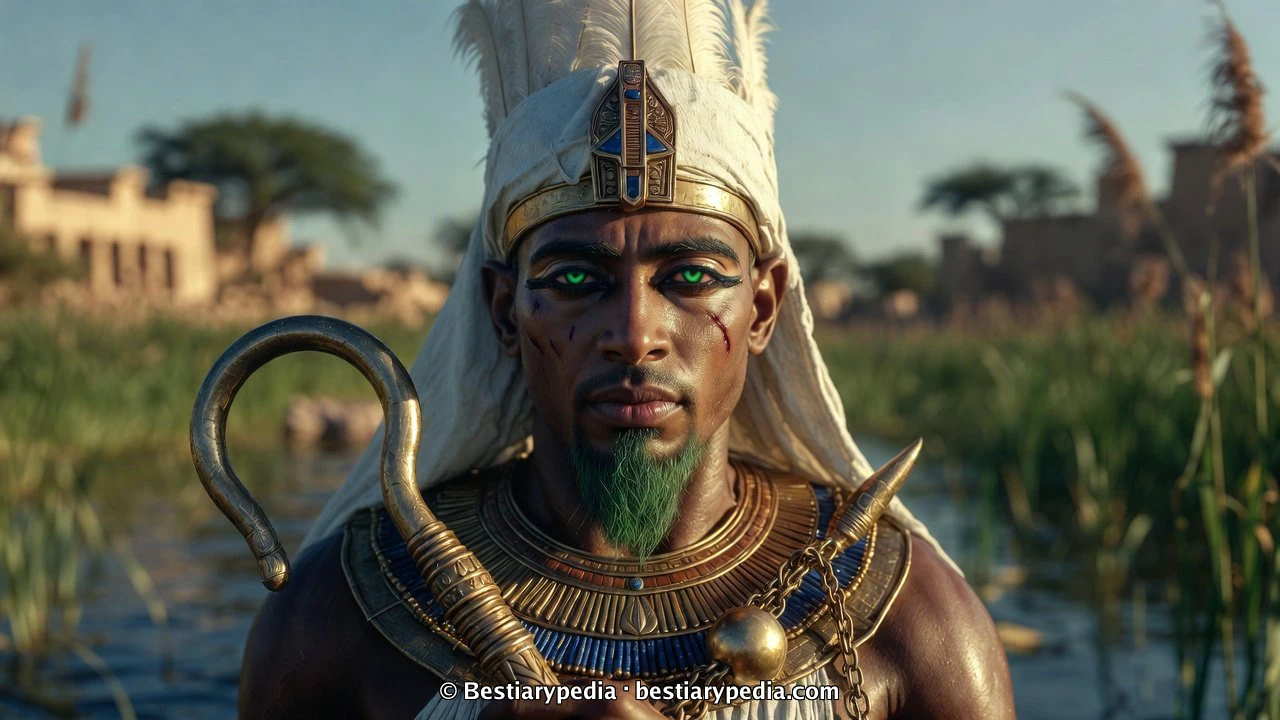
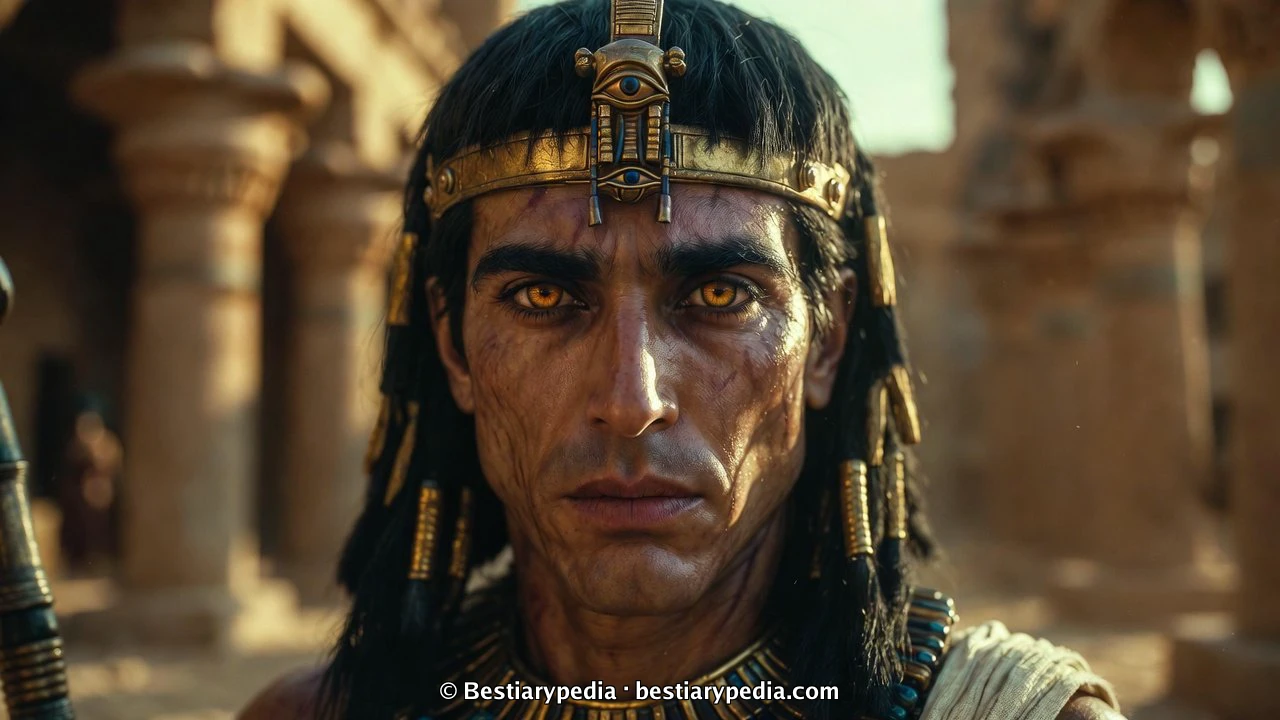
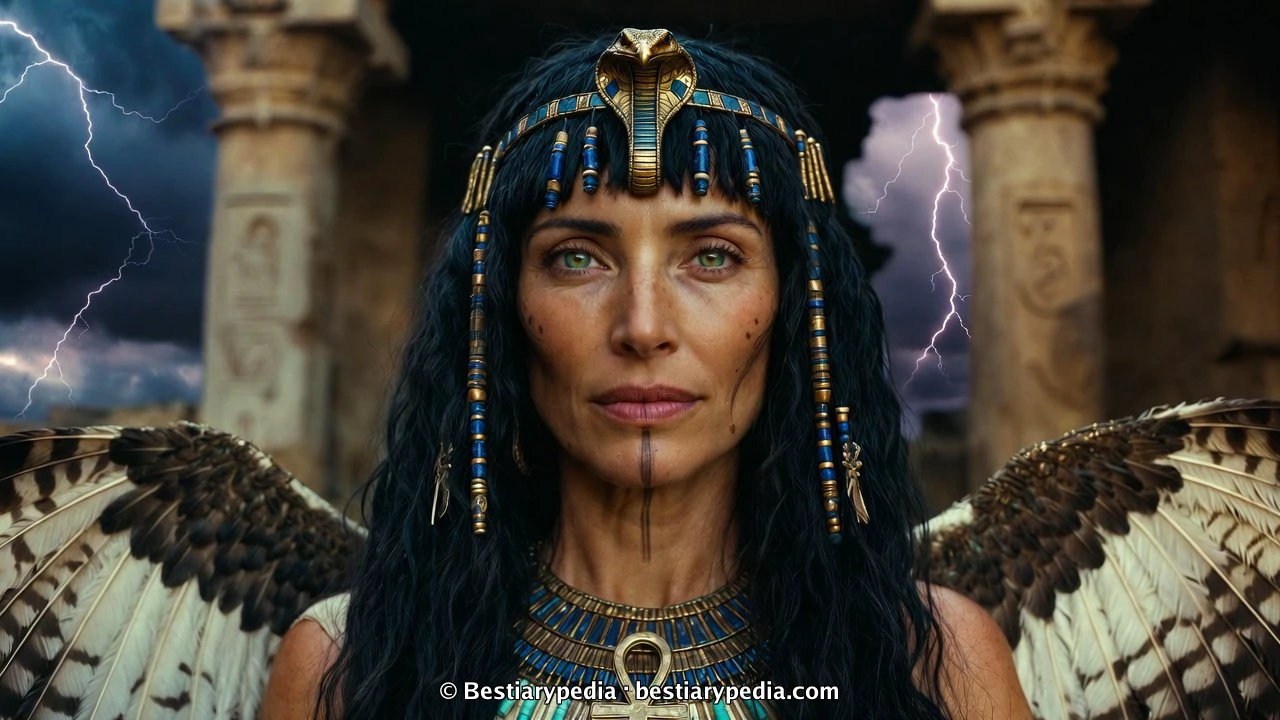
Rival of
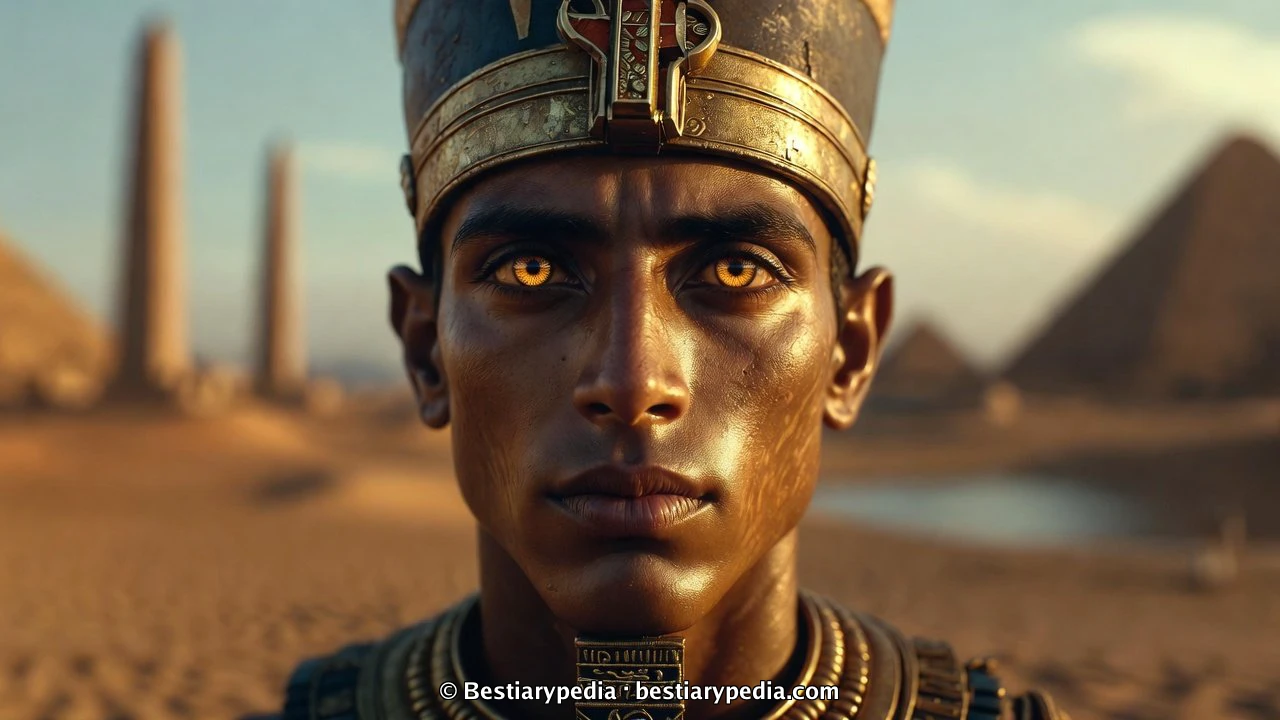
🗺️In the Atlas
Travel the beings’ world of origin and the cosmos of their dimensions.
📜 Mythologies
Egyptian mythology developed in ancient Egypt over more than three millennia, from the predynastic period to the Roman era, and was closely linked to the civilization that inhabited the banks of the Nile. Its beliefs were based on a worldview in which cosmic order, represented by the concept of maat, was maintained through the action of the gods and the performance of rituals by humans. The Egyptian pantheon included numerous local and national deities, among which Ra stood out, associated with the sun and creation, and Osiris, god of resurrection and the underworld, along with other figures such as Isis, Horus, Seth and Amun. Mythological narratives explained the origin of the world, the daily cycle of the sun and the fate of the soul after death, integrating elements of the nature of the Nile valley and astronomical observation. Funerary texts, such as the Book of the Dead, and temple reliefs constitute the main sources for the knowledge of these beliefs. Although official worship declined with the Christianization of Egypt, Egyptian mythology has exerted a lasting influence on art, literature and the Western imagination, and continues to be the subject of study in Egyptology.
Sources
The Contendings of Horus and Seth
Egyptian Tradition · c. 1186–1070 BCE
Egyptian mythological tale from Papyrus Chester Beatty I (20th Dynasty, c. 1186-1070 BCE). It narrates the eighty-year dispute between Horus and Seth over the throne of Egypt before the tribunal of the gods, a key source on Osiris, Isis, Ra and the Egyptian pantheon.
Pyramid Texts
Unknown · -2400
Collection of ancient Egyptian funerary texts inscribed in the pyramids of the Fifth and Sixth Dynasties.
On Isis and Osiris
Plutarch · 100
Treatise by Plutarch (1st-2nd century AD) preserving the most complete account of the Osirian cycle and the Egyptian divine family, interpreted for the Greco-Roman world. A key classical source on Egyptian religion.
Frequently asked questions
What is the origin of Set in the Textos de las Pirámides?
Set appears already in the Texts of the Pyramids as primordial deity, son of Geb and Nut, and brother of Osiris, Isis and Neftis. He embodies the red desert, the storm and the foreign force: everything that remains outside the fertile valley. He is the personification of isfet, the chaos that opposes maat, the order.
What protective role does Set acquire after his contest with Horus?
After losing the contest for the throne, Set comes to defend Ra's solar boat against the serpent Apophis. This role embodies the duality between chaos and order: the same god who murders Osiris becomes indispensable, because only a destructive force can stop the one that threatens to devour the sun.
What attributes and symbols characterize Set's dominion over storms and deserts?
Set rules over storms, deserts, chaos and foreigners. His sacred animal is the Set animal with straight ears and curved snout. He is associated with the color red, metallurgy and brute strength as destructive and protective energy.
Why does the killer of Osiris defend the solar boat of Ra?
It is the great paradox of Set. After losing the throne to Horus, he goes on to travel in the boat of Ra and to repel every night the serpent Apofis, who tries to devour the sun. Egyptian theology does not turn him into a good god: it recognizes that only a destructive force can stop another, and that order needs that violence on its side to survive.
🔖Cite this entry▾
If you cite this article in an academic, journalistic or editorial publication, use any of these formats:
Bestiarypedia. (2026, July 20). Set. Bestiarypedia. https://bestiarypedia.com/en/beings/set
Free citation with attribution and canonical link for editorial, academic or journalistic use. Full commercial reuse or creation of derivative products requires prior agreement.
Similar beings
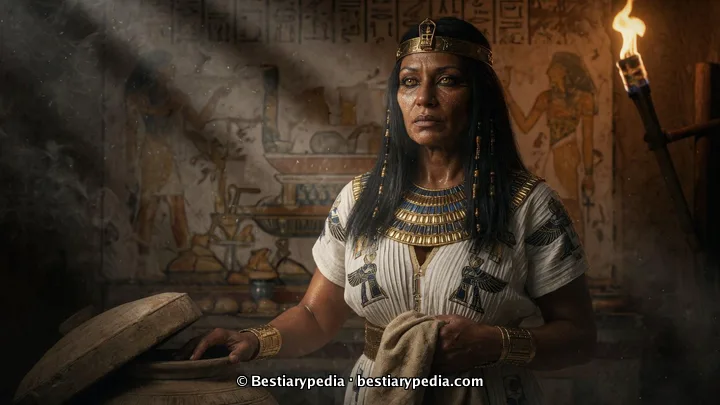
Nephthys
Nephthys, Egyptian funerary goddess, sister of Isis, wife of Set and mother of Anubis
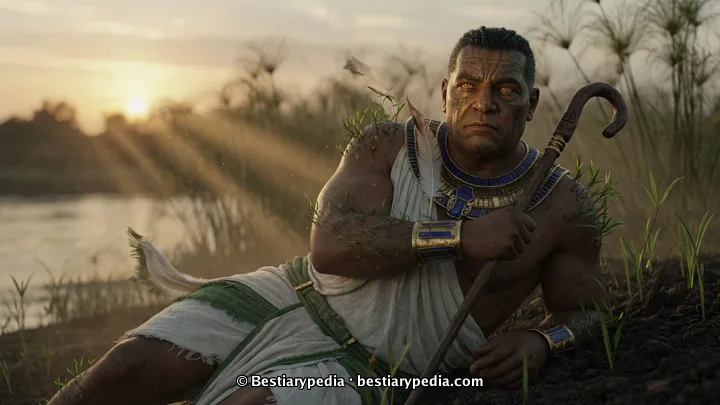
Geb
Geb, Egyptian god of the Earth, son of Shu and Tefnut
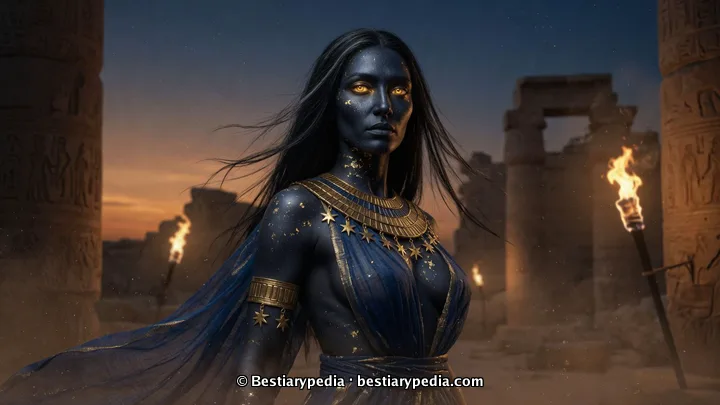
Nut
Nut, Egyptian goddess of the sky who arches over the Earth
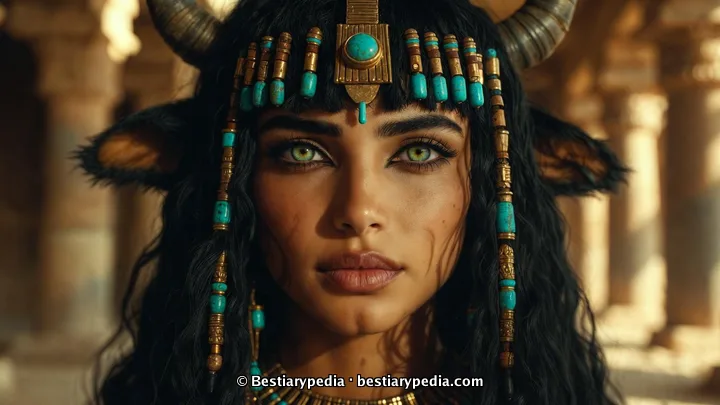
Hathor
Hathor, goddess of love, beauty, music and motherhood in Egyptian mythology
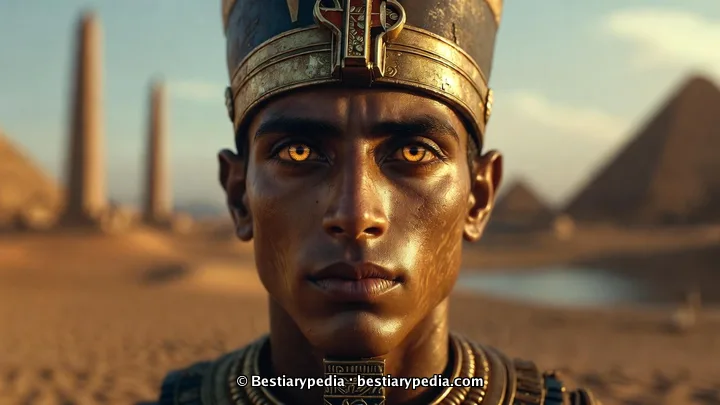
Ra
Ra, Egyptian god of the sun, creator of the world and father of the gods
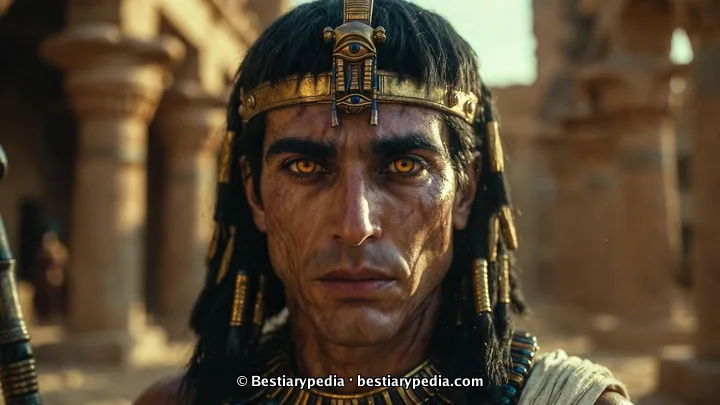
Horus
Horus, god of the sky, kingship and war in Egyptian mythology
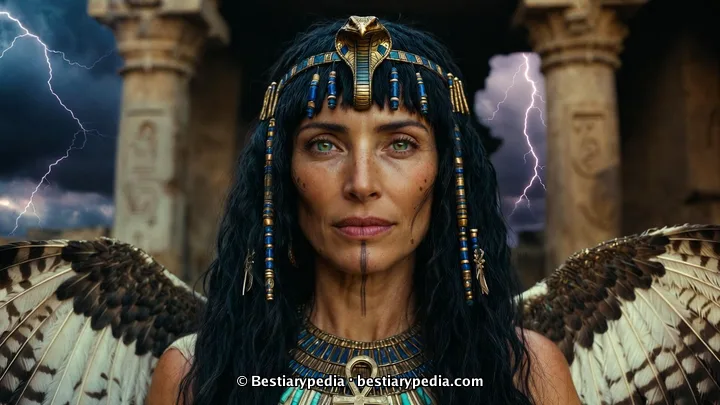
Isis
Isis, Egyptian goddess of motherhood, magic and resurrection
Osiris, Lord of the Dead
Osiris, Lord of the Dead and god of resurrection in Egyptian mythology