Sekhmet
Sekhmet, Egyptian goddess of war, vengeance and healing
Curated byBestiarypediaCreated on
 Ancient Egypt(Egypt)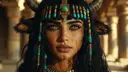
Mythical Origins of Sekhmet as the Eye of Ra
Sekhmet emerged as the fiery eye of Ra, the supreme sun god, to avenge his dishonor against rebellious humans. In the Coffin Texts and Memphite hymns, her creation is described from his saliva or solar light, manifesting as a fierce lioness to bring destruction. This genesis directly links her to solar power and divine justice in the ancient Egyptian pantheon.
Powers and Nature of Sekhmet
Sekhmet wields dominion over war, plagues, and healing fire. Her breath spreads diseases, but her controlled wrath heals and protects. Linked to scorching sun, her lioness form symbolizes untamed might; only Ra could appease her with beer dyed red with ochre mimicking blood. These attributes make her a dual goddess of destruction and restoration in Egyptian mythology.
Key Myths of Sekhmet
In the Destruction of Mankind myth, Ra sends Sekhmet to slaughter ungrateful humans; her bloodlust threatens extinction until Ra tricks her with a 'lake of blood' of beer. She is also a healer in Memphite temples, syncretized with Hathor as a dual goddess. These narratives highlight her role in Egyptian cosmic balance.
Worship and Legacy of Sekhmet
Worshipped in Memphis and Thebes, Sekhmet had thousands of statues to appease her wrath. Festivals involved blood-symbolic wine offerings. Her cult emphasized balance between destruction and healing, influencing ancient Egyptian medicine. This legacy endures in rituals celebrating her protective and vengeful power.
The Festival of Drunkenness and the Memphite triad
Sekhmet's pacification with dyed beer was commemorated each year at the Festival of Drunkenness, in which devotees drank to the point of unconsciousness to the sound of music, reenacting the trick that saved humanity and appeasing the goddess at the start of the Nile flood. In Memphite theology she formed the triad of Memphis alongside her husband Ptah, the craftsman god, and her son Nefertem, the child of the lotus. Her healing side was as important as her vengeful one: her priests, the wabu of Sekhmet, served as physicians, and she was invoked against the very plagues she could send. Amenhotep III dedicated hundreds of black granite statues to her to appease her wrath year after year, one of the largest sculptural ensembles devoted to a single deity.
Also known as
Relics
🏺 Sekhem Scepter
Symbol of power channeling her warrior and healing fury.
Symbology
Element
Fire and Blood
Number
Seven
Color
Solar Red
Animals
Lioness
Sigils:
🏷️ Traits
Powers
Weaknesses
Behavioral
Resistances
🗺️In the Atlas
Travel the beings’ world of origin and the cosmos of their dimensions.
📜 Mythologies
Egyptian mythology developed in ancient Egypt over more than three millennia, from the predynastic period to the Roman era, and was closely linked to the civilization that inhabited the banks of the Nile. Its beliefs were based on a worldview in which cosmic order, represented by the concept of maat, was maintained through the action of the gods and the performance of rituals by humans. The Egyptian pantheon included numerous local and national deities, among which Ra stood out, associated with the sun and creation, and Osiris, god of resurrection and the underworld, along with other figures such as Isis, Horus, Seth and Amun. Mythological narratives explained the origin of the world, the daily cycle of the sun and the fate of the soul after death, integrating elements of the nature of the Nile valley and astronomical observation. Funerary texts, such as the Book of the Dead, and temple reliefs constitute the main sources for the knowledge of these beliefs. Although official worship declined with the Christianization of Egypt, Egyptian mythology has exerted a lasting influence on art, literature and the Western imagination, and continues to be the subject of study in Egyptology.
Sources
Pyramid Texts
Unknown · -2400
Collection of ancient Egyptian funerary texts inscribed in the pyramids of the Fifth and Sixth Dynasties.
The Book of the Heavenly Cow
Scribes of Ancient Egypt · c. 1550 BC
Ancient Egyptian funerary text recounting the myth of the destruction of humankind and Ra's ascent to heaven upon the Heavenly Cow.
Coffin Texts
Unknown · c. 2000 BCE
Egyptian funerary texts inscribed on coffins from the Middle Kingdom.
Frequently asked questions
How did Sekhmet emerge as the fiery eye of Ra in Egyptian myths?
Sekhmet emerged as the fiery eye of Ra to avenge his dishonor against rebellious humans. In the Coffin Texts and Memphite hymns her creation is described from his saliva or solar light. This genesis directly links her to solar power and divine justice.
What dual powers of destruction and restoration does Sekhmet possess according to Egyptian mythology?
Sekhmet wields dominion over war, plagues, and healing fire. Her breath spreads diseases, but her controlled wrath heals and protects. Only Ra could appease her with beer dyed red with ochre mimicking blood, making her a dual goddess of destruction and restoration.
What mythological relationship does Sekhmet maintain with Ra and Hathor in the Egyptian pantheon?
Sekhmet is daughter and avenging eye of Ra, sent to punish rebellious humans. She also represents the fierce war form of Hathor, her peaceful aspect. This duality integrates her into the cosmic balance of the Egyptian pantheon.
What role does Sekhmet play in the cosmic balance of the Egyptian pantheon?
Sekhmet embodies the duality between destruction and restoration in Egyptian mythology. Her cult emphasized balance between war and healing, influencing ancient medicine. This legacy endures in rituals celebrating her protective and vengeful power.
🔖Cite this entry▾
If you cite this article in an academic, journalistic or editorial publication, use any of these formats:
Bestiarypedia. (2026, August 2). Sekhmet. Bestiarypedia. https://bestiarypedia.com/en/beings/sekhmet
Free citation with attribution and canonical link for editorial, academic or journalistic use. Full commercial reuse or creation of derivative products requires prior agreement.
Similar beings
Sobek
Sobek, god of the Nile, fertility and protection in Egyptian mythology
Nephthys
Nephthys, Egyptian funerary goddess, sister of Isis, wife of Set and mother of Anubis
Geb
Geb, Egyptian god of the Earth, son of Shu and Tefnut
Nut
Nut, Egyptian goddess of the sky who arches over the Earth
Hathor
Hathor, goddess of love, beauty, music and motherhood in Egyptian mythology
Set
Set, god of chaos, storm and violence in Egyptian mythology