Hathor
Hathor, goddess of love, beauty, music and motherhood in Egyptian mythology
Curated byBestiarypediaCreated onUpdated on
 Ancient Egypt(Egypt)
Family Tree
Mythical Origins of Hathor
Hathor is one of the oldest and most venerated goddesses of Egypt. Her name, Hut-Hor, means abode of Horus: it is the sky itself inside which the falcon god flies, and hence she is also called his mother or his wife. The Pyramid Texts name her daughter of Ra and Eye of the Sun, the force that the creator sends ahead of himself. She is attributed the title of Lady of the West, the one who receives the setting sun and with it the deceased in the necropolis. As a celestial cow she nurses the pharaoh with her divine milk, a gesture that makes him son of the gods and legitimizes his reign.
Nature and Attributes of Hathor
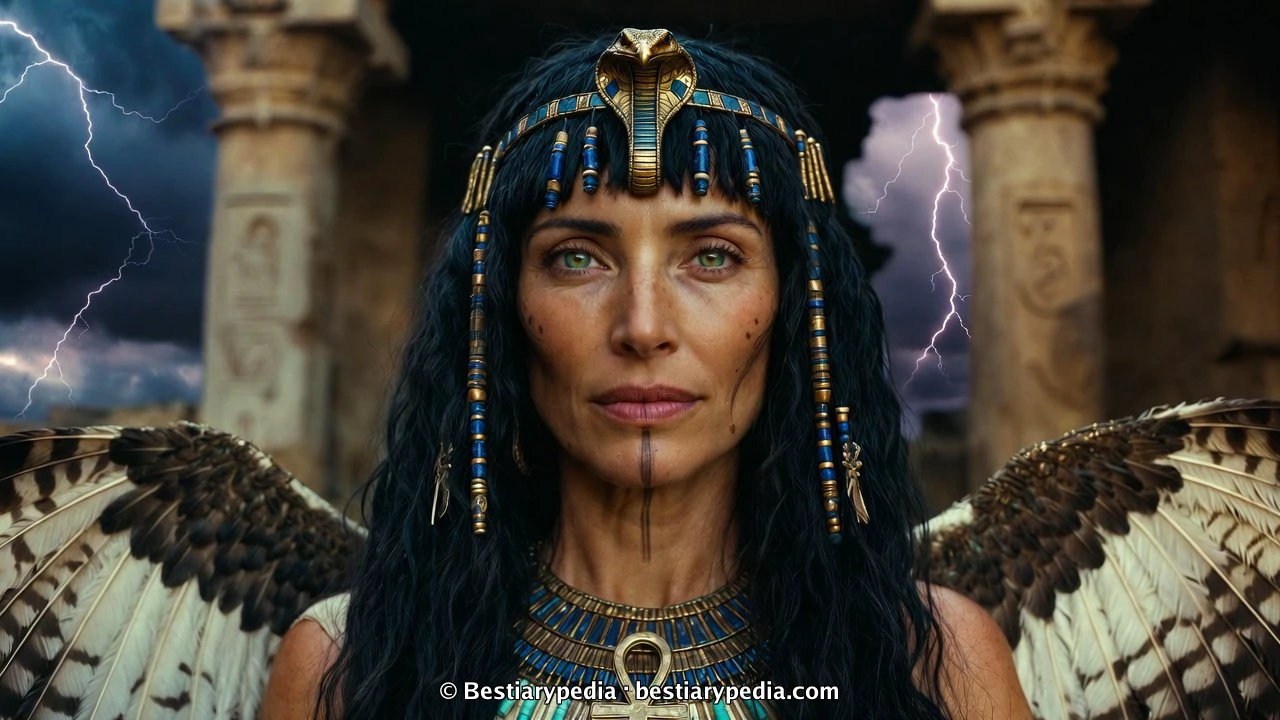
Lady of music, dance, love and intoxication, Hathor shakes the sistrum, ritual rattle whose tinkling wards off evil, and the menat collar. She is represented as a cow, as a woman with horns framing the solar disk, or as a frontal face with bovine ears on the capitals of her temples. The other face of that sweetness is fierce: the Book of the Celestial Cow narrates how Ra, weary of human rebellion, sends his Eye against men, and Hathor transforms into the lioness Sekhmet and reaps so many lives that she threatens to extinguish humanity. Only dyeing the beer red and making her drink it, deceiving her with blood, stops the slaughter.
Cult and Legacy of Hathor
Her major temple rises in Dendera, where each year the goddess's barque sailed up the Nile to Edfu for the Festival of the Beautiful Encounter with Horus. The festivals of intoxication commemorated with music, beer and dance the night when Sekhmet was appeased. Her cult was transversal like few others: it was served by priestesses and musicians, and women who asked for a child, miners from Sinai, sailors and foreigners came to it. In the Theban necropolis she emerges from the mountain as a cow to welcome the dead. The Greeks identified her with Aphrodite, and her face with bovine ears remains one of the visual emblems of Egypt.
Also known as
Relics
🏺 Hathor's Sistrum
Metal rattle producing protective and euphoric sound in rituals.
🏺 Hathor's Menat
Ceremonial necklace with counterweight, symbol of power and joy.
Symbology
Element
Copper
Number
Seven
Color
Turquoise
Animals
Cow, Lioness
Sigils:
🏷️ Traits
Powers
Weaknesses
Behavioral
Resistances
🔗 Relations with other beings
🗺️In the Atlas
Travel the beings’ world of origin and the cosmos of their dimensions.
📜 Mythologies
Egyptian mythology developed in ancient Egypt over more than three millennia, from the predynastic period to the Roman era, and was closely linked to the civilization that inhabited the banks of the Nile. Its beliefs were based on a worldview in which cosmic order, represented by the concept of maat, was maintained through the action of the gods and the performance of rituals by humans. The Egyptian pantheon included numerous local and national deities, among which Ra stood out, associated with the sun and creation, and Osiris, god of resurrection and the underworld, along with other figures such as Isis, Horus, Seth and Amun. Mythological narratives explained the origin of the world, the daily cycle of the sun and the fate of the soul after death, integrating elements of the nature of the Nile valley and astronomical observation. Funerary texts, such as the Book of the Dead, and temple reliefs constitute the main sources for the knowledge of these beliefs. Although official worship declined with the Christianization of Egypt, Egyptian mythology has exerted a lasting influence on art, literature and the Western imagination, and continues to be the subject of study in Egyptology.
Sources
Dendera Inscriptions
Priests of Dendera · Ptolemaic Dynasty, c. 300 BCE
Reliefs and hieroglyphic inscriptions of the temple of Hathor at Dendera (Ptolemaic period). They document the myths, rites and festivals of the goddess Hathor and the late Egyptian pantheon, an essential epigraphic source of ancient Egyptian religion.
Pyramid Texts
Unknown · -2400
Collection of ancient Egyptian funerary texts inscribed in the pyramids of the Fifth and Sixth Dynasties.
The Book of the Heavenly Cow
Scribes of Ancient Egypt · c. 1550 BC
Ancient Egyptian funerary text recounting the myth of the destruction of humankind and Ra's ascent to heaven upon the Heavenly Cow.
Frequently asked questions
What does the name Hathor mean?
Hut-Hor means dwelling of Horus. Hathor is the sky itself in whose interior the falcon god flies, and for that reason she is called indistinctly his mother or his wife. The Pyramid Texts also name her daughter of Ra and Eye of the Sun.
Is it true that Hathor and Sekhmet are the same goddess?
The Book of the Celestial Cow tells that Ra, tired of the rebellion of the men, sent his Eye against them: Hathor then transformed into the lioness Sekhmet and killed with such fury that she threatened to extinguish humanity. Sekhmet is his destructive face, not a foreign goddess.
How was Sekhmet's massacre stopped?
With a deception. The gods dyed red thousands of jars of beer and poured them over the earth; the lioness, believing that it was blood, drank it until getting drunk and remained asleep. Upon awakening she had returned to being Hathor. The drunkenness festivals commemorated that night with music and beer.
Where was she worshiped and who attended her cult?
Her major temple is in Dendera, from where her boat went up the Nile to Edfu every year for the Feast of the Beautiful Encounter with Horus. She was served by priestesses and musicians, and women who asked for a son, miners of the Sinai, sailors and foreigners came to her. The Greeks identified her with Aphrodite.
🔖Cite this entry▾
If you cite this article in an academic, journalistic or editorial publication, use any of these formats:
Bestiarypedia. (2026, July 26). Hathor. Bestiarypedia. https://bestiarypedia.com/en/beings/hathor
Free citation with attribution and canonical link for editorial, academic or journalistic use. Full commercial reuse or creation of derivative products requires prior agreement.
Similar beings
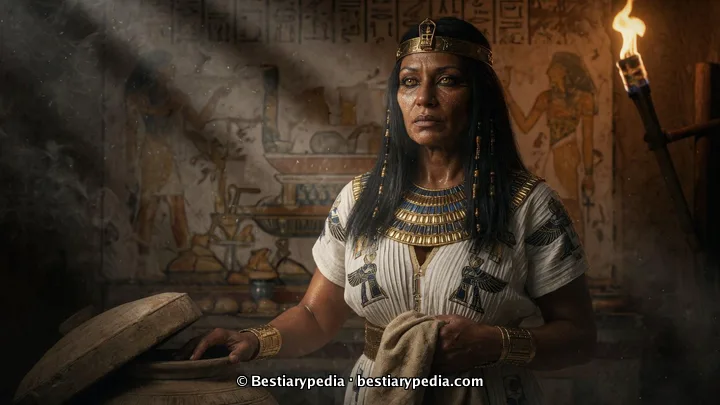
Nephthys
Nephthys, Egyptian funerary goddess, sister of Isis, wife of Set and mother of Anubis

Geb
Geb, Egyptian god of the Earth, son of Shu and Tefnut
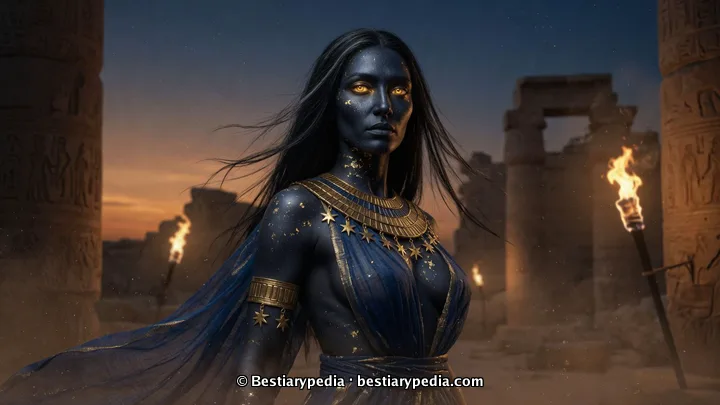
Nut
Nut, Egyptian goddess of the sky who arches over the Earth

Set
Set, god of chaos, storm and violence in Egyptian mythology
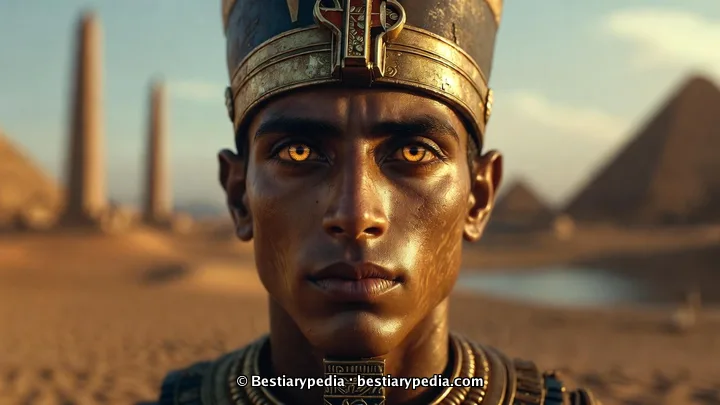
Ra
Ra, Egyptian god of the sun, creator of the world and father of the gods
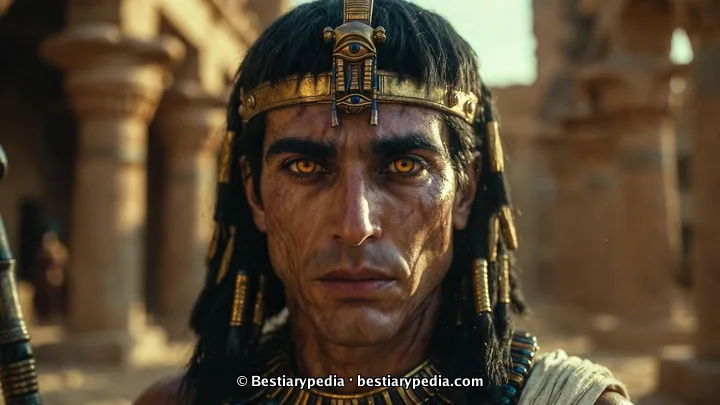
Horus
Horus, god of the sky, kingship and war in Egyptian mythology
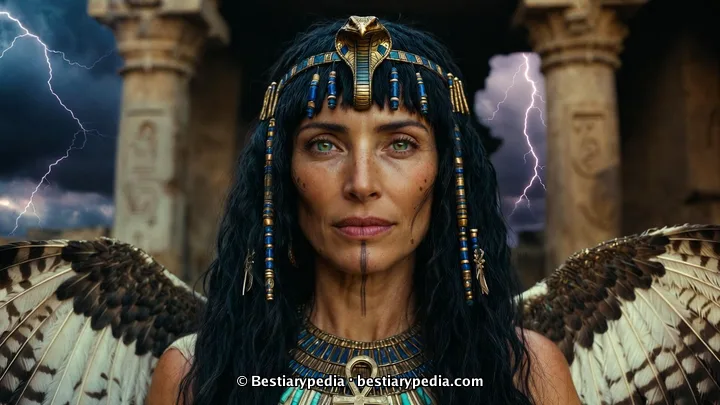
Isis
Isis, Egyptian goddess of motherhood, magic and resurrection
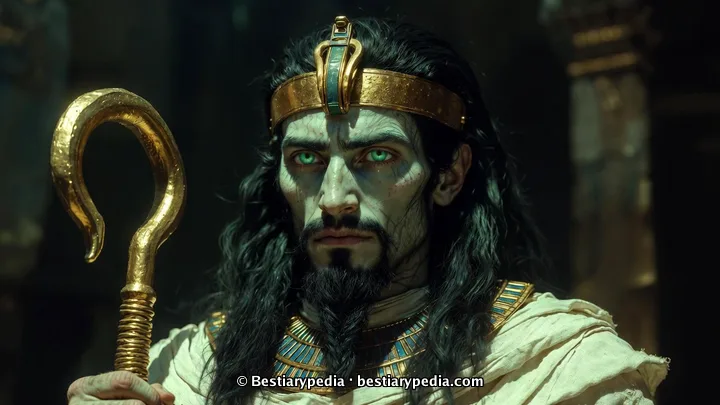
Osiris, Lord of the Dead
Osiris, Lord of the Dead and god of resurrection in Egyptian mythology