Gello
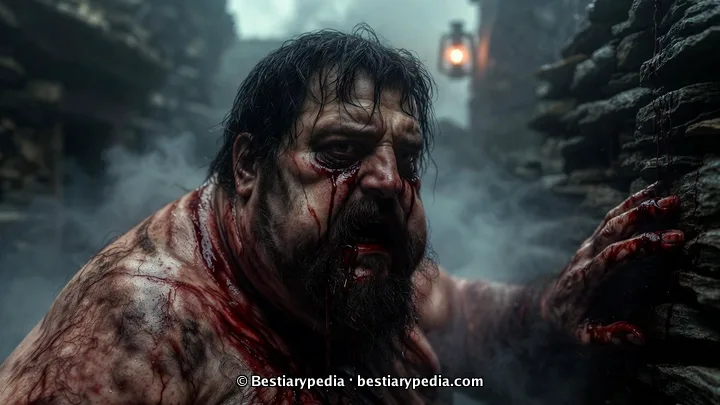
Gello, Greek spirit who kills newborns
Curated byBestiarypediaCreated onUpdated on
 Ancient Greece(Greece)

Origins and documentary continuity of Gello
Gello first appears in a fragment of Sappho from the 7th century BCE where she is mentioned as a harmful spirit. The Suda, a 10th-century Byzantine lexicon, records her name and several of her aliases. Michael Psellos in De operatione daemonum describes her demonic attributes and Byzantine exorcisms preserve lists of her twelve and a half names. This documentary chain extends without interruption to the folklore of Greek villages in the 20th century, almost three thousand years of persistence of the same belief in a specter that kills newborns. This long continuity underscores Gello's importance as evidence of the endurance of ancient Greek beliefs into the medieval and modern eras without fundamental change in her nature as a slayer of newborns.
Nature, powers and names of Gello
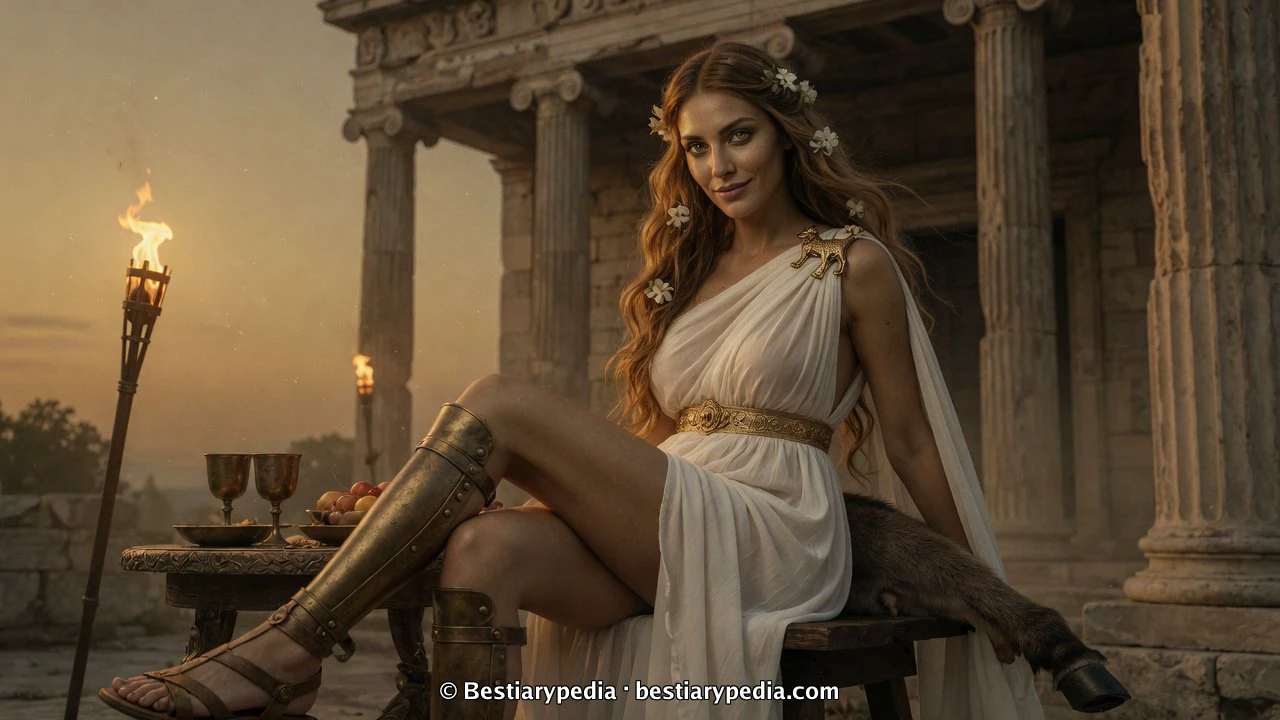
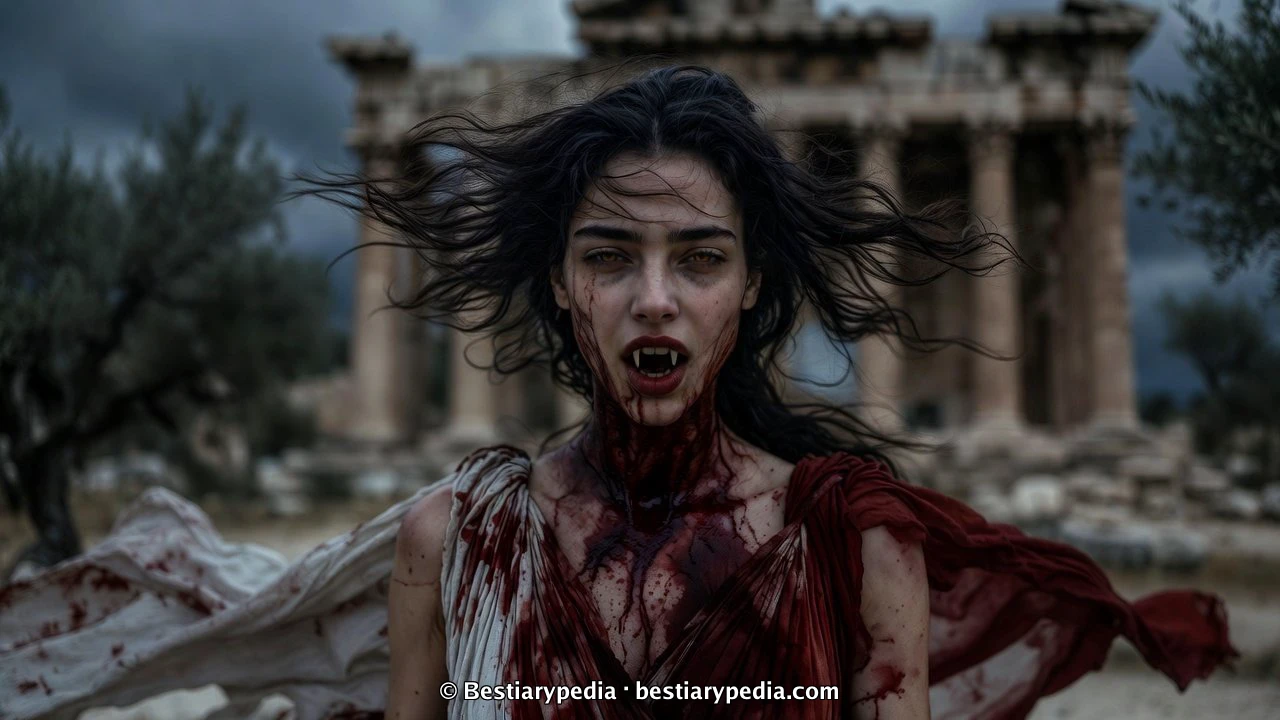
According to tradition Gello was a young woman who died a virgin and without offspring, so she envies and kills the children of other women. In the Byzantine sphere twelve and a half names were attributed to her; whoever managed to recite them all succeeded in driving her away. This belief generated written amulets with the complete list that were placed in cradles. Her ability to attack childbirths and newborns directly links her to maternal protection and makes her one of the most persistent figures in European folklore of vampiric specters. Her power manifests in the intense jealousy that drives her to target infants, reflecting the symbolism of the barren woman turned vengeful entity.
Relations with other entities and symbolism
Gello shares traits with Lamia and with the Jewish Lilith because of her hostility toward mothers and childbirths. Her condition as a dead woman who returns directly connects her with the vrykolakas, the Greek vampire. The amulets with the twelve and a half names, the cradles and the figure of the woman who was not a mother constitute her main symbolism. This continuity from archaic Greece to modern folklore makes her a central piece for understanding the dark vein of Greek mythology and its persistence in the European imaginary. Her cultural relations with similar entities highlight the continuity of beliefs across different civilizations.
Relics
🏺 Amulet of the twelve names
Amulet inscribing the twelve and a half names of Gyllou to ward off her attack on newborns.
Symbology
Element
Shadow
Number
12
Color
Black
Animals
Serpent
Sigils:
🏷️ Traits
Powers
Weaknesses
Behavioral
Resistances
🔗 Relations with other beings
🗺️In the Atlas
Travel the beings’ world of origin and the cosmos of their dimensions.
📜 Mythologies
Greek mythology developed in Ancient Greece from the Late Bronze Age and reached its most elaborate form during the archaic and classical periods, between the 8th and 4th centuries BCE. It emerged among the Hellenic peoples who inhabited the Greek peninsula, the Aegean islands and the coasts of Asia Minor, and was transmitted mainly through the oral poetry of Homer and Hesiod, as well as local traditions collected in sanctuaries and festivals. Its worldview presents a universe ordered by a hierarchy of divinities that intervene in human and natural affairs, with Olympus as the dwelling of the principal gods and Hades as the destination of the deceased. The central deities include the twelve Olympians, headed by Zeus, god of the sky and sovereign, together with Hera, Poseidon, Athena, Apollo, Artemis, Aphrodite, Ares, Hephaestus, Hermes, Demeter and Dionysus. Before them, the Titans, among whom Cronus and Rhea stand out, ruled the cosmos until they were deposed by the Olympians in the Titanomachy. Other important entities are the Muses, the nymphs, the Cyclopes and the Moirai, who embody cosmic forces and destinies. This tradition exerted a lasting influence on the literature, art and thought of Rome, the European Renaissance and subsequent Western culture, supplying motifs, characters and narrative structures that have endured in philosophy, astronomy and the arts to the present day.
Sources
Fragments of Sappho
Sappho of Lesbos · 7th c. BCE
Surviving fragments of the Greek poet Sappho of Lesbos (7th century BC), lyric verse invoking gods and powers of love.
On the Operation of Demons
Michael Psellos · 1050
11th-century Byzantine treatise by Michael Psellos describing the attributes of demons including Gello.
Suda
Anonymous Byzantine · c. 1000
Tenth-century Byzantine encyclopedic lexicon compiling entries on Greek mythology.
Frequently asked questions
When did Gello first appear in written records?
Gello first appeared in a fragment of Sappho in the 7th century BCE. The Suda and Michael Psellos document her continuity in the Byzantine era.
How many names are attributed to Gello in Byzantine tradition?
Twelve and a half names were attributed to her. Whoever recited them all drove her away according to Byzantine amulets.
With which entities is Gello connected due to her nature as a returning dead woman?
She connects directly with the vrykolakas, the Greek vampire, because of her return after death.
🔖Cite this entry▾
If you cite this article in an academic, journalistic or editorial publication, use any of these formats:
Bestiarypedia. (2026, August 3). Gello. Bestiarypedia. https://bestiarypedia.com/en/beings/gello
Free citation with attribution and canonical link for editorial, academic or journalistic use. Full commercial reuse or creation of derivative products requires prior agreement.