Vrykolakas
Vrykolakas, the Greek vampire of the improperly buried corpse
Curated byBestiarypediaCreated onUpdated on
 Greek Islands(Greece)Ancient Greece(Greece)
⇄ Cultural variants (3)
4 beings in the lineage
Origins of the Vrykolakas
The vrykolakas (βρυκόλακας) is the reanimated dead of Greek folklore, a revenant whose name, of Slavic origin, shares root with other vampiric terms of the Balkans. According to tradition, he who died in a state of impurity or under curse became vrykolakas: the excommunicated by the Church (to whom it was believed that the earth did not accept), those who died without being baptized or of violent death, the suicides, or those who had led a perverse life. A particular belief held that also could become vrykolakas he who had eaten the flesh of an animal dead by a wolf. The Orthodox Church, which considered the incorruption of the body an ambiguous sign, contributed to fix the belief that certain deceased did not find rest.
Appearance and characteristics
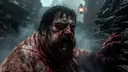
Unlike the pale and emaciated vampire of literature, the vrykolakas is described as a swollen and tense corpse, with darkened, reddish or purplish skin, with the body swollen by the gases of decomposition, an aspect that ethnography relates to the real observation of corpses. It is attributed a fully corporeal nature: it is not a ghost, but a tangible body endowed with superhuman strength, capable of forcing doors. It wanders at night and, in some traditions, knocks on the doors of houses and pronounces the name of its inhabitants; it was believed that answering the first call brought death, so it was recommended to always wait for the second. Its proximity brought illness, nightmares and misfortune to the community.
Powers and weaknesses
The vrykolakas spreads epidemics and deaths in the village, exhausts the living, attacks the livestock and is accused of sitting on the chest of the sleepers. It is attributed a strength much superior to the human and a growing virulence with the passage of time if it is not destroyed. Among its limits, tradition points out its inability to act during the day, when it must remain in the tomb, and the protective power of Christian symbols, holy water and the crowing of the rooster at dawn. Its activity was especially associated with the islands of the Aegean, where beliefs were particularly intense, as attested by accounts collected by European travelers of the seventeenth and eighteenth centuries.
Destruction and legacy
To put an end to a vrykolakas the corpse was exhumed, often on Saturday, the day on which tradition held that the revenant had to remain in its tomb. The methods included driving a stake into the body, beheading it or, especially on the islands, incinerating it completely, something that clashed with Orthodox doctrine on bodily resurrection and caused tensions with the Church. The scholar León Allacio described these beliefs in his treatise De Graecorum hodie quorundam opinationibus (1645), one of the oldest sources on the subject. The vrykolakas is counted among the folkloric antecedents of the modern vampire and constitutes the Greek variant of a figure common to all the Balkans, related to the Romanian strigoi and the Slavic upir.
Also known as
Relics
🏺 Hawthorn Stake
🏺 Burial Shroud
Symbology
Element
Earth
Number
40
Color
Red
Animals
Pig, Wolf
Sigils:
🏷️ Traits
Powers
Weaknesses
Behavioral
Resistances
🗺️In the Atlas
Travel the beings’ world of origin and the cosmos of their dimensions.
📜 Mythologies
Post-classical Greek folklore includes kallikantzaroi winter goblins, nereids water nymphs, orei mountain spirits, kaloi ghosts, nepheles cloud beings, vrykolakas vampires, rooted in Byzantine and Ottoman-era traditions across Aegean islands and Peloponnese.
Sources
Necromantia Graecorum
Leo Allatius · 1645
Leo Allatius' letter (1645) describes the vrykolakas as a grave-returning corpse in Orthodox Greece, detailing origins from outcasts and destruction methods.
The Vampire, His Kith and Kin
Montague Summers · 1928
Montague Summers' book (1928) compiles historical accounts of the vrykolakas, citing Allatius and describing powers, weaknesses, and Balkan folklore links.
Frequently asked questions
What circumstances cause the Vrykolakas to arise according to Greek folklore?
It arises from corpses of excommunicates, suicides, violent death victims or those who ate impure meat. The body remains forty days in the grave swelling and emitting sounds. After this period it emerges to prey on the living.
What physical attributes and abilities distinguish the Vrykolakas from other undead?
It appears as a swollen corpse with red or blue skin, bulging eyes, rapidly growing nails and hair. It possesses tenfold human strength, supernatural speed and emits pig-like sounds. Its body is tangible and leaves physical marks.
What cultural relationship does the Vrykolakas maintain with the Romanian strigoi in Balkan folklore?
It is a cultural parallel of the strigoi. Both arise from improperly buried corpses failing Orthodox rites. They are voracious in draining blood or mora, spread plagues and are destroyed by Saturday exhumation, heart stake, decapitation and burning.
What symbolic elements and rituals characterize the destruction of the Vrykolakas?
The grave is exhumed on Saturday, a hawthorn stake driven into the heart, the head severed between the feet and the body burned. Alternatives include holy water or a gold coin in the mouth. These rites blend Orthodox Christian beliefs with ancient Greek pagan remnants.
🔖Cite this entry▾
If you cite this article in an academic, journalistic or editorial publication, use any of these formats:
Bestiarypedia. (2026, July 26). Vrykolakas. Bestiarypedia. https://bestiarypedia.com/en/beings/vrykolakas
Free citation with attribution and canonical link for editorial, academic or journalistic use. Full commercial reuse or creation of derivative products requires prior agreement.