Lilith
Lilith, the first rebellious woman and queen of demons
Curated byBestiarypediaCreated onUpdated on
 Mesopotamia(Iraq)
 Holy Land(Israel)
Family Tree






Mythical Origins of Lilith
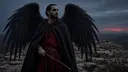
Lilith, in ancient Jewish and Kabbalistic traditions, is considered the first woman created from the same earth as Adam, making her his equal partner in creation. She refused to submit to him in intercourse, demanding equality, and pronounced the Greatest Name of God, which granted her supernatural power to fly away from the Garden of Eden toward the Red Sea of Demons. There, in dark caves, she joined demons and fallen angels, becoming a symbol of female rebellion and independence from patriarchal male authority, as recounted in the Alphabet of Ben Sira from the 8th century.
Appearance: what is attested and what was added
The ancient texts say far less about her than modern imagery takes for granted. The Talmud gives her long hair (Eruvin 100b) and wings (Niddah 24b), and warns against sleeping alone in a house for fear of her (Shabbat 151b); in Bava Batra 73a a demon appears who is called the son of Lilith. The incantation bowls of Nippur, between the fifth and seventh centuries, draw her frontally, naked and with bound feet, ringed by the formula that expels her. The Zohar pairs her with Samael and places her among the qelipot, the shells that enclose the divine spark.
The rest is recent and worth dating. The bat wings and cloven feet come from Christian iconography of the devil and from the Romantic print of the nineteenth century; the inverted pentagram was popularised by Éliphas Lévi in 1855; the owl comes from so translating the lilit of Isaiah 34:14 and from the Burney Relief, whose identification with her was discarded decades ago. None of that is in Ben Sira, in the Talmud, or in the Zohar.
Offspring, incantation and modern reception
Lilith is the mother of the lilim, the host of demons that attacks newborns and men who sleep alone. Against her, Ashkenazi folklore hung beside the cradle amulets bearing the names of the three angels the Alphabet of Ben Sira sends after her, Senoy, Sansenoy and Semangelof; the Mesopotamian bowls had served the same purpose centuries earlier. In Lurianic Kabbalah she stands on the side of the qelipot, the shells that imprison the divine spark, paired with Samael.
Her rereading as a figure of liberation belongs to the twentieth century and can be dated. Judith Plaskow's essay «The Coming of Lilith» (1972) rewrites her as Eve's ally, and in 1976 the Jewish feminist magazine Lilith took her name; from there she passed into neopaganism and popular culture. That reception should not be mistaken for an ancient cult: in the Jewish sources no one venerates her, she is conjured away.
Also known as
Relics
Symbology
Element
Dark Night
Number
7
Color
Dark Red
Animals
Owl of Lilith, Serpent of Eden
Sigils:
Traits
Powers
Weaknesses
Behavioral
Resistances
Relations with other beings
Companion of


In the Atlas
Travel the beings’ world of origin and the cosmos of their dimensions.
Mythologies
Esoteric and Kabbalistic traditions within Judaism, encompassing Merkabah mysticism from the Talmudic era, 13th-century Zoharic Kabbalah, 16th-century Lurianic Kabbalah, the 18th-century Hasidic movement, and various meditative, contemplative, and visionary practices aimed at ascending through spiritual worlds, invoking divine names, and achieving mystical union with the divine while unraveling the secrets of the creative universe.
Sources
Sefer Raziel HaMalakh
Eleazar of Worms (attributed to Raziel) · 1200
Medieval Jewish grimoire (c. 1200) attributed to the angel Raziel, said to have given it to Adam. It gathers cosmology, angelic names and protective magic; a central reference of esoteric angelology.
Zohar
Moses de León · c. 1280
Fundamental thirteenth-century Kabbalistic work that expands the mythology of Lilith and her demonic descendants.
Babylonian Talmud
Several rabbis · ca. 500 CE
Rabbinic compilation of the oral law and the discussions of the Babylonian academies, closed around the year 500; its tractates also record beliefs about demons, night spirits and amulets.
Alphabet of Ben Sira
Anonymous (medieval Jewish tradition) · 800
Alphabet of Ben Sira (8th-9th century) is a satirical Jewish text providing the first detailed account of Lilith as Adam's first wife who refuses submission and flies to the Red Sea.
Frequently asked questions
How does the Alphabet of Ben Sira describe Lilith's origin and her flight from Eden?
Lilith was created from the same earth as Adam. She refused to submit to him and pronounced the Greatest Name of God to gain supernatural power. She flew from Eden to the Red Sea of Demons, where she joined demons and fallen angels.
What do the sources actually say about her appearance?
Less than is commonly assumed. The Talmud gives her long hair and wings, and the Nippur bowls draw her naked with bound feet. The bat wings, cloven feet, crescent moon and inverted pentagram date from the nineteenth century onwards: Romantic and occultist imagery, not Jewish.
What relationship does Lilith have with Adam and with Eve?
With Adam, the one told in the Alphabet of Ben Sira: she was his first wife, refused to lie beneath him on the grounds that both came from the same earth, pronounced the Name and left. With Eve, none in that text. Setting them against each other is a modern reading; medieval tradition did almost the opposite, identifying Lilith with the serpent of Eden.
What place does Lilith hold among the demons, and what of the lilim?
The lilim are her offspring, not subjects assigned to her: she is their mother, and her authority follows from that. The Zohar pairs her with Samael and places her among the qelipot. That her power peaks at the new moon appears in no source; what does appear is that she was feared at night and above all in childbirth.
🔖Cite this entry▾
If you cite this article in an academic, journalistic or editorial publication, use any of these formats:
Bestiarypedia. (2026, August 20). Lilith. Bestiarypedia. https://bestiarypedia.com/en/beings/lilith
Free citation with attribution and canonical link for editorial, academic or journalistic use. Full commercial reuse or creation of derivative products requires prior agreement.
Similar beings

Belphegor
Demon prince of sloth

Samael
Samael, the Venom of God

Beelzebub
Beelzebub, prince of flies and lord of the infernal legions

Asmodeus
Asmodeus, demonic prince of lust and wrath among the Princes of Hell

Naamah
Mother of demons, seductress of dreams

Agrat bat Mahlat
Queen of the chariot and the two granted nights