Ra
Ra, Egyptian god of the sun, creator of the world and father of the gods
Curated byBestiarypediaCreated onUpdated on
 Ancient Egypt(Egypt)
Family Tree
Origin and Self-Creation
Ra is the sun made god and the first source of existence. According to the Heliopolitan cosmogony, recorded in the Pyramid Texts and the Coffin Texts, he arose by himself from Nun, the primordial and inert ocean that preceded creation. As the earth did not yet exist, he rose upon the primeval mound (the benben), and some traditions have him spring from a lotus flower or from an egg laid upon the waters of chaos. Self-begotten by his will alone, he had neither father nor mother: he named himself and, in doing so, gave rise to order (Maat) against chaos. The Memphite theology, attested on the Shabaka Stone, offers a different and complementary vision: there it is Ptah, the craftsman god of Memphis, who conceives the world with the heart (thought) and brings it into existence through the tongue (the word), so that Atum-Ra is born from Ptah's design. Far from being a contradiction, both versions reflect Egyptian syncretism, in which each great cult center placed its own god at the origin: Heliopolis proclaimed Ra self-created, and Memphis, Ptah as the creative thought prior to all things.
The Daily Solar Journey
Each day Ra travels through the cosmos in his solar barque. At dawn he sails the daytime sky in the Mandjet, the barque of the morning, showing himself in three successive forms: Khepri, the scarab that pushes the rising sun; falcon-headed Ra at the zenith; and Atum, the old man, at sunset. At nightfall he transfers to the Mesektet, the barque of the night, and descends into the Duat, the underworld, which he crosses hour after hour accompanied by a retinue of gods. On this crossing his great enemy is Apophis (Apep), the serpent of chaos that lurks in the darkness to devour the sun and halt the course of time. Protected by Set and other deities, Ra defeats Apophis night after night, as the Book of the Dead and the books of the underworld recount, and is reborn victorious at dawn. This eternal cycle of death and rebirth makes the sun the guarantor of the cosmic order and the model of resurrection for the dead.
King of the Gods and Cult
Ra reigns as king of the gods and first sovereign of the world, and from him descend the pharaohs, called sons of Ra. His active power is personified in the Eye of Ra, a solar and often wrathful force that punishes the god's enemies and is identified with goddesses such as Hathor, Sekhmet or Bastet. A myth preserved in the Book of the Heavenly Cow tells how Ra, grown old and offended by the rebellion of mankind, sent his Eye (Sekhmet) to exterminate them, before withdrawing to the sky on the back of the celestial cow. His main cult center was Heliopolis (Iunu), seat of the Ennead. Over time he merged with other deities: as Ra-Atum he embodied the creator of the Ennead, as Ra-Horakhty he united with Horus of the horizon, and in Thebes, as Amun-Ra, he became the supreme god of the empire. His iconography depicts him as a man with the head of a falcon crowned by the solar disk, girded by the uraeus, the rearing cobra that spits fire against his enemies.
Also known as
Relics
🏺 Solar Disk
The solar disk atop Ra's head, symbol of his creative and luminous power.
Symbology
Element
Sun / Fire
Number
One
Color
Gold
Animals
Falcon
Sigils:
🏷️ Traits
Powers
Weaknesses
Behavioral
Resistances
🔗 Relations with other beings
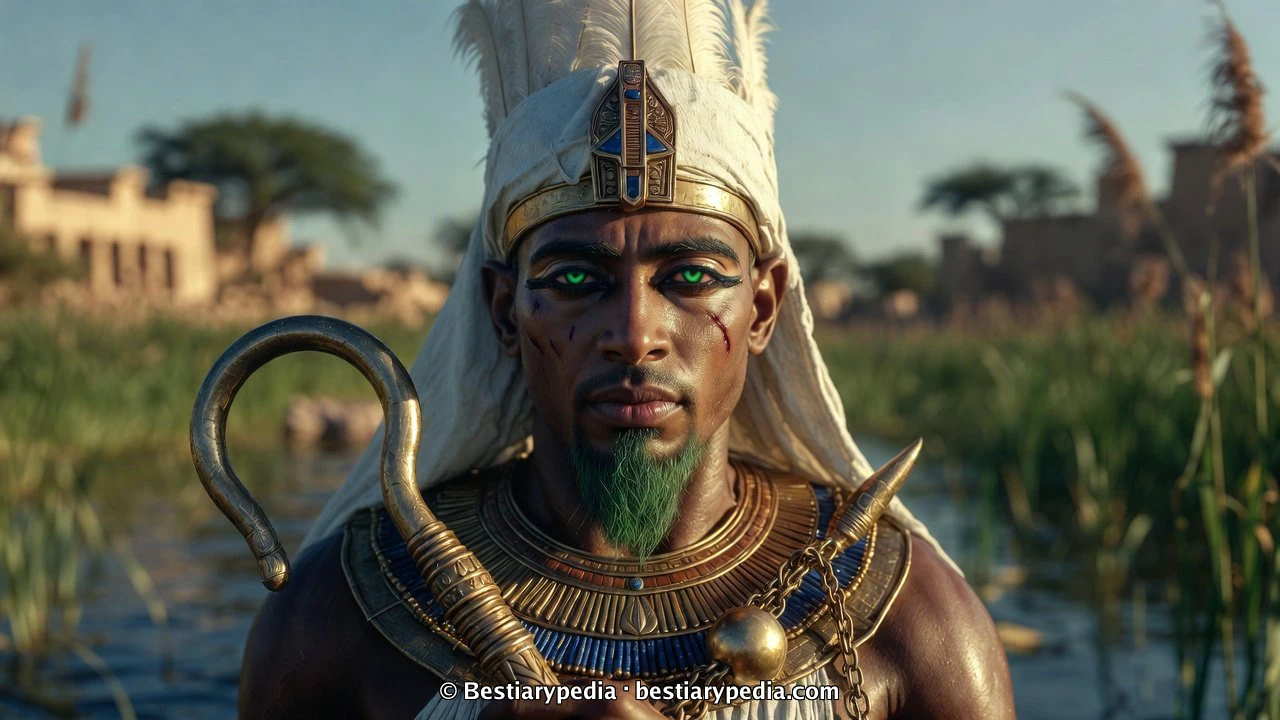
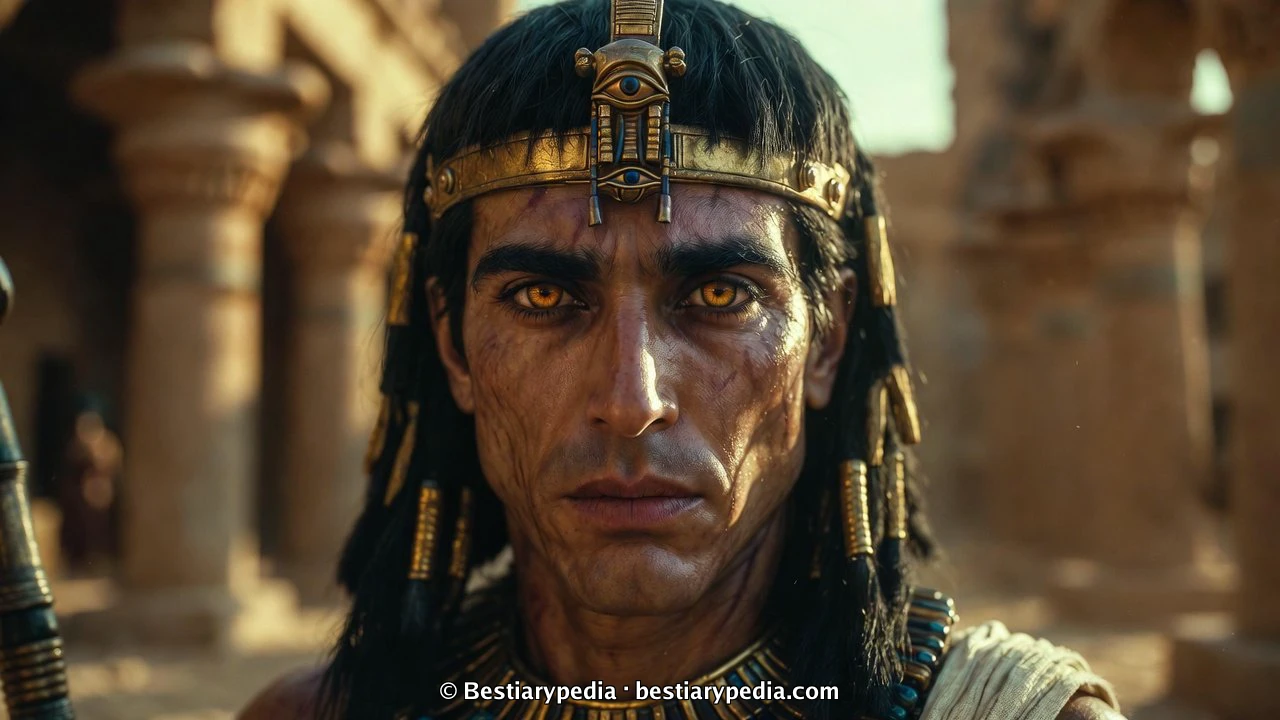
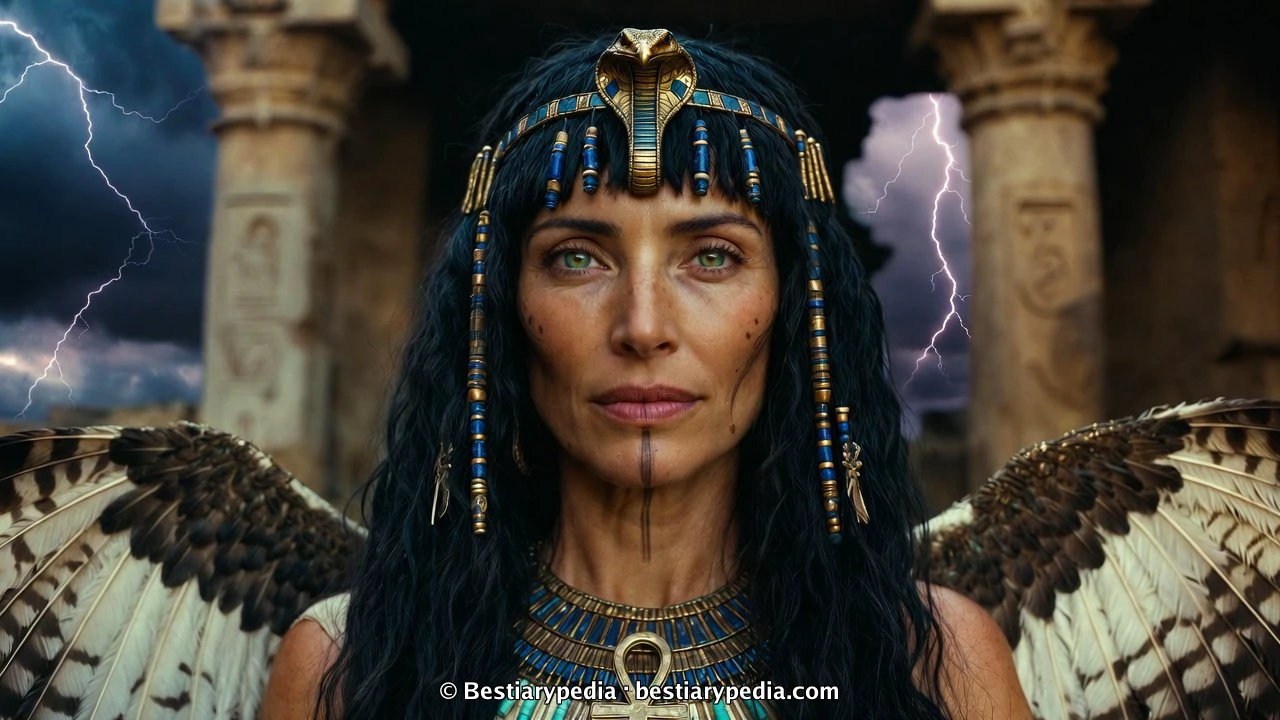
🗺️In the Atlas
Travel the beings’ world of origin and the cosmos of their dimensions.
📜 Mythologies
Egyptian mythology developed in ancient Egypt over more than three millennia, from the predynastic period to the Roman era, and was closely linked to the civilization that inhabited the banks of the Nile. Its beliefs were based on a worldview in which cosmic order, represented by the concept of maat, was maintained through the action of the gods and the performance of rituals by humans. The Egyptian pantheon included numerous local and national deities, among which Ra stood out, associated with the sun and creation, and Osiris, god of resurrection and the underworld, along with other figures such as Isis, Horus, Seth and Amun. Mythological narratives explained the origin of the world, the daily cycle of the sun and the fate of the soul after death, integrating elements of the nature of the Nile valley and astronomical observation. Funerary texts, such as the Book of the Dead, and temple reliefs constitute the main sources for the knowledge of these beliefs. Although official worship declined with the Christianization of Egypt, Egyptian mythology has exerted a lasting influence on art, literature and the Western imagination, and continues to be the subject of study in Egyptology.
Sources
Pyramid Texts
Unknown · -2400
Collection of ancient Egyptian funerary texts inscribed in the pyramids of the Fifth and Sixth Dynasties.
Book of the Dead
Anonymous · c. 1550 BC
Compilation of funerary spells from ancient Egypt used from the New Kingdom onward.
The Book of the Heavenly Cow
Scribes of Ancient Egypt · c. 1550 BC
Ancient Egyptian funerary text recounting the myth of the destruction of humankind and Ra's ascent to heaven upon the Heavenly Cow.
Coffin Texts
Unknown · c. 2000 BCE
Egyptian funerary texts inscribed on coffins from the Middle Kingdom.
Frequently asked questions
Did Ra create himself or did Ptah create him?
Both ideas coexist in Egyptian religion depending on the cult center. The Heliopolitan theology, the most widespread, makes him self-begotten: he arises by his own will from the primordial ocean Nun, without father or mother. The Memphite theology, by contrast, attributes the creation to Ptah, who conceives Atum-Ra with thought (the heart) and the word (the tongue). They are not a contradiction, but two distinct theological schools that Egyptian syncretism kept in parallel.
What role did Ra play in the creation of the gods and the world?
In the Heliopolitan tradition, as Atum-Ra he gave rise by himself to the first divine pair, Shu (the air) and Tefnut (the moisture), from whom the Ennead, the nine primordial gods, descends; it was also said that humankind was born from his tears. In the Memphite variant, that same creative work is attributed to the word of Ptah, from whom Atum-Ra proceeds.
Which enemy does Ra fight on his nightly journey?
During the nightly crossing of the Duat in the Mesektet barque, Ra confronts Apophis, the great serpent of chaos that tries to devour the sun and halt time. Aided by gods such as Set, he defeats it every night and is reborn at dawn to sail once more the daytime sky in the Mandjet barque.
🔖Cite this entry▾
If you cite this article in an academic, journalistic or editorial publication, use any of these formats:
Bestiarypedia. (2026, July 14). Ra. Bestiarypedia. https://bestiarypedia.com/en/beings/ra
Free citation with attribution and canonical link for editorial, academic or journalistic use. Full commercial reuse or creation of derivative products requires prior agreement.
Similar beings
Nephthys
Nephthys, Egyptian funerary goddess, sister of Isis, wife of Set and mother of Anubis
Geb
Geb, Egyptian god of the Earth, son of Shu and Tefnut
Nut
Nut, Egyptian goddess of the sky who arches over the Earth
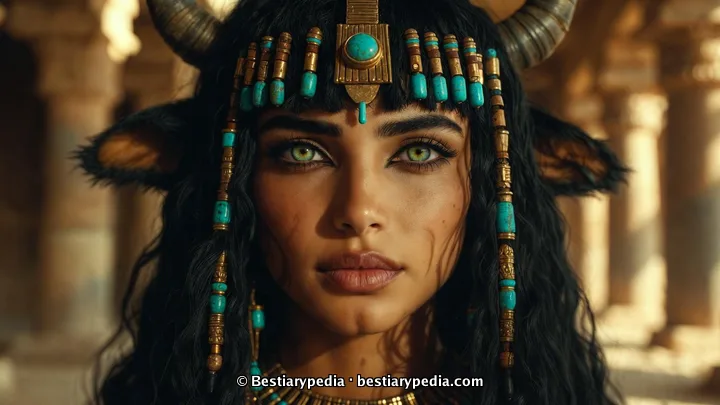
Hathor
Hathor, goddess of love, beauty, music and motherhood in Egyptian mythology
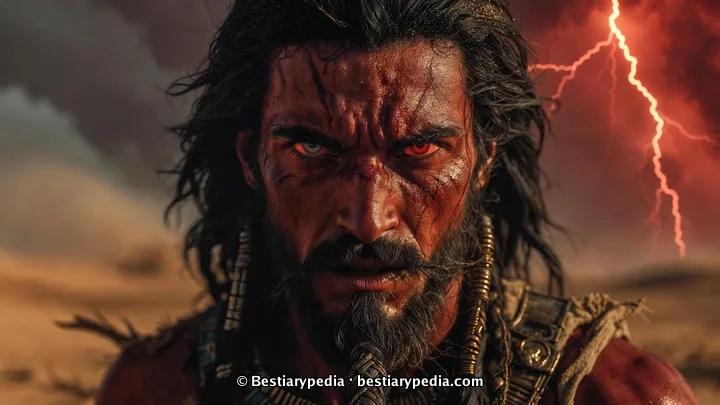
Set
Set, god of chaos, storm and violence in Egyptian mythology
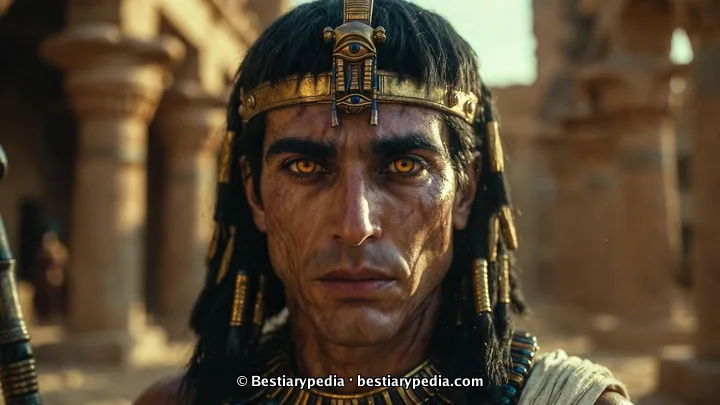
Horus
Horus, god of the sky, kingship and war in Egyptian mythology
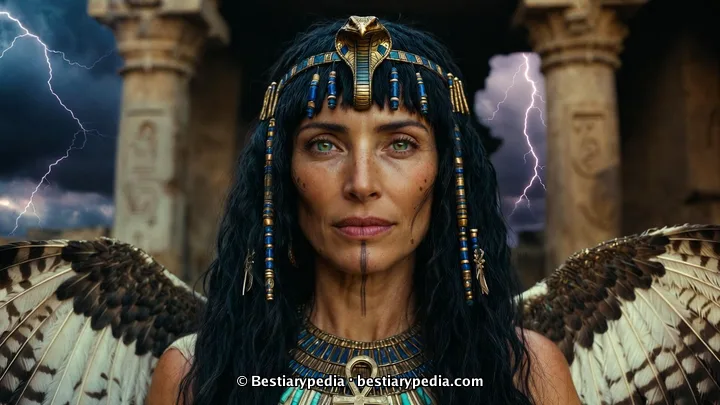
Isis
Isis, Egyptian goddess of motherhood, magic and resurrection
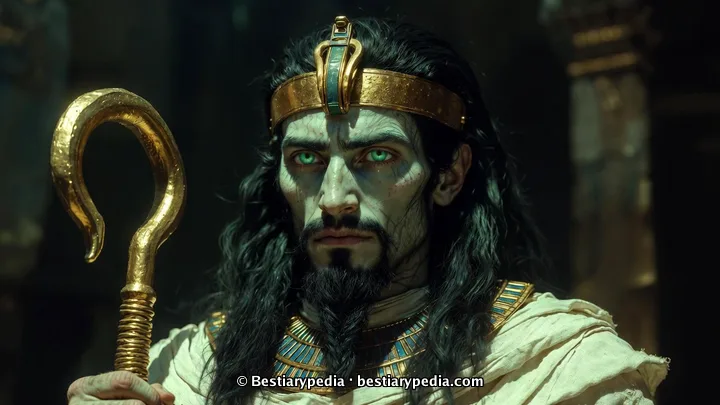
Osiris, Lord of the Dead
Osiris, Lord of the Dead and god of resurrection in Egyptian mythology