Dagon the Demon
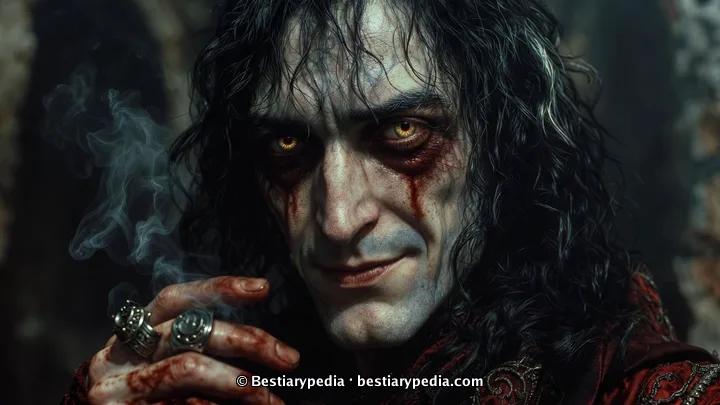
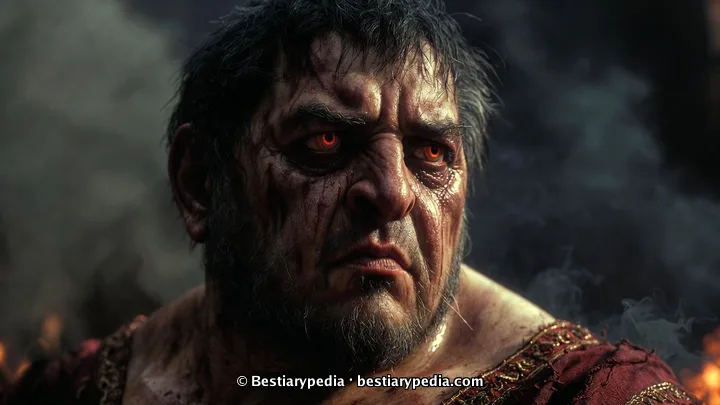
Dagon the Demon, infernal prince of the abyssal depths and ancient Philistine god
Curated byBestiarypediaCreated onUpdated on
 Holy Land(Israel)
 +2Levant(Israel, Jordan, Lebanon, Syria, Palestine)

From grain god to sea demon
Dagon the Demon arises from the Christian demonisation of Dagan (or Dagon), an ancient Semitic god of grain and fertility worshipped at Mari, Ebla, Ugarit and, above all, among the Philistines, in whose cities (Ashdod, Gaza) he had major temples. The First Book of Samuel (5:1-5) recounts how, after the Philistines captured the Ark of the Covenant and placed it in Dagon's temple at Ashdod, the god's statue was found fallen face-down before the Ark and, the next day, with its head and hands severed upon the threshold. The Book of Judges (16:23-30) also sets the death of Samson in a temple of Dagon. Judeo-Christian theology reinterpreted this defeated god as a false idol and, in time, as a fallen demon: thus he passed from agricultural deity to infernal prince in medieval and Renaissance demonology.
The monster half man, half fish
The most widespread image of the demonic Dagon portrays him as an amphibious being, with the torso and head of a man and the lower half of a fish ('upward Man and downward Fish', as John Milton describes him in Paradise Lost. This iconography rests on a popular etymology that linked his name to the Hebrew dag ('fish'), although modern scholarship derives it rather from dagan ('grain'). Demonological dictionaries assign him marine attributes)scales, a trident, a retinue of creatures of the abyss— that underscore his dominion over the deep waters and his condition as a toppled idol, shamed before the Ark in his own sanctuary.
Rank and dominions in hell
In the infernal hierarchy set out by the demonologists, Dagon figures as a high-ranking demon bound to the sea and, by inheritance from his ancient agricultural cult, to bread and grain: Collin de Plancy's Dictionnaire Infernal numbers him among the great officers of the infernal court. He is credited with lordship over the sea depths, tempests and shipwrecks, and with the power to grant riches hidden beneath the waters to those who invoke him —gifts that tradition describes as deceptive and ruinous. As a demon of perverted grain, he embodies fertility turned to corruption: abundance that becomes famine and rot.
Sources and legacy
The demonised Dagon takes firm shape in Western demonology through three public-domain corpora: the biblical accounts of his humiliation (1 Samuel 5; Judges 16), John Milton's epic Paradise Lost (1667), which numbers him among the fallen angels, and Collin de Plancy's Dictionnaire Infernal (1818), which catalogues him among the demons. It should be noted that, despite a frequent attribution, Dagon does not appear in Johann Weyer's Pseudomonarchia Daemonum (1577), whose catalogue of sixty-nine demons makes no mention of him. His figure must also be distinguished from the homonymous sea deities of modern fiction, which are foreign to historical folklore and demonology.
Also known as
Relics
🏺 Abyssal Trident
🏺 Shark Tooth Necklace
Symbology
Element
Sea and Abyss
Number
2
Color
Turquoise Green
Animals
Abyssal Kraken, Minor Leviathan
Sigils:
🏷️ Traits
Powers
Weaknesses
Behavioral
Resistances
🗺️In the Atlas
Travel the beings’ world of origin and the cosmos of their dimensions.
📜 Mythologies
The Abrahamic religions comprise Judaism, Christianity and Islam, three monotheistic traditions that share a common origin in the figure of Abraham, regarded as patriarch in all three. Originating in the ancient Near East, Judaism developed among the Hebrews during the second millennium BCE, Christianity arose in the 1st century CE in the context of Second Temple Judaism and Islam appeared in the 7th century on the Arabian Peninsula. Each is based on divine revelations transmitted through prophets and sacred scriptures, such as the Torah, the Bible and the Qur'an, and upholds the belief in a single creator and judge God.
Sources
1 Samuel 5 (Bible)
Traducción bíblica tradicional
In 1 Samuel 5, the statue of Dagon falls before the Ark of the Covenant in the temple of Ashdod, symbolizing Yahweh's superiority over Philistine gods.
Three Books of Occult Philosophy
Heinrich Cornelius Agrippa · 1533
Renaissance encyclopedia of magic by Heinrich Cornelius Agrippa detailing planetary and angelic correspondences.
Paradise Lost
John Milton · 1667
Epic poem by John Milton (1667) on the Fall of Man, which enumerates the fallen angels (among them Dagon) turned into pagan idols.
Dictionnaire Infernal
Collin de Plancy · 1818
Demonological dictionary by Collin de Plancy (1818), famous for the illustrations by Louis Le Breton in its 1863 edition. It catalogues demons, superstitions and infernal beings, and popularized the visual image of many entities of goetia.
Ugaritic Texts
Various (scribes of Ugarit) · c. 1300 BC
Corpus of inscriptions and tablets documenting the mythology, rituals and theology of the Canaanite pantheon in Ugarit.
Frequently asked questions
How did the Philistine god Dagon become a demon?
Dagon was a Semitic god of grain and fertility, worshipped by the Philistines in cities such as Ashdod and Gaza. In 1 Samuel 5 his statue falls and breaks before the Ark of the Covenant, and in Judges 16 his temple collapses upon Samson. Judeo-Christian theology reinterpreted this defeated pagan god as a false idol and, later, as a fallen demon, incorporating him into medieval and Renaissance demonology as a prince of hell.
Why is Dagon depicted as half man and half fish?
The amphibious image comes above all from John Milton, who in Paradise Lost describes him as 'upward Man and downward Fish'. It rests on a popular etymology linking his name to the Hebrew dag ('fish'), although current scholarship derives it from dagan ('grain'). This hybrid form underscores his lordship over the sea depths and his condition as a toppled idol.
What rank and powers does Dagon hold in demonology?
Demonologists place him as a high-ranking demon bound to the sea and, by inheritance from his agricultural cult, to grain; Collin de Plancy's Dictionnaire Infernal numbers him among the officers of the infernal court. He is credited with dominion over the depths, storms and shipwrecks, and with the power to offer riches hidden beneath the waters, gifts that tradition holds to be deceptive.
In which sources does Dagon appear as a demon?
His public-domain sources are the biblical accounts of his humiliation (1 Samuel 5; Judges 16), John Milton's Paradise Lost (1667), which numbers him among the fallen angels, and Collin de Plancy's Dictionnaire Infernal (1818). It should be clarified that, despite a frequent attribution, Dagon does not appear in Johann Weyer's Pseudomonarchia Daemonum (1577), and that he must be distinguished from the homonymous sea creatures of modern fiction.
🔖Cite this entry▾
If you cite this article in an academic, journalistic or editorial publication, use any of these formats:
Bestiarypedia. (2026, July 16). Dagon the Demon. Bestiarypedia. https://bestiarypedia.com/en/beings/dagon-the-demon
Free citation with attribution and canonical link for editorial, academic or journalistic use. Full commercial reuse or creation of derivative products requires prior agreement.