Enoch
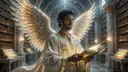
Enoch, the patriarch taken to heaven and transformed into Metatron
Curated byBestiarypediaCreated onUpdated on
 Israel(Israel)
🔄 Transformation line (Phase 1 of 2)

Origins and Lineage of Enoch
Enoch was born in the earliest ages of humanity before the Flood, as the son of Jared who lived eight hundred sixty-two years, and was the seventh in the line of patriarchs from Adam through Seth, Enosh, Kenan, Mahalalel, Jared. He is mentioned in Genesis 5:18-22 as a pivotal figure in a morally decaying world, where humans began marrying the daughters of men and evil spread, but he remained pure and distinguished by his piety. He lived three hundred sixty-five years, a number symbolizing the complete solar cycle, pointing to his role as a mediator between earth and heaven in later traditions.
Life of Piety and Visions
Unlike his corrupted contemporaries, 'Enoch walked with God' as Genesis 5:24 states, implying an intimate close communion with the divine. This granted him profound visions of cosmic secrets, stellar movements, the fall of rebellious angels (Watchers) who mated with human daughters birthing Nephilim, and end-time events. He recorded this knowledge in sacred books like First Book of Enoch, describing his journeys through heavens, judgment of fallen angels, and depictions of paradise and hell, making him the first teacher of heavenly wisdom in Jewish and early Christian traditions.
The Ascension to Heaven
At the age of three hundred sixty-five, Enoch suddenly vanished from earth without seen death, as Genesis 5:24 states: 'Enoch walked with God; and he was not, for God took him'. This exceptional event, unique before Elijah, is interpreted in apocryphal texts as a living transit to the seventh heaven through graduated gates, where he received heavenly coronation and instruction from angels on divine secrets, affirming his status as a living martyr and extraordinary prophet in Jewish theology.
Transformation into Metatron
In Jewish esoteric traditions like Third Book of Enoch (Hebrew-Kabbalistic), Enoch's arrival at God's throne is depicted where his physical body turned to celestial fire, veins to lightning bolts, bones to sinews, eyes to torches, crowned with 72 wings becoming Metatron 'the voice' or 'high priest', heavenly scribe recording human deeds and guardian of cherubim. This transformation positions him as the supreme mediator between God and creation, mentioned in Talmud as 'lesser YHWH', linking human eras to spiritual realms in Kabbalah and Hermeticism.
Also known as
Relics
🏺 The Book of Enoch
Sacred manuscript detailing apocalyptic visions and the nature of the celestial and demonic worlds.
Symbology
Element
Earth/Aether
Number
365
Color
Pure White
Animals
Dove, Eagle
Sigils:
🏷️ Traits
Powers
Weaknesses
Behavioral
Resistances
🗺️In the Atlas
Travel the beings’ world of origin and the cosmos of their dimensions.
📜 Mythologies
Esoteric and Kabbalistic traditions within Judaism, encompassing Merkabah mysticism from the Talmudic era, 13th-century Zoharic Kabbalah, 16th-century Lurianic Kabbalah, the 18th-century Hasidic movement, and various meditative, contemplative, and visionary practices aimed at ascending through spiritual worlds, invoking divine names, and achieving mystical union with the divine while unraveling the secrets of the creative universe.
Sources
Book of Enoch
Anonymous · 3rd century BCE
Ancient apocryphal text describing the fall of the Watchers and their forbidden teachings.
3 Enoch (Hebrew Book of Enoch)
Anonymous · c. 500 CE
The Hebrew Book of Enoch (3 Enoch or Sefer Hekhalot) is a medieval Jewish mystical text (5th-6th c. CE), attributed to Enoch transformed into Metatron. It describes angelic hierarchies, fallen princes like Tamiel, and visions of the heavenly palaces (Hekhalot).
Book of Jubilees
Attributed to Moses · 2nd cent. BC
The Book of Jubilees, a Jewish pseudepigraphal text (2nd century BCE), rewrites Genesis and Exodus, mentioning the Watchers and their leaders including references to Azazel as a corrupter teaching idolatry and fornication, reinforcing his role in Enochian tradition and justifying the Flood as punishment.
Frequently asked questions
What is Enoch's lineage and origin according to Genesis?
Enoch was born before the Flood as the son of Jared. He was the seventh patriarch from Adam through Seth, Enosh, Kenan, Mahalalel and Jared. He lived three hundred sixty-five years in a morally decaying world.
What visions did Enoch receive during his life of piety?
Enoch received visions of cosmic secrets, stellar movements and the fall of the Watchers. These angels united with human daughters and begat Nephilim. He recorded this knowledge in the First Book of Enoch.
How was Enoch transformed into Metatron according to esoteric traditions?
In Jewish esoteric traditions such as the Third Book of Enoch, Enoch's body transformed into celestial fire. He received seventy-two wings and became Metatron, heavenly scribe and guardian of the cherubim.
What relationship does Enoch hold with Metatron in the celestial hierarchy?
Enoch was elevated to heaven and transformed into Metatron, the Prince of the Presence. This change positions him as the supreme mediator between God and creation according to the Third Book of Enoch.
🔖Cite this entry▾
If you cite this article in an academic, journalistic or editorial publication, use any of these formats:
Bestiarypedia. (2026, July 14). Enoch. Bestiarypedia. https://bestiarypedia.com/en/beings/enoch
Free citation with attribution and canonical link for editorial, academic or journalistic use. Full commercial reuse or creation of derivative products requires prior agreement.