Sutoku Tennō
Sutoku Tennō, aristocratic goryō of the Heian period
Curated byBestiarypediaCreated onUpdated on
 Japan(Japan)
Origins of Sutoku Tennō
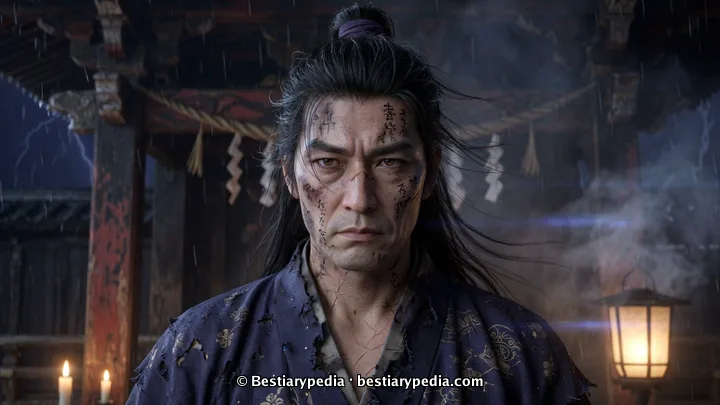
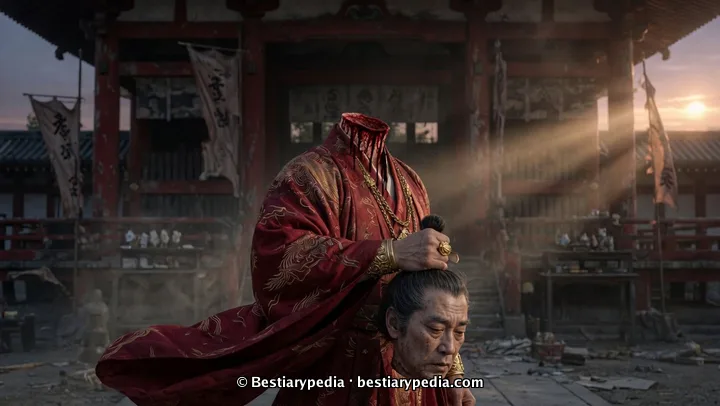
Sutoku Tennō (1119-1164) was the seventy-fifth emperor of Japan, enthroned being a child in 1123. Officially he was the son of Emperor Toba, although an insistent court suspicion had him as the son of this one's grandfather, the cloistered emperor Shirakawa, rumor that poisoned from the beginning his relationship with Toba and that historiography collects as root of his misfortune. In the system of cloistered government, who really commanded was not the emperor on the throne but the retired sovereign, and Toba never let Sutoku exercise real power. In 1142 he forced him to abdicate in favor of a half-brother, and at the death of Toba the succession line deviated towards another brother, Go-Shirakawa. Sutoku was thus left aside twice from the power that corresponded to him, accumulating a dynastic grievance that tradition signals as the origin of all that came after.
The exile in Sanuki and the rejected sutras
In 1156, Toba dead, the succession dispute erupted into the open war known as the Hōgen rebellion. Sutoku's faction was defeated by that of Go-Shirakawa in a night of combat in Kioto, and the retired emperor was captured and exiled to the province of Sanuki, on the island of Shikoku. There, far from the court, he devoted himself to Buddhist devotion and dedicated years to copying sutras in his own hand, an enormous work conceived as penance and as an offering. When he sent those copies to the capital asking that they be deposited in a temple, the court, fearing that they were loaded with malefice, rejected them and returned them to him without opening them. That slight was the breaking point: the humiliation of exile could still be endured, but having his religious offering returned as if it were poison ended up breaking him inside.
The Great Demon of Japan
Enraged by the rejection, Sutoku bit his tongue and with his own blood wrote on the sutras the oath that made him legendary: to become the Great Demon (daimaen) of Japan, to make the sovereign a commoner and the commoner a sovereign. He stopped cutting his hair and nails until he became unrecognizable, and died in 1164 transformed, according to tradition, into a tengu of enormous power. The misfortunes that followed, the fall of imperial power and the rise of the warrior class, were attributed to his curse. The Hōgen Monogatari transmits the blood oath, and the tale Shiramine, in the Ugetsu Monogatari by Ueda Akinari, imagines the poet monk Saigyō visiting his tomb and finding an incandescent spirit that refuses to be appeased. The fear lasted centuries: in 1868, on the eve of the Restoration, Emperor Meiji ordered his spirit to be brought back to Kyoto and consecrated in the Shiramine shrine, seven hundred years after his death. He is one of the three great onryō of Japan.
Relics
🏺 Sutra scrolls
Symbology
Element
Calamity
Number
1
Color
Red
Animals
Crow
Sigils:
🏷️ Traits
Powers
Weaknesses
Behavioral
Resistances
🗺️In the Atlas
Travel the beings’ world of origin and the cosmos of their dimensions.
📜 Mythologies
Japanese folklore encompasses oral traditions, myths, legends and supernatural creatures like yōkai and kami, compiled in Edo-period illustrated texts by Toriyama Sekien in works like Gazu Hyakki Yagyō and Konjaku Hyakki Shūi, reflecting Shinto animist beliefs, ecological fears of floods and droughts, and respect for nature in rivers, lakes and rice fields of regions like Shiga, Osaka and Kyoto.
Sources
Heian period chronicles
Several court historians · 12th century
Set of chronicles and historical records of Japan’s Heian period (794-1185). They document court life, its beliefs and the accounts of spirits, demons (oni) and portents that feed Japanese supernatural folklore.
Ugetsu Monogatari by Ueda Akinari
Ueda Akinari · 1776
Hōgen Monogatari (Tale of the Hōgen Era)
Anonymous · 13th cent.
Frequently asked questions
What filled Sutoku's anger until turning him into a vengeful spirit?
It was not only the exile, but the rejection of the sutras that he copied by hand in exile as a religious offering. That the court returned them to him without opening them, fearing a malefice, was the affront that broke him and unleashed his oath of vengeance.
What did his blood oath consist of?
He bit his tongue and wrote with his blood on the sutras themselves the promise of becoming the Great Demon of Japan and overturning the order, making the plebeian emperor and the emperor plebeian. He stopped cutting hair and nails until dying converted into tengu.
Why was Sutoku still feared centuries after dying?
Because his curse was associated with the ruin of imperial power. He was feared so much that in 1868, before the Meiji Restoration, the emperor himself ordered his spirit to be brought from Sanuki to Kyoto to consecrate it, seven hundred years after his death.
🔖Cite this entry▾
If you cite this article in an academic, journalistic or editorial publication, use any of these formats:
Bestiarypedia. (2026, July 26). Sutoku Tennō. Bestiarypedia. https://bestiarypedia.com/en/beings/sutoku-tenno
Free citation with attribution and canonical link for editorial, academic or journalistic use. Full commercial reuse or creation of derivative products requires prior agreement.