Sutoku Daitengu
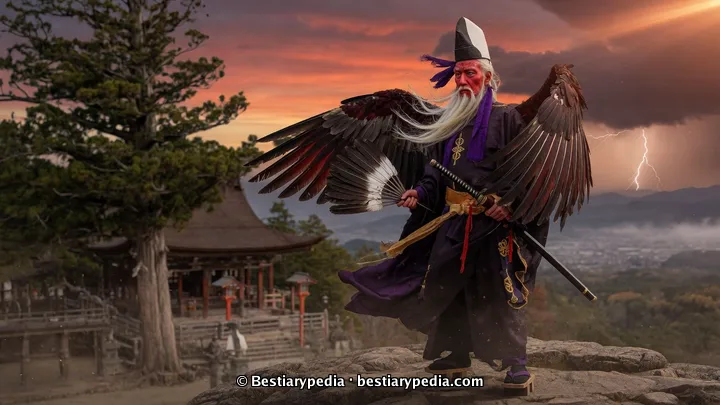
Sutoku Daitengu, deposed emperor transformed into a vengeful great tengu
Curated byBestiarypediaCreated on
 Sanuki(Japan)

Origins and transformation of Sutoku Daitengu
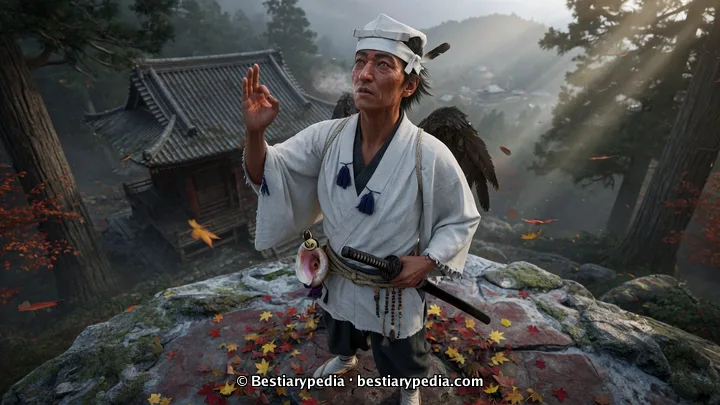
Sutoku Tennō reigned between 1123 and 1142 but was forced to abdicate without exercising real power. In 1156 his confrontation with his brother Go-Shirakawa led to the Hōgen rebellion. After defeat he was exiled to Sanuki where he copied sutras for years and sent them to the capital as an offering of reconciliation. The court rejected the texts fearing curses. According to the Hōgen Monogatari Sutoku bit his tongue and wrote with his blood an oath to become the great demon of Japan to invert the social order. He stopped cutting his hair and nails until he became unrecognizable and died in 1164 transformed into a daitengu. Subsequent disasters were directly attributed to him.
Appearance as daitengu and powers
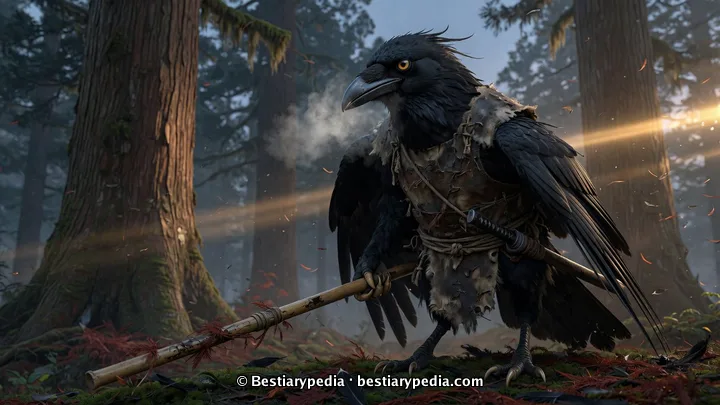
In the Ugetsu Monogatari the monk Saigyō visits Sutoku's tomb in Shiramine and beholds his spirit as an incandescent daitengu that refuses to be appeased. The tengu possesses a long tail and human form with avian features. His blood oath grants him the ability to cause fires and catastrophes that contributed to the fall of the imperial court before the warriors. He is not identical to Sōjōbō of Mount Kurama but a relative of rank within the tengu lineage. His transformation distinguishes him as a vengeful goryō rather than a simple winged demon while retaining influence over natural and political disasters for centuries.
Historical legacy and final consecration
The spirit of Sutoku Daitengu continued to be feared for centuries. In 1868 Emperor Meiji ordered his spirit brought back to Kyoto and consecrated at the Shiramine Jingū shrine before the imperial restoration seven hundred years after his death. This ceremony marked the symbolic closure of ancient dynastic grudges. The sources Toriyama Sekien in Konjaku Gazu Zoku Hyakki and Ueda Akinari in Ugetsu Monogatari document his figure as a vengeful daitengu. His kinship relation with Sōjōbō and other mountain tengu is maintained as a rank bond within Japanese folklore without being confused with them. The tengu and goryō taxon reflects his dual nature as vengeful spirit and winged demon.
Relics
🏺 Blood Sutras
Symbology
Element
Fire
Number
1
Color
Red
Animals
Crow
Sigils:
🏷️ Traits
Powers
Weaknesses
Behavioral
Resistances
🗺️In the Atlas
Travel the beings’ world of origin and the cosmos of their dimensions.
📜 Mythologies
Japanese folklore encompasses oral traditions, myths, legends and supernatural creatures like yōkai and kami, compiled in Edo-period illustrated texts by Toriyama Sekien in works like Gazu Hyakki Yagyō and Konjaku Hyakki Shūi, reflecting Shinto animist beliefs, ecological fears of floods and droughts, and respect for nature in rivers, lakes and rice fields of regions like Shiga, Osaka and Kyoto.
Sources
Ugetsu Monogatari by Ueda Akinari
Ueda Akinari · 1776
Konjaku Hyakki Shūi
Toriyama Sekien · 1781
Instalment of Toriyama Sekien's series of illustrated bestiaries (1776-1784), which collected and fixed the imagery of Japanese folklore yokai.
Hōgen Monogatari (Tale of the Hōgen Era)
Anonymous · 13th cent.
Frequently asked questions
How did Sutoku's transformation into a daitengu occur according to the Hōgen Monogatari?
Sutoku bit his tongue and wrote a blood oath of vengeance after his sutras were rejected. He died in 1164 transformed into a daitengu.
What relationship does Sutoku Daitengu maintain with Sōjōbō and other tengu?
He is a relative of rank within the tengu lineage but not identical to Sōjōbō of Mount Kurama.
When and why was Sutoku's spirit consecrated at Shiramine Jingū?
In 1868 Emperor Meiji consecrated it before the imperial restoration seven hundred years after his death to close ancient grudges.
🔖Cite this entry▾
If you cite this article in an academic, journalistic or editorial publication, use any of these formats:
Bestiarypedia. (2026, July 26). Sutoku Daitengu. Bestiarypedia. https://bestiarypedia.com/en/beings/sutoku-daitengu
Free citation with attribution and canonical link for editorial, academic or journalistic use. Full commercial reuse or creation of derivative products requires prior agreement.