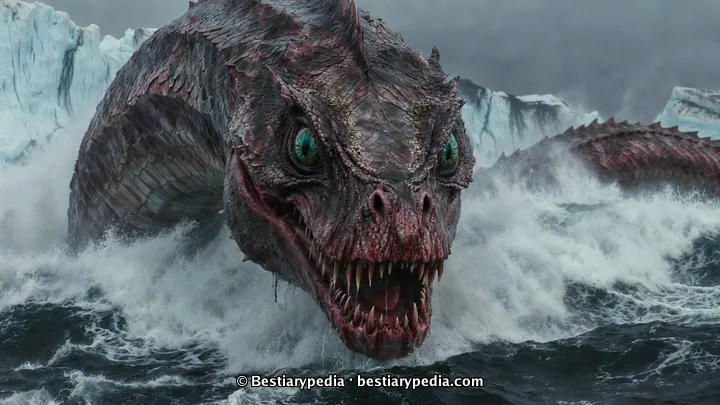
Fenrir
Fenrir, the monstrous wolf of Norse mythology
Curated byBestiarypediaCreated onUpdated on


 Scandinavia(Denmark, Norway, Sweden)
Family Tree



Origin
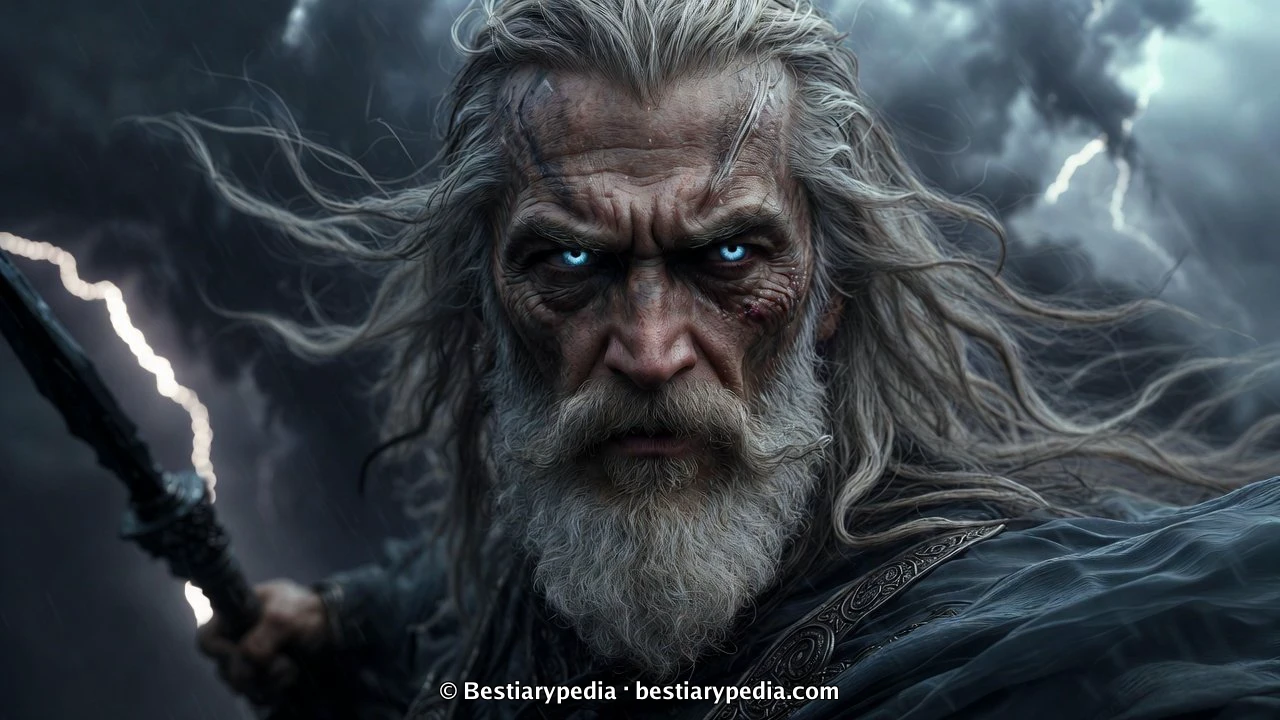
Fenrir, also called Fenrisúlfr, is the monstrous wolf, son of the god Loki and the giantess Angrboda, begotten in Jötunheimr. His siblings are the serpent Jörmungandr, who encircles the world, and Hel, lady of the realm of the dead. Warned by the prophecies that this offspring would bring great evils, the Aesir gods brought Fenrir to Asgard to raise him among themselves and watch him closely. Only the god Týr had the courage to approach and feed him. The wolf, however, grew at a prodigious rate and became fiercer each day, so that the gods' fear did not cease to grow.
Ragnarök Prophecy
The Eddas foretell that Fenrir's captivity will not be eternal. When Ragnarök comes, the twilight of the gods, the wolf will break his bonds and advance with his jaws gaping wide, so enormous that the lower jaw brushes the earth and the upper one touches the sky, while fire pours from his eyes and his snout. In the final battle he will devour Odin, father of the gods. His death will be avenged at once by Víðarr, son of Odin, who will set one foot upon the wolf's lower jaw and, gripping the upper one, will tear his maw apart until he slays him. Fenrir thus embodies the primordial chaos and the cyclical destruction that precedes the renewal of the world.
The Binding of Gleipnir
Alarmed by his size, the gods resolved to chain Fenrir. They first forged a stout chain called Læðingr and then another even stronger, Drómi, but the wolf broke both without effort. Understanding that no ordinary forging would suffice, Odin sent Skírnir, the messenger of Freyr, to Svartálfheim (Niðavellir), where the dwarfs, commissioned by the gods, forged the binding Gleipnir. Though as fine and smooth as a silken ribbon, it was made of six impossible ingredients: the sound of a cat's step, the beard of a woman, the roots of a mountain, the sinews of a bear, the breath of a fish, and the spittle of a bird. Distrustful, Fenrir only agreed to be bound if a god placed his hand between his jaws as a pledge of good faith, and only Týr consented. When the wolf found that he could not break Gleipnir, he clamped his jaws shut and tore off Týr's hand at the wrist, the 'wolf-joint'. The gods fastened the binding to a great slab, Gjöll, and to a peg, Þviti, sunk deep in the earth, and thrust a sword between his jaws to hold them open. There, on the island of Lyngvi, Fenrir remained chained until Ragnarök.
Also known as
Relics
🏺 Gleipnir
The impossible chain made of six impossible things: sound of cat's footfalls, woman's beard, mountain roots, bear's sinews, fish's breath, and bird's spittle.
Symbology
Element
Fire and chaos
Number
One
Color
Black and blood red
Animals
Wolf
Sigils:
🏷️ Traits
Powers
Weaknesses
Behavioral
Resistances
🔗 Relations with other beings
🗺️In the Atlas
Travel the beings’ world of origin and the cosmos of their dimensions.
📜 Mythologies
Norse mythology developed among the Germanic peoples of northern Europe, especially in Scandinavia, from the late Iron Age until the progressive Christianization between the 8th and 11th centuries. Its stories are preserved mainly in medieval Icelandic sources such as the Poetic Edda and the Prose Edda of Snorri Sturluson, which collect earlier oral traditions. The universe is conceived as a set of nine worlds connected by the cosmic tree Yggdrasil, in which gods, giants, humans and other beings coexist, and where the destiny of all is ruled by the Norns. The main gods are divided into two groups: the æsir, among whom Odin, Thor and Tyr stand out, and the vanir, represented by Njörðr, Freyr and Freyja, although both groups eventually integrated after a mythical war. Odin, associated with wisdom, war and poetry, occupies a central place, while Thor, god of thunder, protects humans from the giants. The end of the world, known as Ragnarök, involves a catastrophic battle in which most of the gods perish, although a later rebirth is foreseen. This tradition has exerted a lasting influence on literature, art and popular culture in Europe and America, from medieval sagas to modern representations in operas, novels and audiovisual media. Elements such as Valhalla or the valkyries have become part of the Western collective imagination, although often reinterpreted outside their original context.
Sources
Poetic Edda
Anonymous · 1200
Collection of ancient poems including Grímnismál with allusions to the wolves pursuing the Sun and Moon.
Prose Edda
Snorri Sturluson · 1220
Snorri Sturluson's 13th-century handbook of poetics, compiling and organising Norse mythology from the origin of the world to Ragnarök. Together with the Poetic Edda, the main source for the Scandinavian pantheon.
Gylfaginning (Fenrir)
Snorri Sturluson · c. 1220
Passage from Snorri Sturluson's Gylfaginning (c. 1220) about Fenrir, the monstrous wolf son of Loki and the giantess Angrboða. It tells how the gods bind him with the fetter Gleipnir at the cost of Týr's hand, and how at Ragnarök he will devour Odin.
Frequently asked questions
What is the origin of Fenrir in Norse mythology?
Fenrir is the son of Loki and the giantess Angrboda. The gods attempted to contain him fearing his destructive fate.
What does the Ragnarök prophecy state about Fenrir?
Fenrir will break his bonds, slay Odin and be slain by Víðarr. He embodies primordial chaos.
How was Fenrir bound with Gleipnir?
The gods forged chains Fenrir broke. Gleipnir of magical materials he bit without breaking, costing Tyr his hand.
🔖Cite this entry▾
If you cite this article in an academic, journalistic or editorial publication, use any of these formats:
Bestiarypedia. (2026, July 16). Fenrir. Bestiarypedia. https://bestiarypedia.com/en/beings/fenrir
Free citation with attribution and canonical link for editorial, academic or journalistic use. Full commercial reuse or creation of derivative products requires prior agreement.