Angrboda
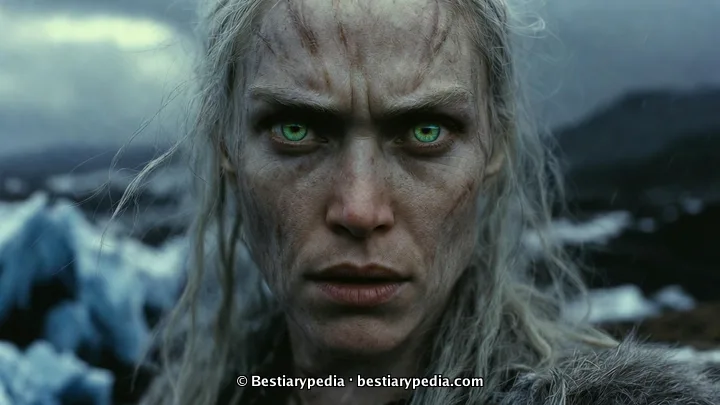
Angrboda, giantess of Jötunheim, lover of Loki and mother of Fenrir, Jörmungandr and Hel
Curated byBestiarypediaCreated on


 Scandinavia(Denmark, Norway, Sweden)
Family Tree

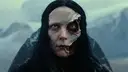
Mythical Origins of Angrboda
Angrboða is a giantess of Jötunheim whose name means «the one who announces the pain» or «the one who brings the affliction», and in Norse mythology the names are destiny. The sources that mention her are scarce but decisive: the eddic poem Hyndluljóð calls her the old giantess with whom Loki engendered the wolf, and the Prose Edda of Snorri details that from that union three children came out. She is not a primordial power nor a goddess: she is a jötunn, and that condition matters, because Norse mythology does not separate gods and giants as pure bands but as lineages that mix one and another time. The own Odin descends from giants by maternal way, and Loki, father of his children, is son of giants welcomed among the Æsir.
The three sons and their distribution
From Angrboða and Loki are born Fenrir the wolf, Jörmungandr the serpent that girds the world and Hel, lady of the dead. Snorri recounts that the gods, warned by prophecies of the harm they would cause, went to seek them in Jötunheim and distributed them to neutralize them: Odin threw Jörmungandr into the sea that surrounds the earth, where it grew until biting its own tail; he dispatched Hel to Niflheim and gave her authority over the dead who do not fall in combat; and Fenrir they raised among them in Asgard until his size terrified them and they chained him with Gleipnir, the magical bond. None of the three measures prevents anything: the three creatures fulfill their role in Ragnarök exactly as feared.
The Witch of the Iron Forest
The Gylfaginning speaks of an old giantess who inhabits the Járnviðr, the Iron Forest east of Midgard, and who there raises a lineage of wolves, among them those who pursue the sun and the moon until devouring them at the end of the world. Tradition has tended to identify that witch with Angrboða, although Snorri does not say it expressly. The reading fits: the mother of the wolf Fenrir as mother of all the wolves that end with the light. Her figure thus functions as the exact reverse of the divine attempt to control destiny, because each measure that the gods take against her offspring is precisely what pushes it to fulfillment. It is one of the scarce figures of Norse myth whose importance is measured entirely by her children.
Relics
🏺 Stone of Jötunheim
Symbology
Element
Ice
Number
3
Color
Black
Animals
Wolf Fenrir
Sigils:
🏷️ Traits
Powers
Weaknesses
Behavioral
Resistances
🗺️In the Atlas
Travel the beings’ world of origin and the cosmos of their dimensions.
📜 Mythologies
Norse mythology developed among the Germanic peoples of northern Europe, especially in Scandinavia, from the late Iron Age until the progressive Christianization between the 8th and 11th centuries. Its stories are preserved mainly in medieval Icelandic sources such as the Poetic Edda and the Prose Edda of Snorri Sturluson, which collect earlier oral traditions. The universe is conceived as a set of nine worlds connected by the cosmic tree Yggdrasil, in which gods, giants, humans and other beings coexist, and where the destiny of all is ruled by the Norns. The main gods are divided into two groups: the æsir, among whom Odin, Thor and Tyr stand out, and the vanir, represented by Njörðr, Freyr and Freyja, although both groups eventually integrated after a mythical war. Odin, associated with wisdom, war and poetry, occupies a central place, while Thor, god of thunder, protects humans from the giants. The end of the world, known as Ragnarök, involves a catastrophic battle in which most of the gods perish, although a later rebirth is foreseen. This tradition has exerted a lasting influence on literature, art and popular culture in Europe and America, from medieval sagas to modern representations in operas, novels and audiovisual media. Elements such as Valhalla or the valkyries have become part of the Western collective imagination, although often reinterpreted outside their original context.
Sources
Gylfaginning
Snorri Sturluson · 1220
First mythological part of Snorri Sturluson’s Prose Edda (c. 1220). Through King Gylfi, who questions the Æsir, it expounds the creation of the world, the Nine Realms and the fate of the gods at Ragnarök, key to Norse mythology.
Poetic Edda
Anonymous · 1200
Collection of ancient poems including Grímnismál with allusions to the wolves pursuing the Sun and Moon.
Prose Edda
Snorri Sturluson · 1220
Snorri Sturluson's 13th-century handbook of poetics, compiling and organising Norse mythology from the origin of the world to Ragnarök. Together with the Poetic Edda, the main source for the Scandinavian pantheon.
Frequently asked questions
What does the name of Angrboða mean?
«The one who announces the pain» or «the one who brings the affliction». In Norse mythology names are usually destiny, and hers describes exactly her role: not for what she does, but for what she engenders.
What sons did he have with Loki?
Fenrir, the wolf that will devour Odín; Jörmungandr, the serpent that girds the world and will kill Thor; and Hel, lady of the dead. The three fulfill their role in Ragnarök, so that almost all the end of the Nordic world comes from this union.
What did the gods do with their children?
Distribute them to neutralize them: Odin threw Jörmungandr into the sea that surrounds the earth, sent Hel to Niflheim giving her authority over the dead, and let Fenrir be raised in Asgard until his size terrified them and they chained him. None of the three measures prevented anything; rather it prepared what they feared.
Is Angrboða the witch of the Iron Forest?
The Gylfaginning speaks of an old giantess who lives in the Járnviðr and raises there the wolves that will devour the sun and the moon. Snorri does not say that it is she, but tradition has identified them and it fits well: the mother of Fenrir as mother of all the wolves that end with the light.
🔖Cite this entry▾
If you cite this article in an academic, journalistic or editorial publication, use any of these formats:
Bestiarypedia. (2026, July 20). Angrboda. Bestiarypedia. https://bestiarypedia.com/en/beings/angrboda
Free citation with attribution and canonical link for editorial, academic or journalistic use. Full commercial reuse or creation of derivative products requires prior agreement.