Konoha-tengu
Konoha-tengu, yamabushi ascetic of the sacred mountains
Curated byBestiarypediaCreated onUpdated on
 Japan(Japan)
Origins of the konoha-tengu
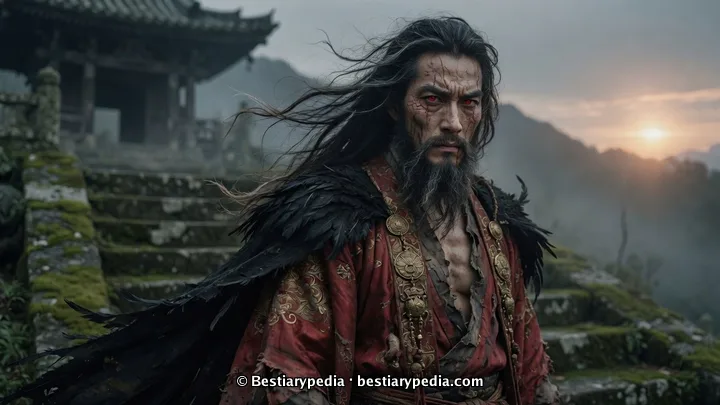
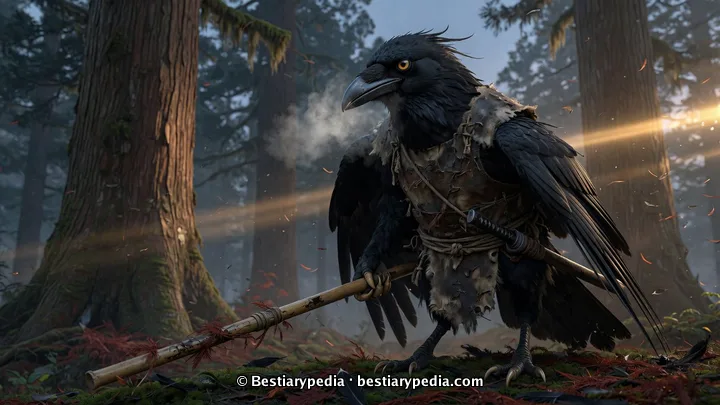
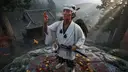
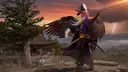
The konoha-tengu is the ascetic form of the tengu, an intermediate stage between the bestial karasu-tengu and the sovereign daitengu. Tradition conceives it as a tengu that, after centuries of discipline in the sacred mountains (Ōmine, Hiei, Hakusan, Kumano), embraces the practices of shugendō, the way of the yamabushi or mountain ascetics that combines Shintoism, esoteric Shingon Buddhism and Taoist elements. This transformation entails a moral change: the konoha-tengu abandons the predation typical of the bestial phase and adopts the solitary and rigorous existence of a wandering monk. Ancient tales, such as those of the Konjaku Monogatari, record numerous encounters between humans and these creatures in the summits.
Appearance and Powers
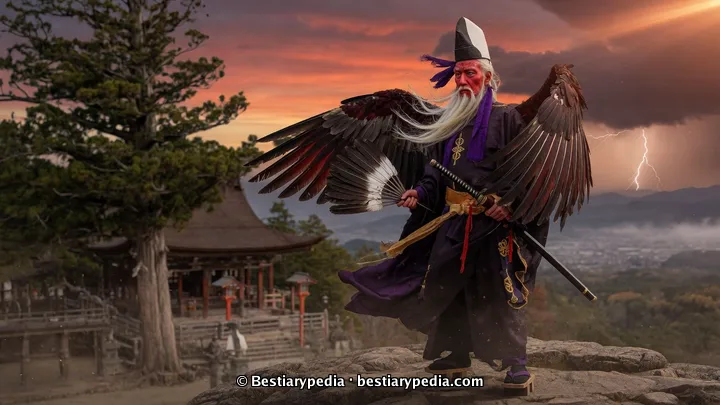
The konoha-tengu is represented with the characteristic attire of the yamabushi: the habit, the small tokin cap on the forehead, the straw sandals and the horagai conch that the ascetics sound in the mountains. It retains features of its avian origin, such as remains of feathers, and a prominent nose or beak. Mastery in the art of the sword, flight, the recitation of sutras and the execution of the mudras and esoteric formulas (kuji-in) is attributed to it, as well as the power to raise whirlwinds of leaves and to perceive the virtue or the hypocrisy of humans. It is, above all, a demanding master of the martial and ascetic arts.
Tradition and relationships
The konoha-tengu acts as a severe master who tests the pilgrims and yamabushi, instructs the worthy and humiliates the arrogant and hypocritical. The legend of Minamoto no Yoshitsune, trained in the art of the sword by a tengu from Mount Kurama, is associated above all with this figure of the tengu-master. Within the cycle of the archetype, the konoha-tengu is the stage that transforms the wild karasu-tengu into a disciplined being, and from which, over time, the great long-nosed daitengu can emerge. Its emblems (the tokin cap, the horagai conch, the sword and the swirling leaves) identify it with the world of mountain ascetics, on the border between the human and the supernatural.
Relics
🏺 Personal yamabushi katana
🏺 Tokin hat
🏺 Horagai conch
Symbology
Element
Refined yang wind
Number
9
Color
Dark forest green
Animals
Crow, Yamabushi eagle, Asian black bear
Sigils:
🏷️ Traits
Powers
Weaknesses
Behavioral
Resistances
🗺️In the Atlas
Travel the beings’ world of origin and the cosmos of their dimensions.
📜 Mythologies
Japanese folklore encompasses oral traditions, myths, legends and supernatural creatures like yōkai and kami, compiled in Edo-period illustrated texts by Toriyama Sekien in works like Gazu Hyakki Yagyō and Konjaku Hyakki Shūi, reflecting Shinto animist beliefs, ecological fears of floods and droughts, and respect for nature in rivers, lakes and rice fields of regions like Shiga, Osaka and Kyoto.
Sources
Konjaku Monogatarishū
Unknown compiler · 12th century
Vast Japanese collection of more than a thousand tales (setsuwa) from the late Heian period (c. 12th century). It gathers Buddhist, secular and supernatural stories from India, China and Japan, and is an essential source for yōkai, oni and spirits of Japanese folklore.
Yanagita Kunio's Tōno Monogatari
Yanagita Kunio · 1910
Classic collection of Japanese folk tales compiled by Yanagita Kunio documenting maternal spirits and regional variants of ubume in rural areas.
Kojiki - Tengu
Toriyama Sekien · 712
The Kojiki (712), Japan’s oldest chronicle, compiles the creation myths, the lineage of the kami and the imperial legends. It is a primary source of Shinto mythology and of countless deities and supernatural beings of the archipelago.
Frequently asked questions
How does a karasu-tengu transform into Konoha-tengu?
After centuries of shugendō asceticism in sacred mountains it adopts humanoid form and yamabushi discipline. The moral change abandons childish predation.
Which yamabushi techniques does the Konoha-tengu master?
Masters kenjutsu with katana, sutra recitation, kuji-in mudras and ritual goma fire. Manipulates autumn leaves for defense and perceives human virtue.
What relationship does it maintain with yamabushi pilgrims?
Receives volunteers in Kurama and Hiei caves, tests them for years and punishes hypocrites. Yoshitsune trained kenjutsu with a konoha tengu according to legend.
Which symbols distinguish the Konoha-tengu from the karasu-tengu?
The tokin hat, authentic katana and autumn leaves in whirlwind differentiate it. The karasu uses rudimentary wakizashi and lacks complete yamabushi attire.
🔖Cite this entry▾
If you cite this article in an academic, journalistic or editorial publication, use any of these formats:
Bestiarypedia. (2026, July 26). Konoha-tengu. Bestiarypedia. https://bestiarypedia.com/en/beings/tengu-konoha-mountain-ascetic
Free citation with attribution and canonical link for editorial, academic or journalistic use. Full commercial reuse or creation of derivative products requires prior agreement.