Sōjōbō
Sōjōbō, daitengu mountain king of Mount Kurama
Curated byBestiarypediaCreated onUpdated on
 Japan(Japan)
Origins of Sōjōbō
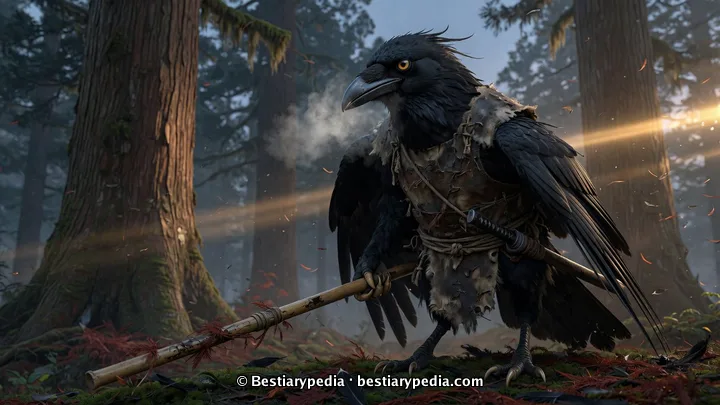
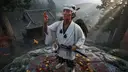
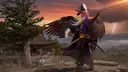
Sōjōbō is the most celebrated of the daitengu, the «great tengu» who head the hierarchy of these beings from Japanese folklore. He is conceived as a tengu who, after centuries of mastery of the sword and shugendō asceticism, attains the supreme rank and lordship over a sacred mountain. The tradition of the Edo period integrates him into a classic pantheon of tengu kings who rule different mountains of Japan (Tarōbō of Mount Atago, Jirōbō of Mount Hira, and others), of which Sōjōbō, lord of Mount Kurama, north of Kyoto, is the most famous. His figure represents the pinnacle of the tengu lineage, from the bestial karasu-tengu and the ascetic konoha-tengu to the sovereign authority of the daitengu.
Appearance and powers
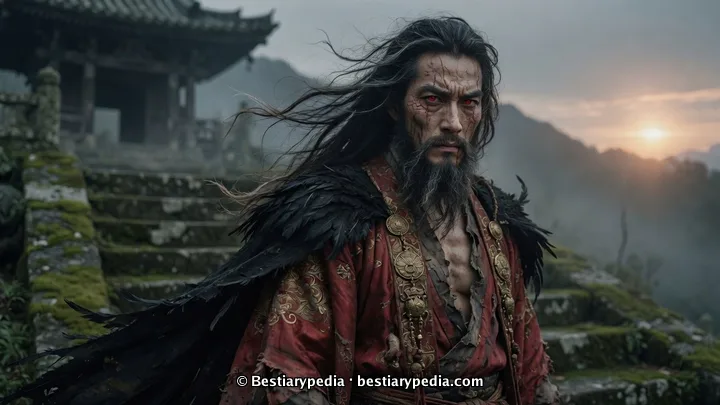
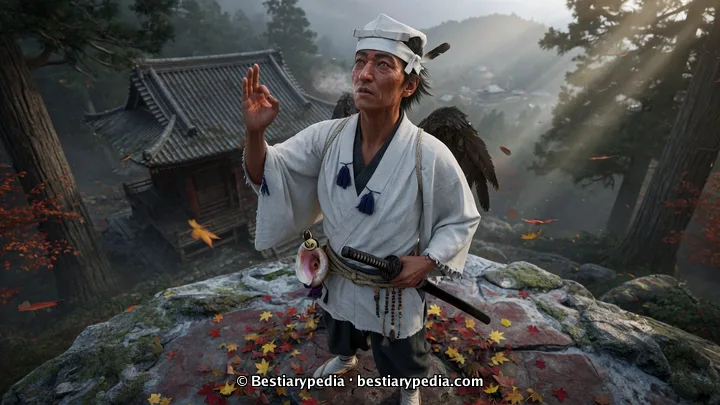
Sōjōbō is represented as a humanoid tengu with a reddish face, with a long and prominent nose (distinctive feature of the daitengu compared to the beak of the karasu-tengu), white hair and beard, the habit of a mountain monk, the small tokin cap of the yamabushi and large geta clogs. He wields a long sword and carries the ha-uchiwa feather fan, with which, according to legend, he can unleash hurricane winds. Superhuman mastery in the art of the sword, the ability to fly, mastery of wind and storms, clairvoyance and command over the lesser tengu of his territory are attributed to him. More than a simple monster, he embodies a figure of fearsome martial power and wisdom.
Tradition and legend
The most famous legend links Sōjōbō with Minamoto no Yoshitsune: as a child (with the name of Ushiwakamaru) and secluded in the Kurama-dera temple, the young man would have been instructed in the art of the sword by the king of the tengu of Mount Kurama, acquiring the skill that would make him a legendary warrior. Sōjōbō selects only exceptional human disciples, punishes the arrogance of warriors and is associated with shugendō, the ascetic path of the yamabushi that mixes Shintoism, esoteric Buddhism and Taoism. His seat is Mount Kurama, and his figure, with the fan and the long nose, is one of the most recognizable images of Japanese folklore, present in theater, prints and popular culture.
Relics
🏺 Ōdachi of Mount Kurama
🏺 Ha-uchiwa fan
🏺 Purple Buddhist monastic robe
Symbology
Element
Royal yang wind
Number
17
Color
Intense red
Animals
Giant crow, Osprey, Mythical Japanese tiger
Sigils:
🏷️ Traits
Powers
Weaknesses
Behavioral
Resistances
🗺️In the Atlas
Travel the beings’ world of origin and the cosmos of their dimensions.
📜 Mythologies
Japanese folklore encompasses oral traditions, myths, legends and supernatural creatures like yōkai and kami, compiled in Edo-period illustrated texts by Toriyama Sekien in works like Gazu Hyakki Yagyō and Konjaku Hyakki Shūi, reflecting Shinto animist beliefs, ecological fears of floods and droughts, and respect for nature in rivers, lakes and rice fields of regions like Shiga, Osaka and Kyoto.
Sources
Konjaku Monogatarishū
Unknown compiler · 12th century
Vast Japanese collection of more than a thousand tales (setsuwa) from the late Heian period (c. 12th century). It gathers Buddhist, secular and supernatural stories from India, China and Japan, and is an essential source for yōkai, oni and spirits of Japanese folklore.
Kwaidan: Stories and Studies of Strange Things
Lafcadio Hearn · 1904
Lafcadio Hearn's 1904 collection, gathering and translating Japanese supernatural legends from oral tradition and introducing them to the West. A classic reference for ghost and yokai folklore.
Kojiki - Tengu
Toriyama Sekien · 712
The Kojiki (712), Japan’s oldest chronicle, compiles the creation myths, the lineage of the kami and the imperial legends. It is a primary source of Shinto mythology and of countless deities and supernatural beings of the archipelago.
Frequently asked questions
How does Sōjōbō ascend to the rank of daitengu mountain king?
Sōjōbō ascends after centuries of mastery in kenjutsu and complete shugendō plus training a renowned human disciple like Yoshitsune and establishing authority on a sacred mountain.
What characteristic powers does Sōjōbō exercise over his territory?
Sōjōbō exercises superhuman kenjutsu full flight sustained regional storm military prophecy temporal invisibility and absolute command over lesser tengu of his mountain.
What relationship does Sōjōbō maintain with Minamoto no Yoshitsune?
Sōjōbō trains in the mount Kurama the young Yoshitsune, his most extraordinary human disciple, and gives him his ha-uchiwa fan. From that supernatural learning proceeds, according to tradition, the military skill of the hero of the Heian period.
🔖Cite this entry▾
If you cite this article in an academic, journalistic or editorial publication, use any of these formats:
Bestiarypedia. (2026, July 20). Sōjōbō. Bestiarypedia. https://bestiarypedia.com/en/beings/tengu-daitengu-sojobo
Free citation with attribution and canonical link for editorial, academic or journalistic use. Full commercial reuse or creation of derivative products requires prior agreement.