Karasu-tengu
Karasu-tengu, the bestial crow tengu of early Japanese folklore
Curated byBestiarypediaCreated onUpdated on
 Japan(Japan)
Origins of the Karasu-tengu
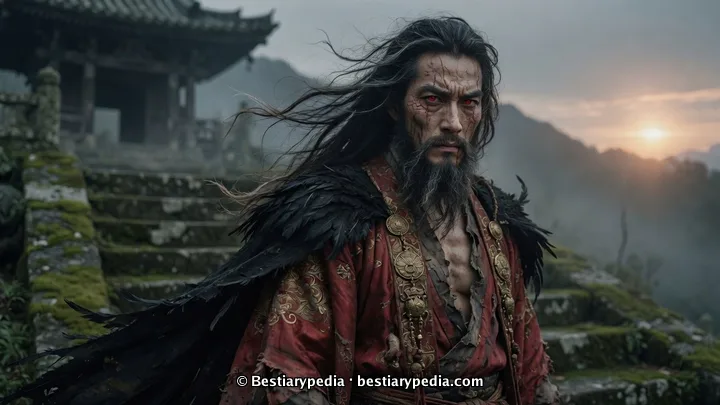
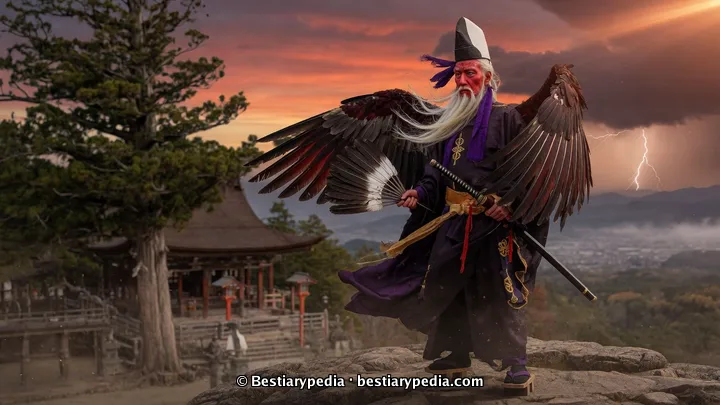
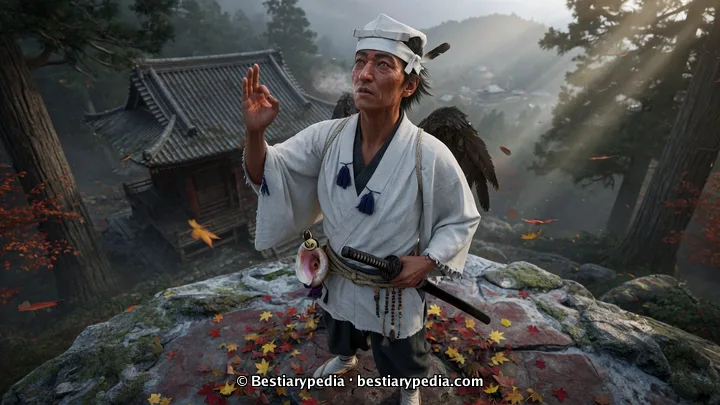
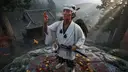
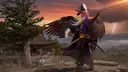
The karasu-tengu, «crow tengu», is the oldest and most bestial form of the tengu in Japanese folklore. It is described as a being with a humanoid body, wings, claws, and the head and beak of a bird of prey, halfway between man and the crow or the kite. The Buddhist tradition, spread in the Heian period, associated it with the souls of proud or corrupt monks who, upon dying without having achieved enlightenment, were reborn in this monstrous form as punishment, remaining confined in their own realm. In this initial phase, the tengu is a wild and dangerous creature that inhabits the coniferous forests of the mountains, before, according to the cycle of the archetype, asceticism elevates it to higher forms.
Nature and powers
The karasu-tengu dominates flight and possesses a strength, an agility and a supernatural sight that make it a fearsome inhabitant of the peaks. Tradition attributes to it the power to cause gusts and gales, to move at great speed among the trees and to handle weapons, especially the sword, in which the tengu are considered masters. It is also attributed the ability to deceive and disorient travelers, to kidnap those who venture into their forests (the motif of tengu-kakushi, «ocultamiento por el tengu», with which disappearances were explained) and to possess people. Although fierce, it is not an absolute demon: it respects true ascetics and punishes impiety.
Tradition and variants
The karasu-tengu represents the starting point of the tengu cycle, from which, through discipline, the superior forms can emerge: the ascetic konoha-tengu and, at the top, the long-nosed daitengu like Sōjōbō of Mount Kurama. Its crow-man iconography appears in numerous works of Japanese art, such as Toriyama Sekien's Gazu Hyakki Yagyō, and in tales from the Konjaku Monogatari and other collections. Linked to the mountains and sacred forests, the karasu-tengu condenses the ambivalent fear and respect that Japanese folklore professes towards mountains and the spirits that inhabit them, between the wild threat and the guardian of the sacred.
Relics
🏺 Personal Bo Staff
🏺 Short Wakizashi Inherited from Lost Monk
🏺 Deerskin Armor Tanned for Years
Symbology
Element
Air Yang
Number
3
Color
Black Plumage
Animals
Japanese Giant Crow Ogara, Osprey Misago, Japanese Viper Mamushi
Sigils:
🏷️ Traits
Powers
Weaknesses
Behavioral
Resistances
🗺️In the Atlas
Travel the beings’ world of origin and the cosmos of their dimensions.
📜 Mythologies
Japanese folklore encompasses oral traditions, myths, legends and supernatural creatures like yōkai and kami, compiled in Edo-period illustrated texts by Toriyama Sekien in works like Gazu Hyakki Yagyō and Konjaku Hyakki Shūi, reflecting Shinto animist beliefs, ecological fears of floods and droughts, and respect for nature in rivers, lakes and rice fields of regions like Shiga, Osaka and Kyoto.
Sources
Konjaku Monogatarishū
Unknown compiler · 12th century
Vast Japanese collection of more than a thousand tales (setsuwa) from the late Heian period (c. 12th century). It gathers Buddhist, secular and supernatural stories from India, China and Japan, and is an essential source for yōkai, oni and spirits of Japanese folklore.
Gazu Hyakki Yagyō
Toriyama Sekien · 1776
Illustrated bestiary by Toriyama Sekien, part of his influential series of yokai catalogues (1776-1784) that defined the classic image of Japanese folklore creatures.
Kojiki - Tengu
Toriyama Sekien · 712
The Kojiki (712), Japan’s oldest chronicle, compiles the creation myths, the lineage of the kami and the imperial legends. It is a primary source of Shinto mythology and of countless deities and supernatural beings of the archipelago.
Frequently asked questions
From what spirits and karmic punishments does the origin of the Karasu-tengu derive?
It derives from spirits of giant crows and eagles acquiring anthropomorphic form and from souls of arrogant monks punished with bestial reincarnation.
What combat techniques and atmospheric phenomena does the Karasu-tengu control?
It controls prolonged flight, prehensile claws with weapons, rudimentary sword skills and minor gales to intimidate without direct elemental damage.
How does the Karasu-tengu interact with children, woodcutters and yamabushi in its territory?
It abducts children to feed or as disciples, kills woodcutters felling sacred trees and respects yamabushi with correct tonsure.
🔖Cite this entry▾
If you cite this article in an academic, journalistic or editorial publication, use any of these formats:
Bestiarypedia. (2026, July 26). Karasu-tengu. Bestiarypedia. https://bestiarypedia.com/en/beings/tengu-karasu-crow
Free citation with attribution and canonical link for editorial, academic or journalistic use. Full commercial reuse or creation of derivative products requires prior agreement.