Vetala
Vetala, the Hindu vampiric spirit that possesses corpses
Curated byBestiarypediaCreated on
 India(India)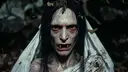

The spirit that inhabits the corpses
The vetala is a spirit of the Indian tradition that occupies foreign bodies already dead. It is formed with the soul of whoever died violently or suddenly, or of whoever did not receive the due funeral rites, and therefore remains trapped between life and the next incarnation, without being able to advance or retreat. It is located in the cemeteries and in the cremation fields, and especially hanging head down from the branches of the shami trees, on new moon nights. It is advisable to undo a frequent misunderstanding: the vetala does not drink blood. It feeds on vital energy and fear, and its true weapon is not the bite, but the word.
A corpse that knows everything
Inhabiting a dead body gives the vetala an unsettling advantage: it can stop its decomposition, move it at will and jump from one corpse to another when it suits it. It is represented with burning eyes and bones in sight. But what really makes it fearsome is what it knows. It knows the past, the present and what is to come, reads thoughts and guesses intentions, so that whoever crosses paths with it cannot lie to it. It can drive the living mad by possessing them, cause abortions and kill, and also heal and protect those who win its favor. It is an ambiguous being, closer to the dangerous oracle than to the monster, and that is why the tantras associate it with untamed spiritual energy.
The twenty-five stories
His work is the Vetala Panchavimshati, the twenty-five tales of the vetala, whose oldest preserved version is in the twelfth book of the Kathāsaritsāgara that Somadeva composed in Sanskrit in the eleventh century; the Baital Pachisi is the later Hindi version of that same material. The king Vikramaditya undertakes with an ascetic to bring him a vetala hanging from a tree. Each time he carries it on his back, the spirit tells him a story that ends in a dilemma, and warns him that if he knows the answer and remains silent, his head will explode. The king answers well twenty-four times, and as many times the vetala escapes back to the tree. In the last one the enigma has no solution and the king remains silent, so the spirit allows itself to be carried. But on the way it reveals to him that the ascetic intends to sacrifice him, and explains to him how to get ahead. Vikramaditya follows the advice and decapitates the sorcerer: the monster turns out to be the one who saves the hero.
Also known as
Relics
🏺 Shami Tree
🏺 Inverted Corpse
Symbology
Element
Darkness
Number
25
Color
Red
Animals
Raven
Sigils:
🏷️ Traits
Powers
Weaknesses
Behavioral
Resistances
🗺️In the Atlas
Travel the beings’ world of origin and the cosmos of their dimensions.
📜 Mythologies
Hindu mythology originated in the Indian subcontinent from the fusion of the traditions of the Indo-Aryan peoples, who arrived around the second millennium BCE, with the pre-existing cultures of the Indus Valley and other local populations. Its foundational texts, such as the Vedas, composed between approximately 1500 and 500 BCE, contain hymns, rituals and narratives that reflect a worldview in which the universe is governed by cosmic order (ṛta) and by cycles of creation, preservation and destruction. The main Vedic deities include Indra, Agni and Varuṇa, while in later periods, especially from the epic texts Mahābhārata and Rāmāyaṇa and the Purāṇas, the triads of Viṣṇu, Śiva and Devī in their various manifestations gain greater relevance. This tradition conceives reality as a web of existences governed by karma and rebirth (saṃsāra), with the ultimate goal of liberation (mokṣa). The epics and Puranic accounts transmit moral, philosophical and ritual teachings that have shaped the religious and social life of much of the Indian subcontinent over the centuries. Its influence extends to the arts, literature and devotional practices of numerous Hindu communities, as well as to other religious traditions of South and Southeast Asia.
Sources
Kathasaritsagara
Somadeva · 11th century
Kathasaritsagara by Somadeva (11th century) is a Sanskrit Indian story collection containing Vetala Panchavimshati, 25 tales of Vetala and King Vikramaditya.
Vikram and the Vampire
Richard Francis Burton · 1870
Translation and adaptation by Richard Francis Burton published in 1870 of the vetala tales. It is the work that introduced the West to the cycle of King Vikramaditya and the corpse-dwelling spirit, based on the Sanskrit recension.
Baital Pachisi
Traditional · medieval
Baital Pachisi (25 Vetala stories) is a popular Indo-Persian folklore collection narrating Vikramaditya's adventures with Vetala, primary source for Vetala myths in popular culture.
Frequently asked questions
Does the vetala drink blood?
No, and it is the most repeated error about him. It feeds on vital energy and fear, not blood. What it does is occupy foreign corpses: it stops their decomposition, moves them at will and jumps from one to another. Its weapon is not the bite, but the word.
From what souls is a vetala born?
Of the one who died in a violent or sudden way, or of the one who did not receive the due funeral rites. That soul remains trapped between life and the next incarnation, without being able to advance or retreat, and takes refuge in the cemeteries, in the cremation fields and hanging head down from the shami trees on the nights of the new moon.
What are the twenty-five tales of the vetala?
The Vetala Panchavimshati, whose oldest preserved version is in the twelfth book of the Kathāsaritsāgara, which Somadeva composed in Sanskrit in the eleventh century; the Baital Pachisi is the later Hindi version. King Vikramaditya carries the spirit again and again, and on each journey this one tells him a story that ends in a dilemma, warning him that if he knows the answer and remains silent, his head will explode.
How does the story end with Vikramaditya?
The king responds well twenty-four times, and as many times the vetala escapes back to his tree. In the twenty-fifth the enigma has no solution and the king keeps silence, so the spirit lets itself be carried. But on the way it reveals to him that the ascetic who commissioned him plans to sacrifice him, and explains to him how to get ahead. Vikramaditya decapitates him: the monster ends up saving the hero.
🔖Cite this entry▾
If you cite this article in an academic, journalistic or editorial publication, use any of these formats:
Bestiarypedia. (2026, July 22). Vetala. Bestiarypedia. https://bestiarypedia.com/en/beings/vetala
Free citation with attribution and canonical link for editorial, academic or journalistic use. Full commercial reuse or creation of derivative products requires prior agreement.