Asherah
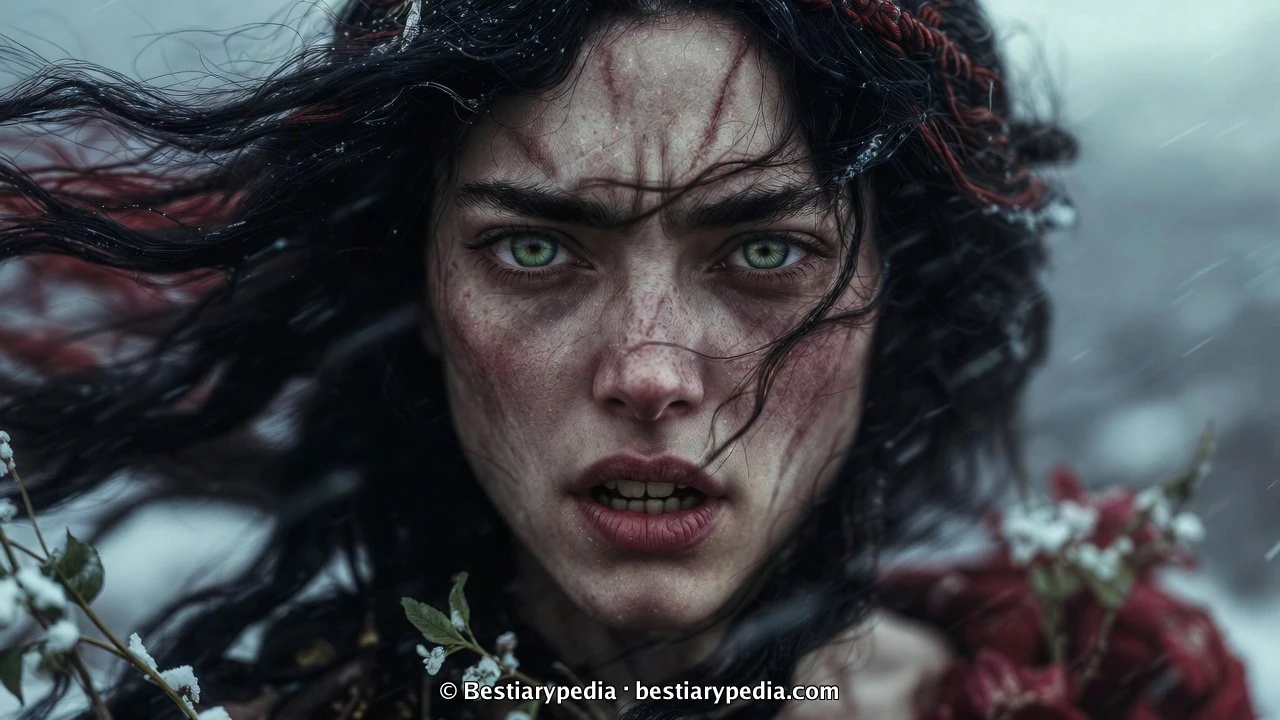
Asherah, consort of El and mother of the seventy gods in the Canaanite pantheon
Curated byBestiarypediaCreated onUpdated on
 Israel(Israel)
 Mesopotamia(Iraq)
Origins of Asherah
Asherah (Athirat in Ugaritic) is one of the great goddesses of the Canaanite pantheon, wife of the supreme god El and mother of the seventy gods that form his divine court (the «sons of Athirat»). In the texts of Ugarit (14th century BC) she receives the title of «Lady of the Sea» (rabbatu athiratu yammi) and acts as intercessor before El. Mother goddess of fertility, she was venerated by means of the asherah, a stylized sacred pole or tree erected in the «high places» throughout the Levant. Archaeology has revealed that in ancient Israel and Judah she was worshiped for centuries alongside Yahweh: the inscriptions of Kuntillet Ajrud mention «Yahweh and his Asherah». The reform of King Josiah (7th century BC), narrated in 2 Kings 23, ordered to remove and burn her pole from the Temple of Jerusalem.
Domains and Cult
As a great mother goddess, Asherah presided over the fertility of the earth, of livestock and of human beings, and she was invoked for rain and dew. In her role as consort of El she was the matriarch of the pantheon, and in the domestic sphere she was associated with the protection of the home, childbirth and midwives. Her cult, one of the most enduring of the ancient Near East, spread for more than a millennium from Ugarit to Tyre, Sidon, the high places of Israel and Judah and New Kingdom Egypt, where she was assimilated under the form of Qudshu. With the passage of time her figure became confused with that of Astarte, giving rise to the syncretic form Ashtoret which appears condemned in 1 Kings 11:5 and 11:33, and the later rabbinic tradition demonized that name transforming it into the demon Astaroth.
Symbols and Iconography
The most characteristic symbol of Asherah is the asherah-pole, a sacred pole or tree (often a stylized palm or tamarisk) that represented the goddess in the sanctuaries. In Syro-Palestinian iconography she is associated with the lion, on which she sometimes appears standing, and with intertwined serpents. In Egypt, under the advocacy of Qudshu, she is represented as a naked goddess facing forward on a lion, holding lotus flowers and serpents. Numerous Jewish «pillar figurines», small female terracotta effigies that emphasize her attributes as a nurse and protector of fertility, have been linked to her domestic cult. Her iconographic trace allows following her continuity from the Canaanite pantheon to the popular practices of monarchical Israel, before Josianic monotheism eradicated her official cult.
Relics
🏺 Living tamarisk branch
🏺 Copper diadem
Symbology
Element
Water Yang
Number
70
Color
Olive Green
Animals
Syro-Palestinian lion, Two intertwined serpents, Messenger doves
Sigils:
🏷️ Traits
Powers
Weaknesses
Behavioral
Resistances
🔗 Relations with other beings
🗺️In the Atlas
Travel the beings’ world of origin and the cosmos of their dimensions.
📜 Mythologies
Canaanite mythology developed among the Semitic peoples who inhabited the region of Canaan, located in the eastern Mediterranean Levant, from the late third millennium BCE until the first half of the first millennium BCE. The main sources for its knowledge come from the texts discovered at Ugarit, as well as references in Egyptian, Hittite and Hebrew documents. This tradition formed part of a broader set of religions of the ancient Near East and shared elements with Mesopotamian and Egyptian mythologies, although it retained distinctive features linked to the coastal and agricultural environment of the area. In the Canaanite pantheon, the divinities associated with fertility, storms and the sea occupied a prominent place. Baal, god of rain and vegetation, played a central role in the myths of combat against the forces of chaos, while Asherah, associated with motherhood and sacred trees, figured as the consort of the supreme god El. Other relevant figures included Astarte, Dagan and Mot, who embodied aspects of war, grain and death respectively. Worship was practiced in local shrines and temples, with rituals that sought to ensure agricultural prosperity and the protection of the city-states. The influence of Canaanite mythology is perceived in later traditions of the Levant, especially in the religion of ancient Israel, where certain elements were reinterpreted or rejected. Epigraphic and archaeological remains found in Phoenicia and Palestine attest to the continuity of some cults until the Hellenistic period, at which time a progressive fusion with Greek and Roman divinities took place.
Sources
Ugaritic Texts
Various (scribes of Ugarit) · c. 1300 BC
Corpus of inscriptions and tablets documenting the mythology, rituals and theology of the Canaanite pantheon in Ugarit.
Book of Ezekiel
Ezekiel ben Buzi (attributed) · c. 593-571 BCE
The Book of Ezekiel is one of the Major Prophets in the Old Testament, recounting the visions and prophecies of the prophet Ezekiel during the Babylonian exile, including the divine chariot, valley of dry bones, and future temple.
Frequently asked questions
What is the origin of Asherah according to the Ugaritic texts?
Asherah is the consort of El in fourteenth-century BCE texts. She is the mother goddess and lady of the sea in the Canaanite pantheon.
What powers are attributed to Asherah in the Canaanite tradition?
She invokes the rain and the dew, governs the fertility of the earth and of the wombs, and exercises authority over the seventy gods, her children, in her condition as mother of the pantheon. She can manifest herself as a sacred tree: the wooden post that bears her name and that the Bible orders to cut down.
How does Asherah relate to Astaroth and Astarte?
Astarte is her companion and both converge in Astaroth through late syncretism. Astaroth is her demonic transformation.
🔖Cite this entry▾
If you cite this article in an academic, journalistic or editorial publication, use any of these formats:
Bestiarypedia. (2026, July 26). Asherah. Bestiarypedia. https://bestiarypedia.com/en/beings/asherah
Free citation with attribution and canonical link for editorial, academic or journalistic use. Full commercial reuse or creation of derivative products requires prior agreement.
Similar beings
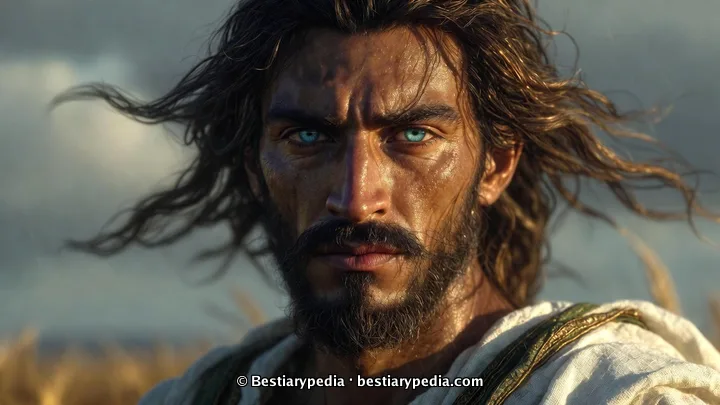
Dagon
Dagon, Canaanite god of the sea, fertility, and agriculture
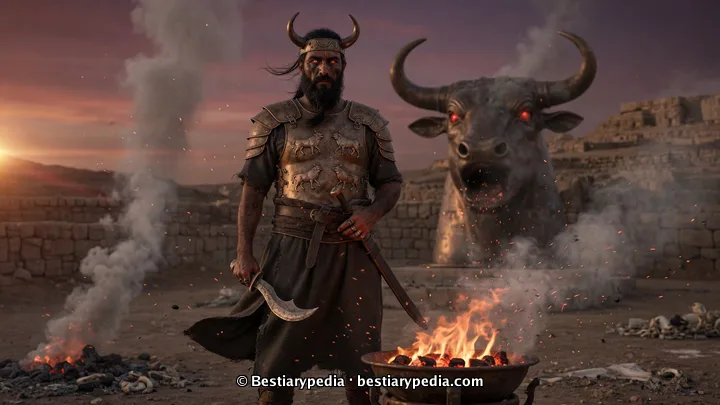
Milcom
Milcom, national Ammonite deity associated with child sacrifice
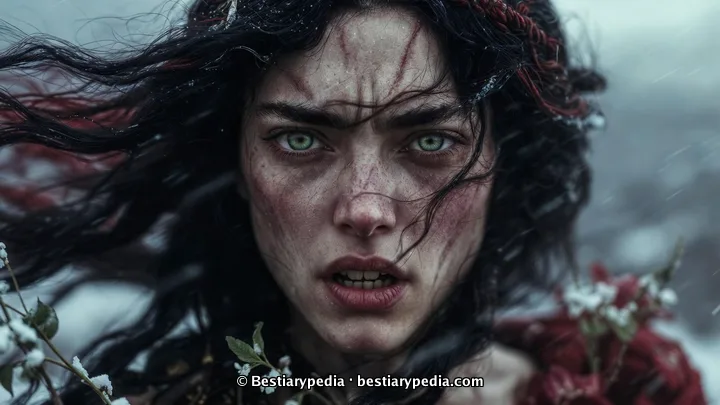
Astarte
Astarte, Canaanite goddess of love, fertility, war and sexuality
Baal-Hadad
Baal-Hadad, Canaanite god of storm, rain and fertility