Lycaon
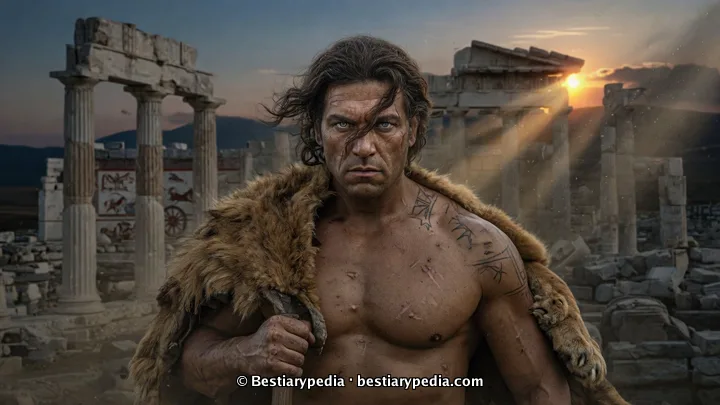
Lycaon, impious king of Arcadia
Curated byBestiarypediaCreated onUpdated on
 Ancient Greece(Greece)
🔄 Transformation line (Phase 1 of 2)
Mythical origins of Lycaon
Lycaon ruled Arcadia as a direct descendant of Pelasgus and father of fifty sons. His reign was marked by systematic impiety toward the Olympian gods. Ancient sources present him as a monarch who deliberately challenged Zeus's authority through acts of public sacrilege. This attitude derived from an Arcadian tradition that emphasized regional autonomy against the pan-Hellenic pantheon. The central conflict arose when Lycaon organized a banquet intended to test divine omniscience.
The transfiguration and divine punishment
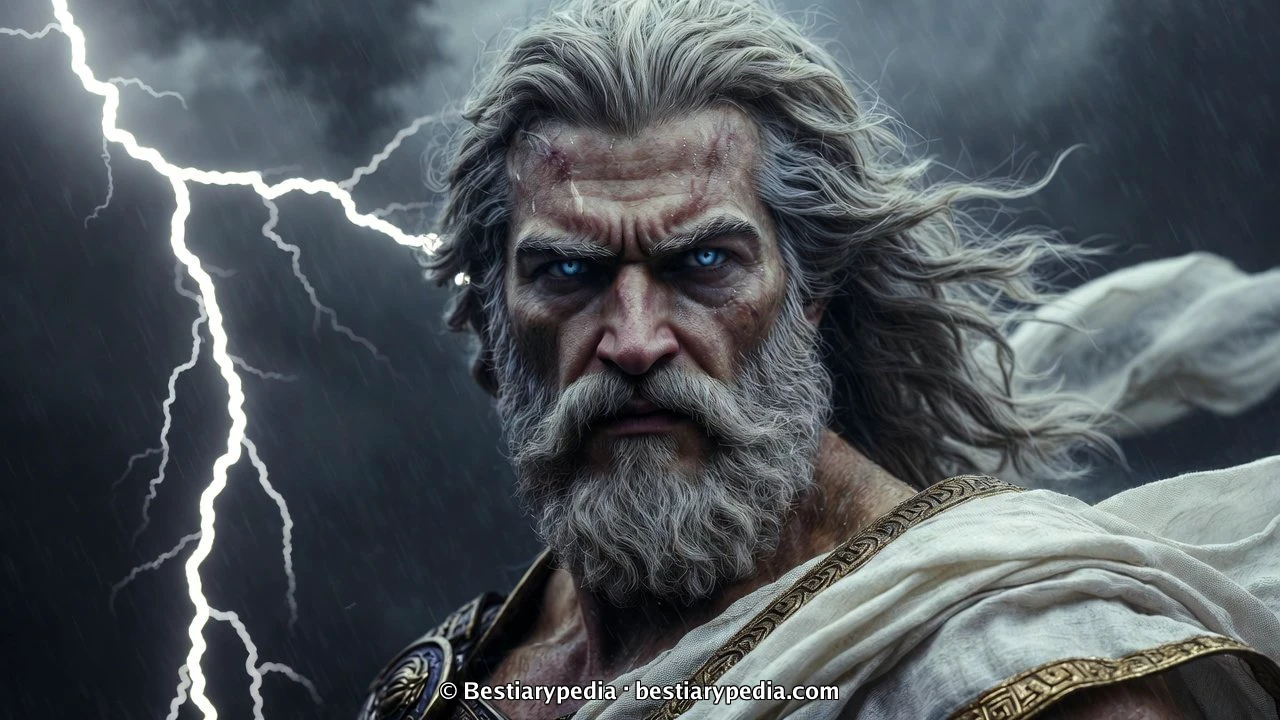
Zeus responded to the sacrilegious banquet by transforming Lycaon into a wolf and striking down most of his sons. The metamorphosis constituted the first documented mythical account of lycanthropy in the Hellenic tradition. Ancient variants disagree on the victim served: his own son Nyctimus or an anonymous hostage. The punishment preserved human consciousness within the lupine form, establishing a model of transformation reversible only by later divine intervention. This narrative grounds the etiological origin of the werewolf figure.
Legacy in mythology and lycanthropy
The story of Lycaon established the archetypal paradigm of lycanthropy in later Greco-Roman literature. Authors such as Ovid and Apollodorus transmitted variants that emphasize divine justice and the restoration of cosmic order. The figure of the wolf king symbolizes the transgression of boundaries between human and animal, serving as a warning against hubris. His transformation directly links Arcadian royalty with the mythical origin of the werewolf, influencing medieval and Renaissance European traditions without altering the original Hellenic core.
Relics
🏺 Wolf skin
Symbology
Element
Wolf
Number
1
Color
Gray
Animals
Wolf
Sigils:
🏷️ Traits
Powers
Weaknesses
Behavioral
Resistances
🔗 Relations with other beings
🗺️In the Atlas
Travel the beings’ world of origin and the cosmos of their dimensions.
📜 Mythologies
Greek mythology developed in Ancient Greece from the Late Bronze Age and reached its most elaborate form during the archaic and classical periods, between the 8th and 4th centuries BCE. It emerged among the Hellenic peoples who inhabited the Greek peninsula, the Aegean islands and the coasts of Asia Minor, and was transmitted mainly through the oral poetry of Homer and Hesiod, as well as local traditions collected in sanctuaries and festivals. Its worldview presents a universe ordered by a hierarchy of divinities that intervene in human and natural affairs, with Olympus as the dwelling of the principal gods and Hades as the destination of the deceased. The central deities include the twelve Olympians, headed by Zeus, god of the sky and sovereign, together with Hera, Poseidon, Athena, Apollo, Artemis, Aphrodite, Ares, Hephaestus, Hermes, Demeter and Dionysus. Before them, the Titans, among whom Cronus and Rhea stand out, ruled the cosmos until they were deposed by the Olympians in the Titanomachy. Other important entities are the Muses, the nymphs, the Cyclopes and the Moirai, who embody cosmic forces and destinies. This tradition exerted a lasting influence on the literature, art and thought of Rome, the European Renaissance and subsequent Western culture, supplying motifs, characters and narrative structures that have endured in philosophy, astronomy and the arts to the present day.
Sources
Library
Apollodorus · 100
Mythological compendium attributed to Apollodorus summarizing Greek legends.
Metamorphoses
Ovid · 8
Work by Ovid narrating mythological transformations including marine interventions.
Pausanias' Description of Greece
Pausanias · ca. 150 CE
Pausanias’ "Description of Greece" (2nd century), a geographical and religious guide to the Greek world. It tours sanctuaries, monuments and local cults, preserving myths, heroes and divinities that would otherwise have been lost.
Frequently asked questions
What action by Lycaon directly caused his transformation into a wolf?
Lycaon served human flesh to Zeus at a banquet to test his omniscience. Zeus responded by transforming him into a wolf.
What specific relationship does Lycaon hold with Zeus according to Greek myth?
Lycaon is a rival of Zeus due to his impiety and direct challenge to divine omniscience. The divine punishment seals this opposition.
How does Lycaon's transformation symbolize the origin of lycanthropy?
Lycaon's metamorphosis constitutes the first documented myth of human conversion into a wolf. It preserves human consciousness within an animal form.
🔖Cite this entry▾
If you cite this article in an academic, journalistic or editorial publication, use any of these formats:
Bestiarypedia. (2026, July 15). Lycaon. Bestiarypedia. https://bestiarypedia.com/en/beings/lycaon-king
Free citation with attribution and canonical link for editorial, academic or journalistic use. Full commercial reuse or creation of derivative products requires prior agreement.