Moroi
Moroi, the living vampire from Romanian folklore that drains vital energy
Curated byBestiarypediaCreated onUpdated on
 Wallachia(Romania)
Origins of the moroi
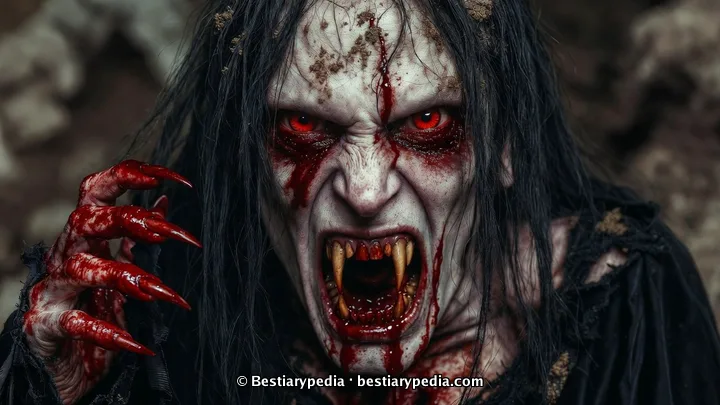
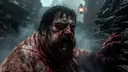
The moroi is a figure from Romanian folklore, closely related to the strigoi and often described as a «living vampire». The compilations of Emily Gerard (Transylvanian Superstitions, 1885) and of Agnes Murgoci (The Vampire in Roumania, 1926) present it as a being born in circumstances considered anomalous or ill-fated: children conceived or born on certain holidays, seventh children, illegitimate children or children who died without being baptized. According to the belief, such people could carry within them a vampiric nature, so that their spirit left the body during sleep to harm the living. Baptism and Orthodox rites were considered essential to prevent this fate, and an unappeased moroi could become after death a strigoi, revenant fully formed.
Manifestation
Unlike the strigoi mort, corpse that comes out of the grave, the moroi often acts while alive or as a spirit. By day it can pass as an ordinary person, although folklore sometimes attributes revealing traits to it, such as a certain paleness or a peculiar constitution. At night, its spirit manifests as an invisible or dark presence that enters houses to oppress the sleepers, sitting on their chest to absorb their breath or vital energy, in an image related to that of the nightmare (the «mara» of European folklore). It is also attributed the ability to transform into small animals to sneak into homes. Its presence was revealed by the restlessness of the livestock, the lack of sleep and the inexplicable exhaustion of its victims.
Protection and legacy
The defenses against the moroi coincide to a large extent with those employed against the strigoi: garlic, certain protective herbs, holy water, crosses and orthodox prayers hung or placed on doors and windows. To prevent a suspicious deceased from rising, they resorted to burying him face down, driving a stake into him or filling his mouth with garlic or seeds, with the idea of keeping him occupied or tied to the grave. Community surveillance and the exhumation of suspicious graves formed part of these practices. The moroi, together with the strigoi, constitutes one of the folkloric antecedents of the modern literary vampire, and its name endures today in popular culture, reused by contemporary vampire fiction.
Also known as
Relics
🏺 Holy Garlic
🏺 Orthodox Iron Cross
Symbology
Element
Shadow
Number
1
Color
White
Animals
Cat, Dog
Sigils:
🏷️ Traits
Powers
Weaknesses
Behavioral
Resistances
🗺️In the Atlas
Travel the beings’ world of origin and the cosmos of their dimensions.
📜 Mythologies
Romanian folklore features creatures like Zmei dragons, Strigoi vampires, Moroi spirits, Iele evil fairies, forest guardians, rooted in pre-Christian Carpathian and Transylvanian traditions, with tales of bloodsuckers, shape-shifters and nocturnal hauntings.
Sources
Transylvanian Superstitions
Emily Gerard · 1885
Emily Gerard's 1885 article in Nineteenth Century documents Romanian superstitions including Moroi as life-energy draining spirits.
The Vampire in Roumania
Agnes Murgoci · 1926
Agnes Murgoci's 1926 study in Folklore journal details Moroi and strigoi as vital energy-draining entities.
Frequently asked questions
What birth conditions give rise to a Moroi according to Emily Gerard's compilations?
The Moroi is born to mothers under inverted conditions: births on Christian holidays, twins, sons of priests or widows, and pregnancies exceeding nine months. These children display visible demonic traits such as a large head, sharp teeth and a small tail. Early baptism and the absence of family curses may prevent its manifestation.
What physical attributes and transformation abilities characterize the Moroi in its nocturnal form?
At night the Moroi manifests as a translucent or shadowy spirit dressed in a white shirt resembling a shroud. It floats or flies with invisible wings and emits whistles or howls. It can transform into small animals such as cats, dogs, chickens or insects to infiltrate homes.
What relationship exists between the Moroi and the strigoi according to Romanian folklore?
The Moroi represents the living form that after death can transform into strigoi mort if specific rituals are not applied. This transition occurs when the body does not receive a stake in the heart, decapitation or garlic in the mouth. The resulting strigoi is considered more powerful and dangerous.
What symbolic and iconographic elements are associated with the Moroi in Romanian folklore?
The Moroi is associated with shadow, the color white and the number one. Its iconography includes the white shroud, sharp fangs and animals such as cat and dog. These elements reinforce its nature as a nocturnal spirit that drains vital energy.
🔖Cite this entry▾
If you cite this article in an academic, journalistic or editorial publication, use any of these formats:
Bestiarypedia. (2026, July 26). Moroi. Bestiarypedia. https://bestiarypedia.com/en/beings/moroi
Free citation with attribution and canonical link for editorial, academic or journalistic use. Full commercial reuse or creation of derivative products requires prior agreement.