Strigoi
Strigoi mort / viu – The Romanian Revenant
Curated byBestiarypediaCreated onUpdated on
 Wallachia(Romania)
Origins of the strigoi
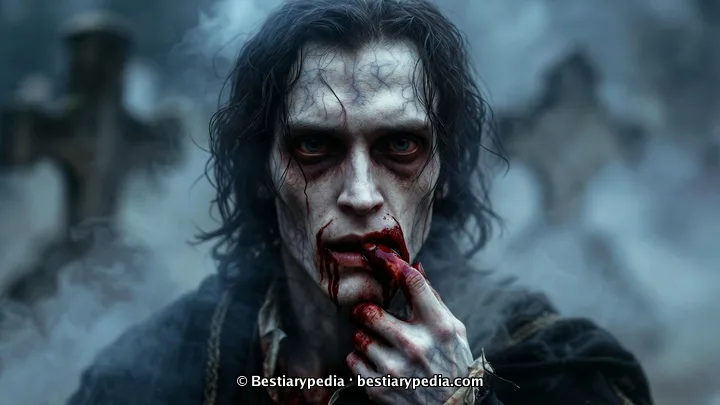
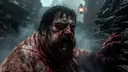
The strigoi is one of the most feared figures in Romanian folklore, a revenant or dead person who returns from the grave, whose roots sink into pre-Christian beliefs about restless souls, later intertwined with Orthodox tradition and with Slavic and Balkan myths. The name derives from the Latin striga («witch»), through the Romanian strigă. The tradition distinguishes two great classes: the strigoi vii, living vampires, people endowed with occult powers (often born with a particularity, such as an amniotic membrane over the head) whose spirit leaves the body at night; and the strigoi morți, reanimated corpses that come out of their graves. It was believed that certain circumstances (suicide, violent death, lack of baptism or unexpiated sins) predisposed one to become a strigoi.
Characteristics
The strigoi morți are described as notably well-preserved corpses, with a reddish face and with nails and hair that seem to have continued growing after death, features that ethnography has related to the natural processes of decomposition misinterpreted by the villagers. They are attributed superhuman strength, the ability to transform into animals (wolf, dog, cat, insect) and that of exhausting the living. Their typical action consists of revisiting their relatives and their old home to consume the vitality of the sleepers, causing illness, exhaustion and death, as well as misfortunes on livestock and crops. The strigoi vii, for their part, act through the nocturnal journey of their spirit, causing nightmares and ills without apparently abandoning their bed.
Detection and Protection
Romanian folklore developed a whole repertoire of measures against the strigoi. As prevention, the suspect was buried face down, garlic was placed in the mouth or thorns around, and the graves of those who had died in disturbing circumstances were watched. To confirm the suspicion the body was exhumed: if it appeared incorrupt, rosy and with fresh blood, it was considered a strigoi. The ritual destruction involved driving a stake (of ash, oak or hawthorn) into the heart, beheading the corpse and placing the head at the feet, extracting and burning the heart, or incinerating the entire body and scattering the ashes. These practices, documented by folklorists such as Agnes Murgoci, reflect a worldview in which ritual purity protects the community, and contributed to forming the image of the vampire that Bram Stoker popularized.
Also known as
Relics
🏺 Strigoi Fang
Symbology
Element
Blood
Number
1
Color
Blood Red
Animals
Bat, Wolf
Sigils:
🏷️ Traits
Powers
Weaknesses
Behavioral
Resistances
🗺️In the Atlas
Travel the beings’ world of origin and the cosmos of their dimensions.
📜 Mythologies
Romanian folklore features creatures like Zmei dragons, Strigoi vampires, Moroi spirits, Iele evil fairies, forest guardians, rooted in pre-Christian Carpathian and Transylvanian traditions, with tales of bloodsuckers, shape-shifters and nocturnal hauntings.
Sources
Transylvanian Superstitions
Emily Gerard · 1885
Emily Gerard's 1885 article in Nineteenth Century documents Romanian superstitions including Moroi as life-energy draining spirits.
The Vampire in Roumania
Agnes Murgoci · 1926
Agnes Murgoci's 1926 study in Folklore journal details Moroi and strigoi as vital energy-draining entities.
The Vampire, His Kith and Kin
Montague Summers · 1928
Montague Summers' book (1928) compiles historical accounts of the vrykolakas, citing Allatius and describing powers, weaknesses, and Balkan folklore links.
Frequently asked questions
From which pre-Christian beliefs do the strigoi arise according to Romanian folklore?
The strigoi emerge from pre-Christian beliefs in restless spirits and wandering souls returning from the grave. They are divided into strigoi vii, living humans with powers, and strigoi morți, reanimated corpses. Their origin links to transgressions such as suicides or violent deaths.
What physical and supernatural attributes distinguish the strigoi from simple ghosts?
The strigoi morți exhibit superhuman strength, flight in bat or wolf form and the ability to turn into mist. They feed on blood or vital breath, emit fetid odor and have red eyes. They are vulnerable to sunlight, garlic and thorns, and their longevity depends on lunar cycles.
What ritual methods does Romanian tradition employ to destroy the strigoi?
Tradition prescribes decapitation, staking the heart with ash or oak and anointing the mouth with garlic. The remains are burned until no ash remains, scattered in running water. The strigoi vii are neutralized with Orthodox prayers, holy water and iron crosses.
🔖Cite this entry▾
If you cite this article in an academic, journalistic or editorial publication, use any of these formats:
Bestiarypedia. (2026, July 26). Strigoi. Bestiarypedia. https://bestiarypedia.com/en/beings/strigoi
Free citation with attribution and canonical link for editorial, academic or journalistic use. Full commercial reuse or creation of derivative products requires prior agreement.