Isis
Isis, Egyptian goddess of motherhood, magic and resurrection
Curated byBestiarypediaCreated onUpdated on
 Ancient Egypt(Egypt)



Mythical Origins of Isis
Isis (Aset in ancient Egyptian, «the one of the throne») is one of the most important and long-lived goddesses of the Egyptian pantheon. Daughter of Geb, the earth, and Nut, the sky, she forms part of the Ennead of Heliopolis and is sister and wife of Osiris, as well as sister of Set and Nephthys. Her name and her oldest headdress, the hieroglyph of the throne, link her from the beginning with royalty: she is the symbolic mother of the pharaoh, whom she holds on her lap as she holds her son Horus. Already in the Pyramid Texts, the oldest religious texts of Egypt, she is invoked as protector of the deceased king and guarantor of his resurrection. With time, Isis absorbed attributes of other goddesses, especially Hathor, whose horns and solar disk she adopted in her crown, and came to be venerated as «the Great in magic» (Weret-Hekau) and as universal goddess, lady of the sky, the earth and the underworld.
Main Myths of Isis
The central myth of Isis is her role in the passion of Osiris. After the murder and dismemberment of her husband at the hands of Set, Isis travels through Egypt gathering the fragments of his body and, with her powerful spells, returns him to life long enough to conceive Horus. She then hides her son in the marshes of the Delta to protect him from Set, and the tales, such as those preserved in the Metternich Stele, show her healing him from a scorpion sting through magic. Another famous myth tells how Isis obtains supreme power: she fabricates a serpent that poisons Ra and only agrees to cure him in exchange for the old solar god revealing his secret name to her, the source of all his strength. These tales consolidate her image as an unequaled sorceress, faithful wife and devoted mother, whose love and cunning overcome death and ensure the continuity of the divine royalty.
Cult and Legacy of Isis
The cult of Isis, rooted in Egypt (with temples as famous as that of Philae, active until the 6th century AD), spread throughout the Greco-Roman world from the Hellenistic period onwards. Assimilated to Greek and Roman goddesses such as Demeter, Aphrodite or Fortuna, Isis was worshipped as a savior and universal divinity in initiatory mysteries that promised protection in this life and hope in the afterlife, and which Apuleius describes in his novel El asno de oro. Her sanctuaries extended from Alexandria to Rome, Pompeii and the borders of the Empire. The iconography of Isis breastfeeding Horus (the Isis lactans) is considered by many scholars a visual antecedent of the Christian representations of the Virgin with the Child. Enduring symbol of divine motherhood, magic and resurrection, Isis is today one of the divinities of ancient Egypt with the greatest recognition and cultural influence.
Also known as
Relics
🏺 Ankh
Symbol of eternal life, wielded by Isis in resurrection rituals.
🏺 Sistrum
Sacred musical instrument that wards off chaos and invokes protection.
Symbology
Element
Water and Earth
Number
7
Color
Blue and Green
Animals
Falcon, Cow
Sigils:
🏷️ Traits
Powers
Weaknesses
Behavioral
Resistances
🔗 Relations with other beings
Ally of
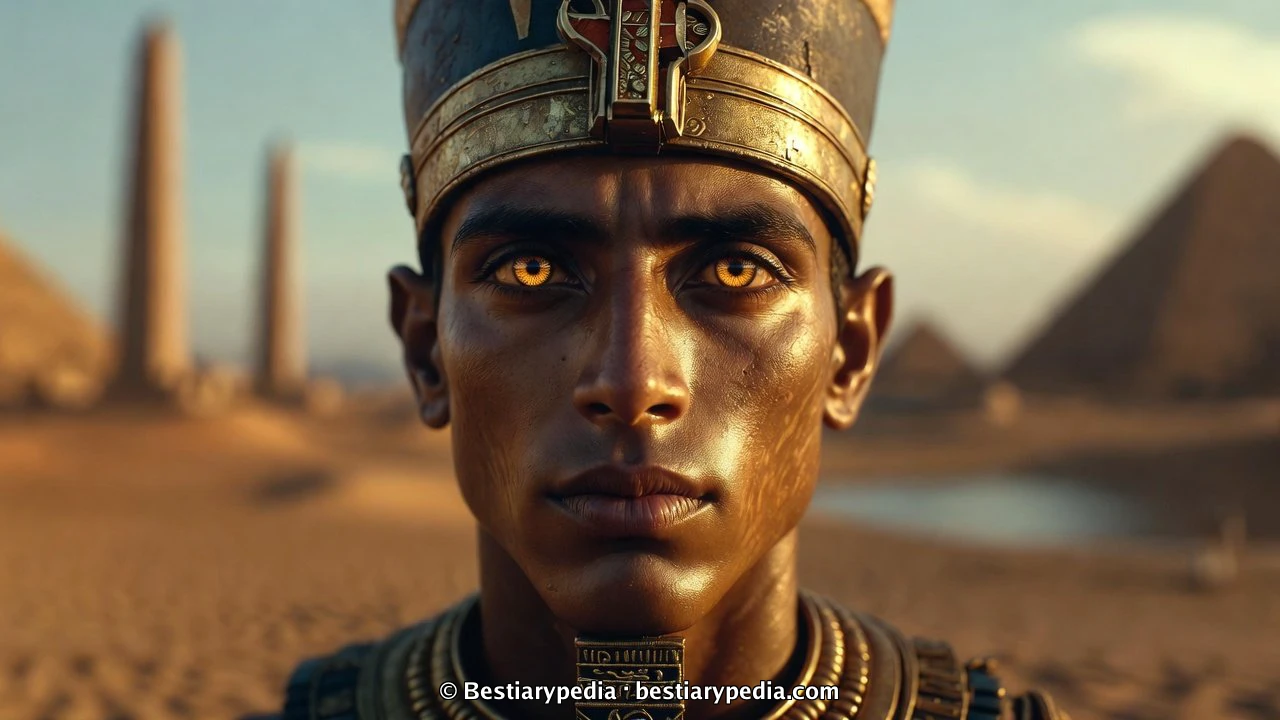
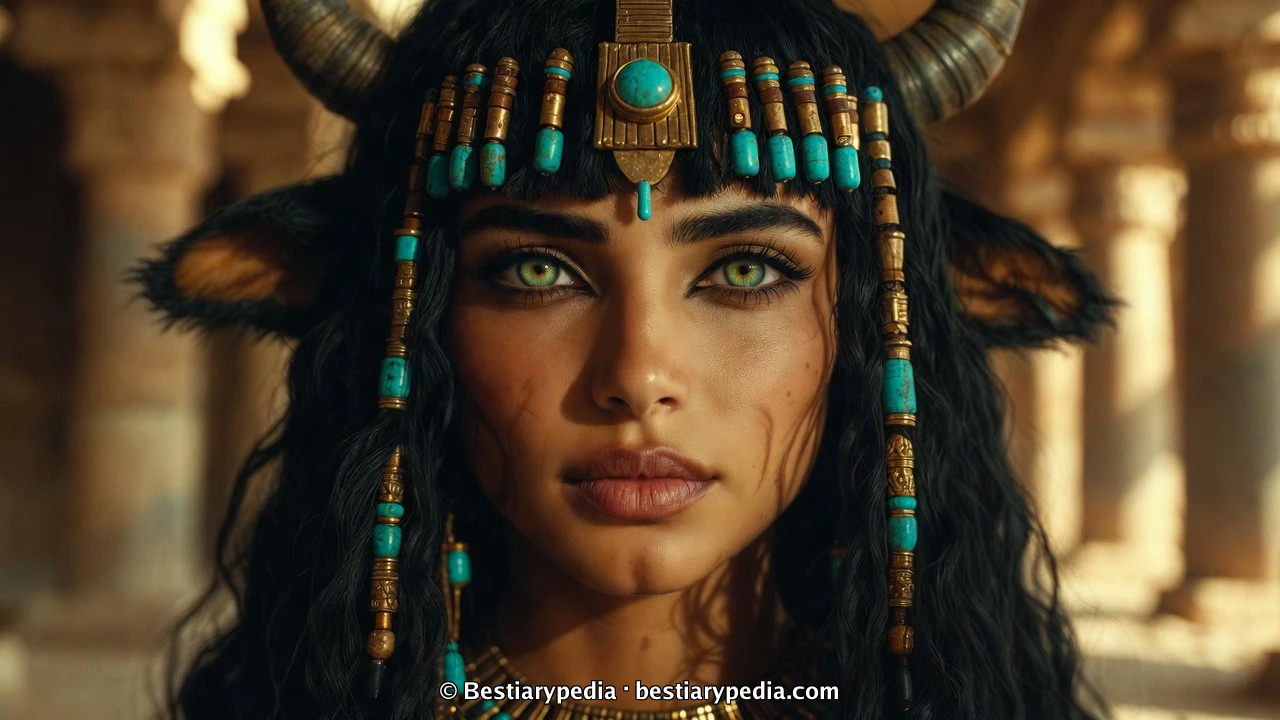
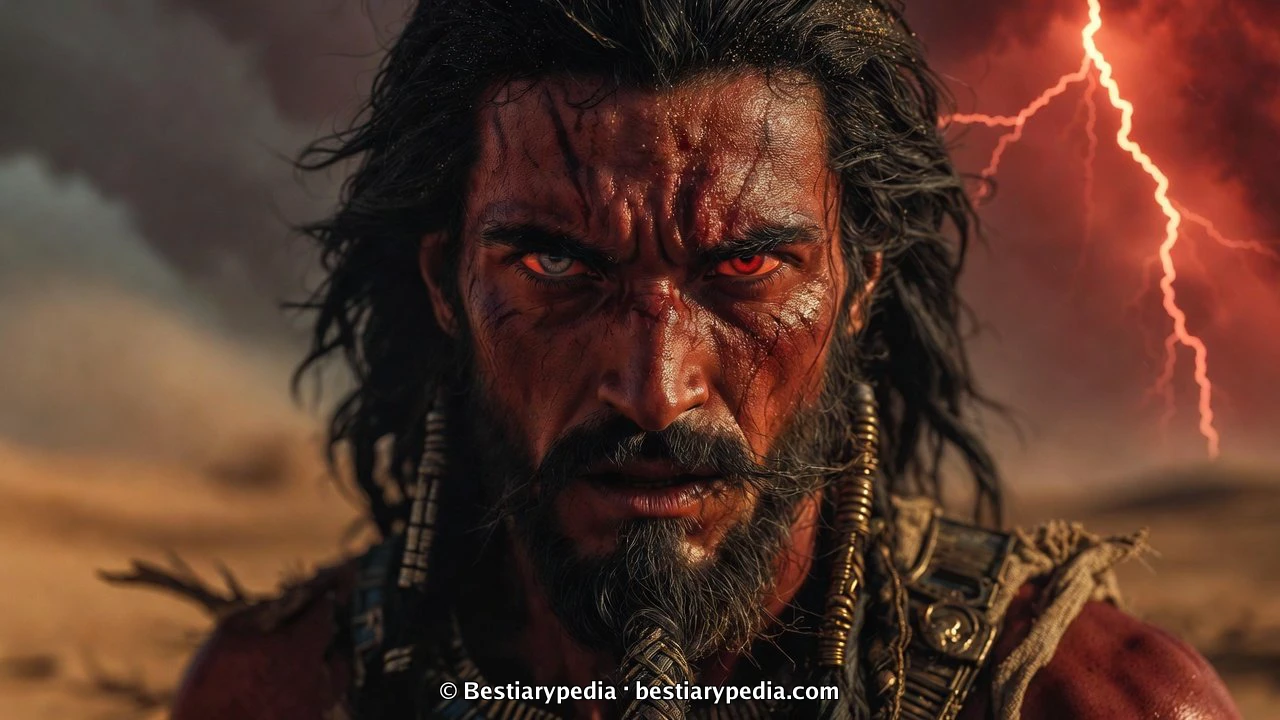
🗺️In the Atlas
Travel the beings’ world of origin and the cosmos of their dimensions.
📜 Mythologies
Egyptian mythology developed in ancient Egypt over more than three millennia, from the predynastic period to the Roman era, and was closely linked to the civilization that inhabited the banks of the Nile. Its beliefs were based on a worldview in which cosmic order, represented by the concept of maat, was maintained through the action of the gods and the performance of rituals by humans. The Egyptian pantheon included numerous local and national deities, among which Ra stood out, associated with the sun and creation, and Osiris, god of resurrection and the underworld, along with other figures such as Isis, Horus, Seth and Amun. Mythological narratives explained the origin of the world, the daily cycle of the sun and the fate of the soul after death, integrating elements of the nature of the Nile valley and astronomical observation. Funerary texts, such as the Book of the Dead, and temple reliefs constitute the main sources for the knowledge of these beliefs. Although official worship declined with the Christianization of Egypt, Egyptian mythology has exerted a lasting influence on art, literature and the Western imagination, and continues to be the subject of study in Egyptology.
Sources
Pyramid Texts
Unknown · -2400
Collection of ancient Egyptian funerary texts inscribed in the pyramids of the Fifth and Sixth Dynasties.
On Isis and Osiris
Plutarch · 100
Treatise by Plutarch (1st-2nd century AD) preserving the most complete account of the Osirian cycle and the Egyptian divine family, interpreted for the Greco-Roman world. A key classical source on Egyptian religion.
Coffin Texts
Unknown · c. 2000 BCE
Egyptian funerary texts inscribed on coffins from the Middle Kingdom.
Hymn to Isis
Priests of Philae · c. 300 BC
Hymn to Isis (c. 300 BCE), a composition of praise to the great Egyptian goddess. It exalts Isis as wife of Osiris and mother of Horus, lady of magic, motherhood and resurrection, venerated throughout the Mediterranean.
Frequently asked questions
How does Isis's cosmic birth connect to the restoration of order after primordial chaos?
Isis emerged as daughter of Geb and Nut in the Ennead of Heliopolis. Her cosmic birth links her to the cycle of life, death and rebirth. It symbolizes the maternal force that restores order after primordial chaos.
What actions does Isis perform to resurrect Osiris and protect Horus according to the main myths?
Isis gathered the scattered fragments of Osiris's body after his murder by Seth. She resurrected him through powerful magic rituals and conceived Horus. She protected her son with spells and amulets described in the Coffin Texts.
In what way did the cult of Isis spread and which Hellenistic goddesses were syncretized with her?
The cult of Isis spread from Egypt throughout the Mediterranean. It syncretized with goddesses such as Demeter and Aphrodite. Hymns praise her as great magician and universal protector in Hellenistic and Roman traditions.
🔖Cite this entry▾
If you cite this article in an academic, journalistic or editorial publication, use any of these formats:
Bestiarypedia. (2026, July 26). Isis. Bestiarypedia. https://bestiarypedia.com/en/beings/isis
Free citation with attribution and canonical link for editorial, academic or journalistic use. Full commercial reuse or creation of derivative products requires prior agreement.
Similar beings
Nephthys
Nephthys, Egyptian funerary goddess, sister of Isis, wife of Set and mother of Anubis
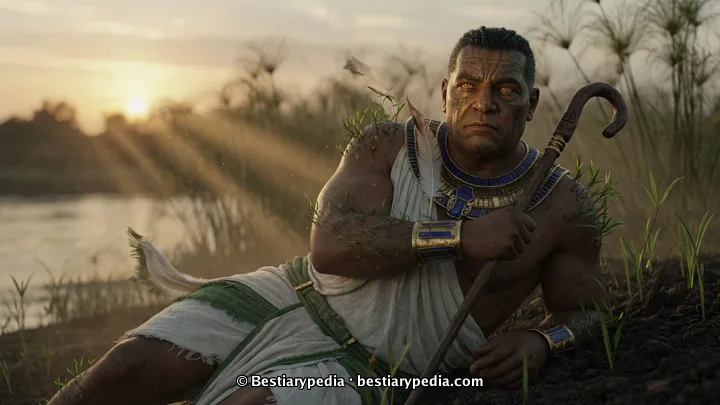
Geb
Geb, Egyptian god of the Earth, son of Shu and Tefnut
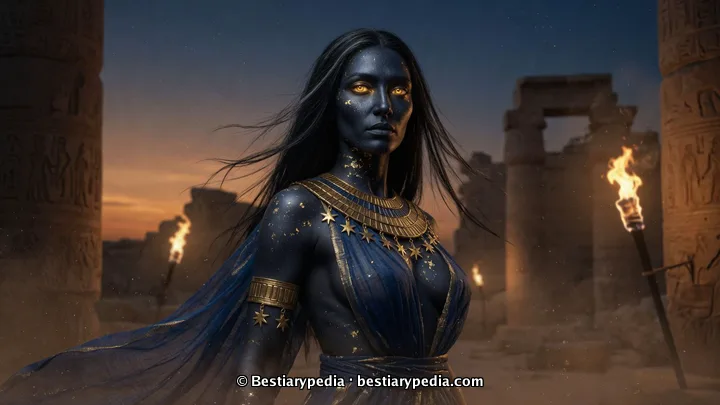
Nut
Nut, Egyptian goddess of the sky who arches over the Earth
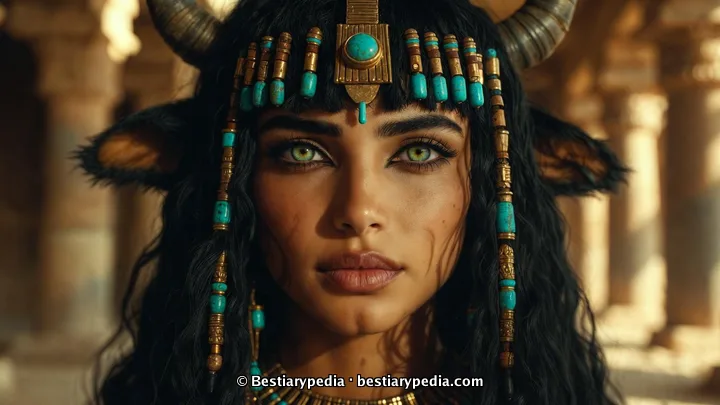
Hathor
Hathor, goddess of love, beauty, music and motherhood in Egyptian mythology
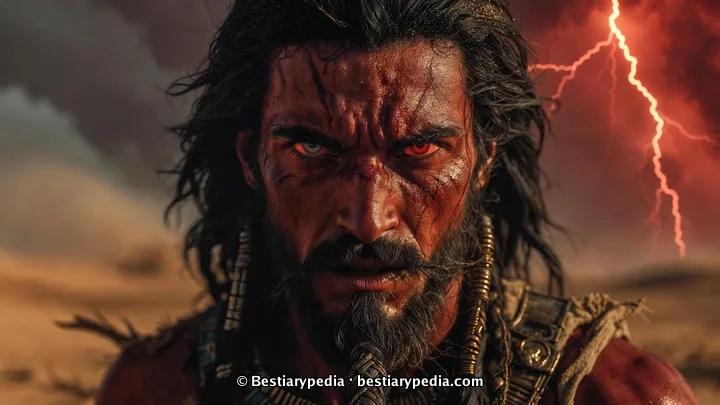
Set
Set, god of chaos, storm and violence in Egyptian mythology
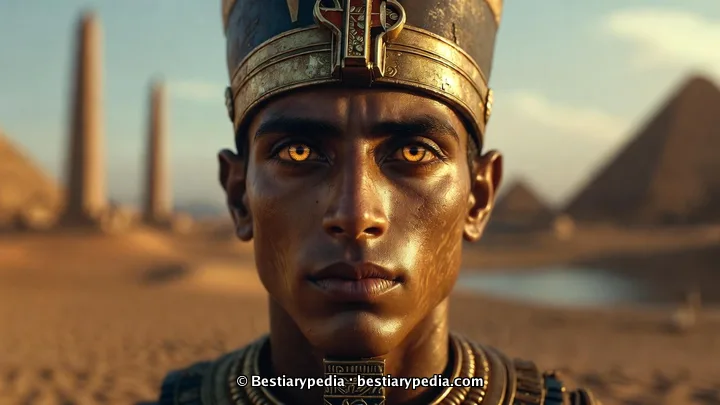
Ra
Ra, Egyptian god of the sun, creator of the world and father of the gods
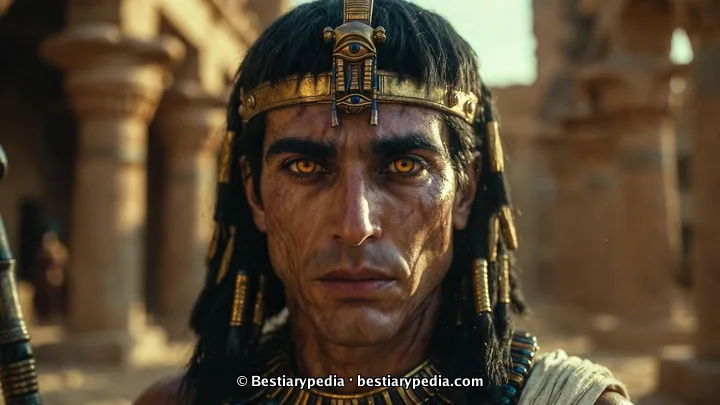
Horus
Horus, god of the sky, kingship and war in Egyptian mythology
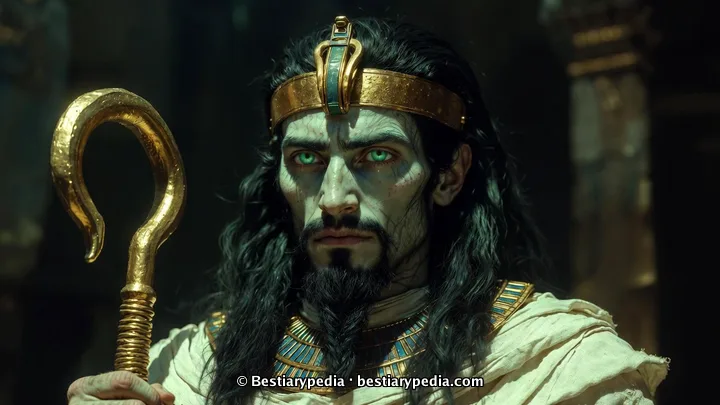
Osiris, Lord of the Dead
Osiris, Lord of the Dead and god of resurrection in Egyptian mythology