Adi Shakti
Adi Shakti, the primordial cosmic Goddess of Shaktism
Curated byBestiarypediaCreated onUpdated on
 India(India)
 South Asia(India, Nepal)
🔄 Transformation line (Phase 1 of 5)

Cosmic Origins of Adi Shakti
Adi Shakti represents the primordial and infinite energy that precedes all manifestation in Shaktism. She emerges from absolute emptiness at the beginning of each cosmic cycle as the supreme creative force without origin or defined form. Shakta texts describe her as the universal matrix from which all subsequent feminine deities spring. Her existence transcends time and space, constituting the active principle that animates the entire universe. This position places her as the first in the chain of Devi transformations, prior even to any duality.
Divine Manifestations and Relationships
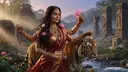
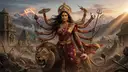
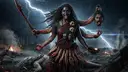
From Adi Shakti emanate directly Sati, Parvati, Durga and Kali as successive expressions of the same cosmic energy. Each form inherits her creative and transformative power while maintaining essential unity with the primordial source. Her relationship with Shiva is that of cosmic consort where feminine energy activates the masculine principle of pure consciousness. This union symbolizes the balance between creation and dissolution in the universal cycle. Adi Shakti remains unaltered while her manifestations act in the phenomenal world.
Iconography and Symbolic Distinction
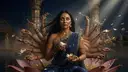
Adi Shakti is depicted as a radiant cosmic female figure endowed with a thousand arms holding attributes of creation and destruction. She is positioned on a floating lotus surrounded by the vibrant energies of the cosmos in the form of luminous mandalas. This iconography emphasizes her unlimited and omnipresent nature. She is clearly distinguished from Mahadevi since the latter represents the manifested and personalized phase while Adi Shakti embodies the unmanifested and transcendent source. Her image avoids limited anthropomorphic attributes to highlight her condition as pure energy prior to all form.
Also known as
Relics
🏺 Cosmic Lotus
Symbology
Element
Cosmic Energy
Number
1000
Color
Gold
Animals
Tiger
Sigils:
🏷️ Traits
Powers
Weaknesses
Behavioral
Resistances
🗺️In the Atlas
Travel the beings’ world of origin and the cosmos of their dimensions.
📜 Mythologies
Hindu mythology originated in the Indian subcontinent from the fusion of the traditions of the Indo-Aryan peoples, who arrived around the second millennium BCE, with the pre-existing cultures of the Indus Valley and other local populations. Its foundational texts, such as the Vedas, composed between approximately 1500 and 500 BCE, contain hymns, rituals and narratives that reflect a worldview in which the universe is governed by cosmic order (ṛta) and by cycles of creation, preservation and destruction. The main Vedic deities include Indra, Agni and Varuṇa, while in later periods, especially from the epic texts Mahābhārata and Rāmāyaṇa and the Purāṇas, the triads of Viṣṇu, Śiva and Devī in their various manifestations gain greater relevance. This tradition conceives reality as a web of existences governed by karma and rebirth (saṃsāra), with the ultimate goal of liberation (mokṣa). The epics and Puranic accounts transmit moral, philosophical and ritual teachings that have shaped the religious and social life of much of the Indian subcontinent over the centuries. Its influence extends to the arts, literature and devotional practices of numerous Hindu communities, as well as to other religious traditions of South and Southeast Asia.
Sources
Lalita Sahasranama
Brahmanda Purana (anonymous); trans. R. Ananthakrishna Shastri · 1925
Sanskrit hymn of the thousand names of the goddess Lalita (Tripura Sundari), contained in the Brahmanda Purana, a central Shakta text.
Devi Mahatmya
Markandeya · c. 500-600
Sixth-century Sanskrit text narrating the exploits of the Great Goddess.
Markandeya Purana
Vyasa · circa 400-600 CE
One of the Puranas of Hinduism (4th-6th century), famous for containing the Devi Mahatmya, a hymn to the Great Goddess. It recounts Durga’s triumph over the buffalo demon Mahishasura, a fundamental source of goddess (Shakti) worship.
Frequently asked questions
How does Adi Shakti relate to Shiva in Shakta cosmology?
Adi Shakti acts as cosmic consort activating Shiva's pure consciousness. Their union represents the balance between energy and consciousness in the universal cycle.
What distinguishes Adi Shakti from Mahadevi according to tradition?
Adi Shakti embodies the unmanifested and transcendent source while Mahadevi represents the manifested and personalized phase of divine energy.
What position does Adi Shakti occupy in the chain of Devi transformations?
She occupies the first position as the primordial source from which all subsequent forms of the Mother Goddess emanate.
🔖Cite this entry▾
If you cite this article in an academic, journalistic or editorial publication, use any of these formats:
Bestiarypedia. (2026, July 16). Adi Shakti. Bestiarypedia. https://bestiarypedia.com/en/beings/adi-shakti
Free citation with attribution and canonical link for editorial, academic or journalistic use. Full commercial reuse or creation of derivative products requires prior agreement.
Similar beings
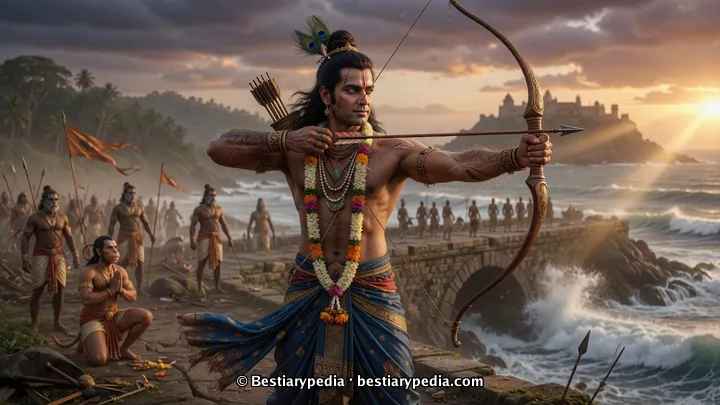
Rama
Rama, prince of Ayodhya and seventh avatar of Vishnu
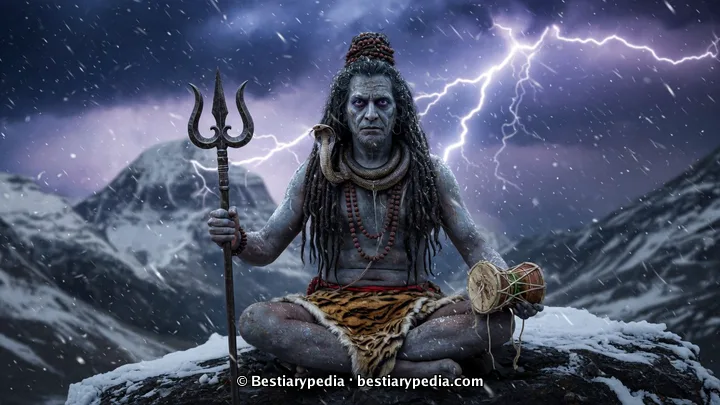
Shiva
Shiva, the destroyer and transformer in the Hindu Trimurti
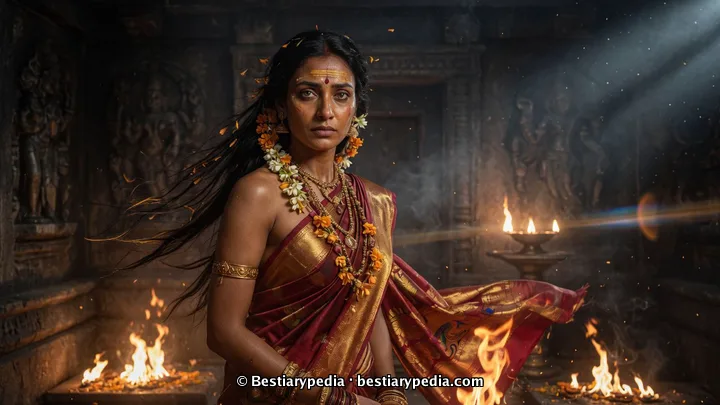
Sati
Sati, first human incarnation of Adi Shakti and original wife of Shiva
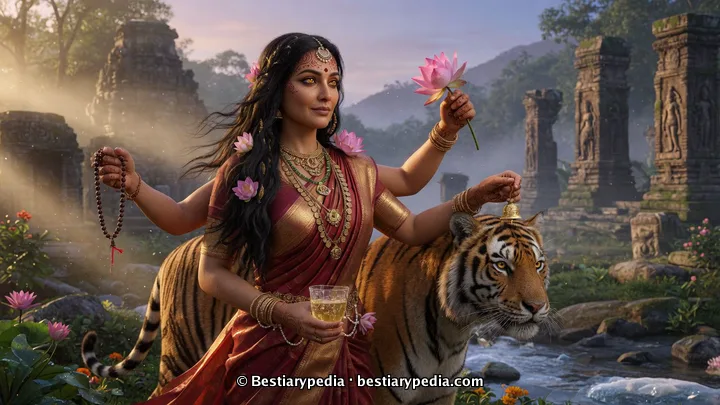
Parvati
Goddess of Love and Fertility
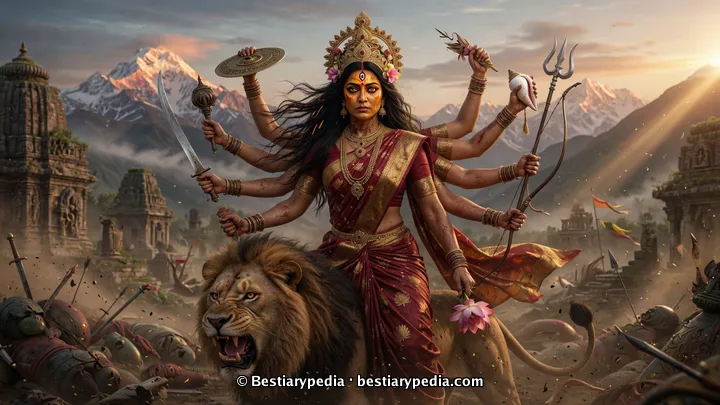
Durga
Ten-Armed Warrior Goddess
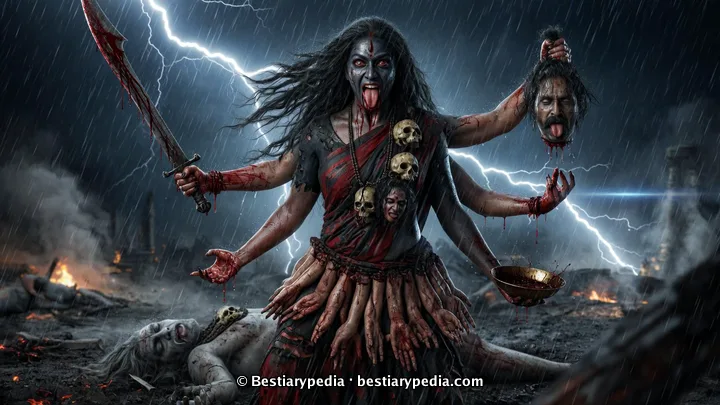
Kali
Goddess of Destruction and Time