Parvati
Goddess of Love and Fertility
Curated byBestiarypediaCreated onUpdated on
 India(India)
 South Asia(India, Nepal)
🔄 Transformation line (Phase 3 of 5)
Origins of Parvati
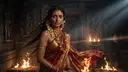
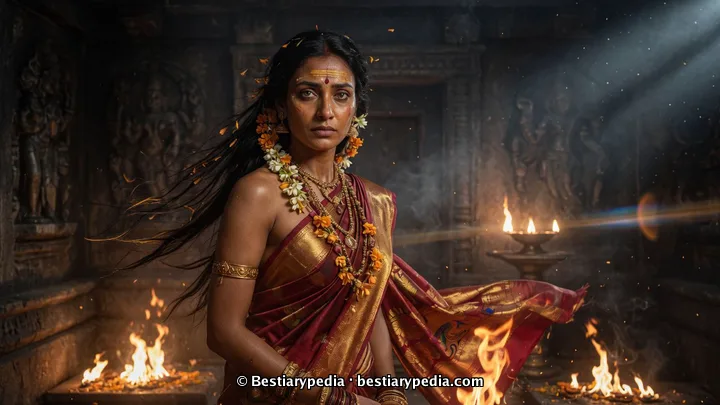
Parvati, one of the most revered goddesses in the Hindu pantheon, emerges in ancient Vedic texts as the feminine embodiment of divine power shakti. Born from the mountains of the Himalayas, daughter of King Himavat and his wife Mena, her origin is intrinsically linked to the sacred geography of India. In the Shiva Purana, it is narrated how Parvati, initially known as Sati, sacrificed herself in the ritual fire to defend her husband Shiva's honor, being reborn later as Parvati after severe penances in the Himalayan forests. This duality of death and rebirth symbolizes the eternal cycle of creation and destruction, central themes in Hindu cosmology. Her birth was not casual: the gods, fearful of the demon Taraka, prayed to Shiva to father an invincible son, and Parvati was destined to be the consort who would soften the ascetic heart of the destroyer.
Appearance and Symbolism
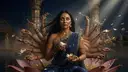
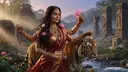
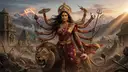
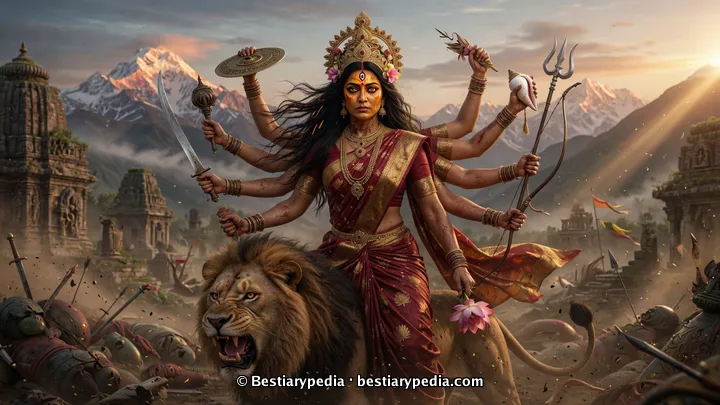
Parvati manifests in multiple forms, reflecting her divine versatility: from the austere meditative maiden to the nurturing mother and the fierce warrior as Durga. In her classical iconography, she appears with dark or golden skin, adorned with jewels, lotus flowers, and red silk garments, mounted on a tiger or lion, wielding weapons like the trident and discus. Her four arms symbolize her omnipotence: one holds a lotus flower for purity, another a rosary for devotion, the third a bell to awaken consciousness, and the fourth a vessel of nectar for eternal blessings. Her serene yet penetrating gaze evokes infinite compassion, while her crescent moon crown alludes to her connection with Shiva. This visual polychromy not only beautifies temples but encodes philosophical lessons on the unity of the gentle and the powerful in divine feminine nature.
Worship and Legacy
The worship of Parvati flourishes in festivals like Navratri, where she is honored in her nine forms as Navadurga, with dances, fasts, and offerings of fruits and sweets in temples across the Indian subcontinent. In Tantrism, she is the supreme Devi, mother of the universe, invoked in mantras like "Om Dum Durgayei Namaha" for protection and prosperity. Her legacy transcends India: in Southeast Asia images of her warrior form Durga endure, such as the Durga Mahishasuramardini of the Prambanan temple in Java (9th century); in Nepal the Kumari is venerated, a living divine girl identified with the Goddess. Matrimonially, she inspires fertility and marital harmony rituals, with legends where she tames Shiva, transforming him from a furious ascetic into a devoted husband. Her influence endures in modern yoga and meditation, symbolizing the balance between action and contemplation, power and tenderness, making Parvati an eternal archetype of the mother goddess.
Also known as
Relics
🏺 Trishula
Symbology
Element
Earth
Number
108
Color
Red
Animals
Lion, Bull
Sigils:
🏷️ Traits
Powers
Weaknesses
Behavioral
Resistances
🗺️In the Atlas
Travel the beings’ world of origin and the cosmos of their dimensions.
📜 Mythologies
Hindu mythology originated in the Indian subcontinent from the fusion of the traditions of the Indo-Aryan peoples, who arrived around the second millennium BCE, with the pre-existing cultures of the Indus Valley and other local populations. Its foundational texts, such as the Vedas, composed between approximately 1500 and 500 BCE, contain hymns, rituals and narratives that reflect a worldview in which the universe is governed by cosmic order (ṛta) and by cycles of creation, preservation and destruction. The main Vedic deities include Indra, Agni and Varuṇa, while in later periods, especially from the epic texts Mahābhārata and Rāmāyaṇa and the Purāṇas, the triads of Viṣṇu, Śiva and Devī in their various manifestations gain greater relevance. This tradition conceives reality as a web of existences governed by karma and rebirth (saṃsāra), with the ultimate goal of liberation (mokṣa). The epics and Puranic accounts transmit moral, philosophical and ritual teachings that have shaped the religious and social life of much of the Indian subcontinent over the centuries. Its influence extends to the arts, literature and devotional practices of numerous Hindu communities, as well as to other religious traditions of South and Southeast Asia.
Sources
Vishnu Purana
Vyasa (traditionally attributed) · c. 400-500 CE
One of the major Puranas of Hinduism, centred on Vishnu (c. 4th-5th century). It sets out the cosmology, divine genealogies and avatars of the god, and describes many deities and beings of the Hindu pantheon.
Linga Purana
Vyasa (traditionally attributed) · c. 500-1000 CE
The Linga Purana is a Shaivite Purana classified as one of the eighteen Upapuranas or Mahapuranas, with about 11,000 verses in two parts (Purva-bhaga and Uttara-bhaga), focused on the worship of Shiva's lingam, cosmogony, yoga, and myths about creation, preservation, and destruction.
Devi Mahatmya
Markandeya · c. 500-600
Sixth-century Sanskrit text narrating the exploits of the Great Goddess.
Shiva Purana
Vyasa · circa 800 CE
One of the major Puranas of Hinduism, dedicated to Shiva. It gathers his mythology, hymns and legends—the marriage to Sati and Parvati, the birth of Ganesha and Kartikeya—and describes many deities and beings of the Hindu pantheon.
Frequently asked questions
How does Parvati's origin relate to Sati's sacrifice and the penances in the Himalayas?
Parvati is reborn after Sati's ritual fire sacrifice to defend Shiva. She performs severe penances in the Himalayan forests. This duality symbolizes the eternal cycle of creation and destruction in Hindu cosmology.
What do Parvati's four arms symbolize in her classical iconography?
Her four arms represent divine omnipotence. One holds a lotus for purity, another a rosary for devotion, the third a bell to awaken consciousness, and the fourth a vessel of nectar for eternal blessings.
What relationship does Parvati maintain with Shiva and how does it influence her transformation?
Parvati is Shiva's wife and principal consort, forming a complementary divine union. Her devotion transforms the furious ascetic into a devoted husband. This relationship inspires fertility and marital harmony rituals in Hindu tradition.
In which festivals and traditions does the worship of Parvati manifest in the Indian subcontinent?
Worship flourishes in festivals like Navratri, where Parvati is honored in her nine forms as Navadurga. It includes dances, fasts, and offerings of fruits and sweets in temples across the Indian subcontinent. In Tantrism she is invoked as the supreme Devi, mother of the universe.
🔖Cite this entry▾
If you cite this article in an academic, journalistic or editorial publication, use any of these formats:
Bestiarypedia. (2026, July 14). Parvati. Bestiarypedia. https://bestiarypedia.com/en/beings/parvati
Free citation with attribution and canonical link for editorial, academic or journalistic use. Full commercial reuse or creation of derivative products requires prior agreement.
Similar beings
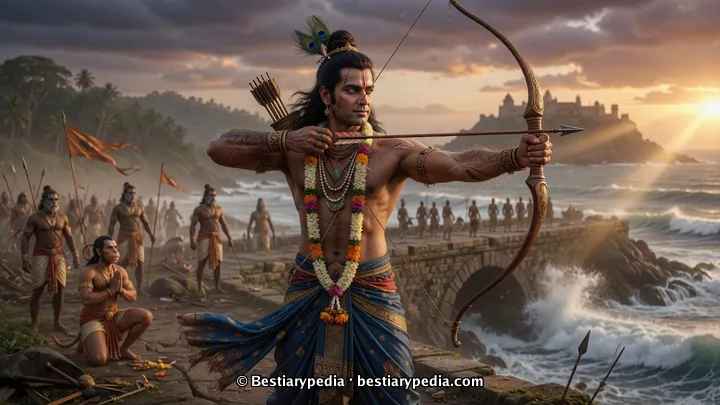
Rama
Rama, prince of Ayodhya and seventh avatar of Vishnu
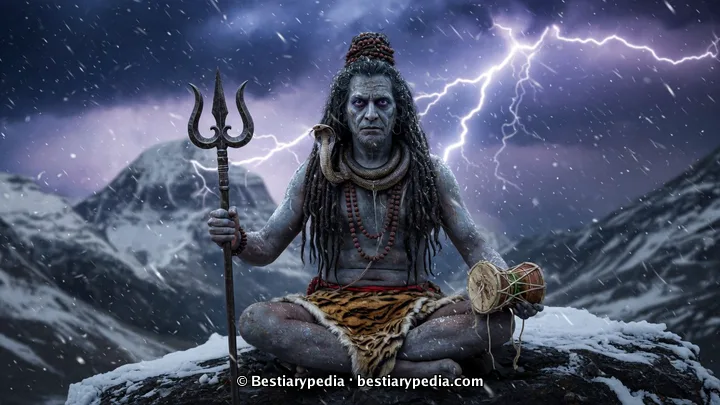
Shiva
Shiva, the destroyer and transformer in the Hindu Trimurti
Sati
Sati, first human incarnation of Adi Shakti and original wife of Shiva
Adi Shakti
Adi Shakti, the primordial cosmic Goddess of Shaktism
Durga
Ten-Armed Warrior Goddess
Kali
Goddess of Destruction and Time