Emperor Jiangshi
Blood-Eater Emperor Jiangshi, supreme of the Chinese imperial lineage
Curated byBestiarypediaCreated onUpdated on
 China(China)
🔄 Transformation line (Phase 3 of 3)


Origins of the imperial jiangshi
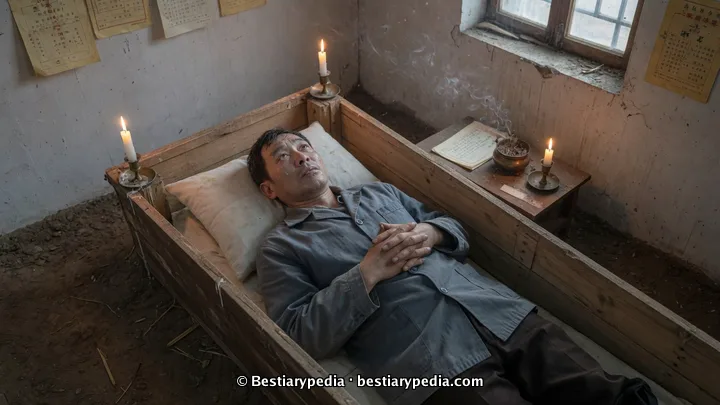
This superior form of the jiangshi develops, within the Chinese imaginary of the reanimated dead, the figure of a corpse of the highest rank: that of a sovereign or high dignitary who, buried without the appropriate rites or whose tomb was profaned, rises as a jiangshi of exceptional power. Tradition attributes to powerful deceased an especially intense qi, and on that basis folklore and later fiction imagined imperial dead capable of dominating other corpses. It is associated with the great Chinese mausoleums, such as that of Qin Shi Huang in Xi'an, scenarios where the wealth of the tombs and the fear of their profanation fueled legends of undead guardians.
Nature and powers
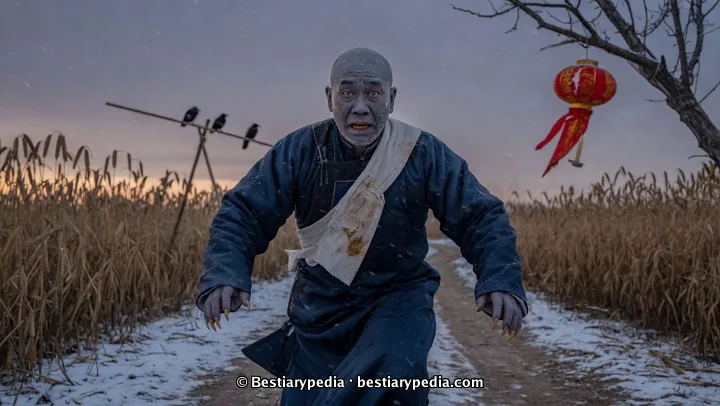
The imperial jiangshi retains part of the memory of its identity and exercises command over the lesser jiangshi, which it directs like an army of corpses. Unlike the common forms, more instinctive, it maintains a notable will and cunning. It drains the vital energy of its victims and, in versions influenced by modern vampirism, also their blood, although the traditional foundation of the jiangshi is the absorption of qi. It possesses strength far superior to human and resists lesser Taoist seals, so that only the most powerful rites and talismans manage to subdue it. Its condition as sovereign dead makes it the apex of the hierarchy of reanimated corpses.
Symbols and tradition
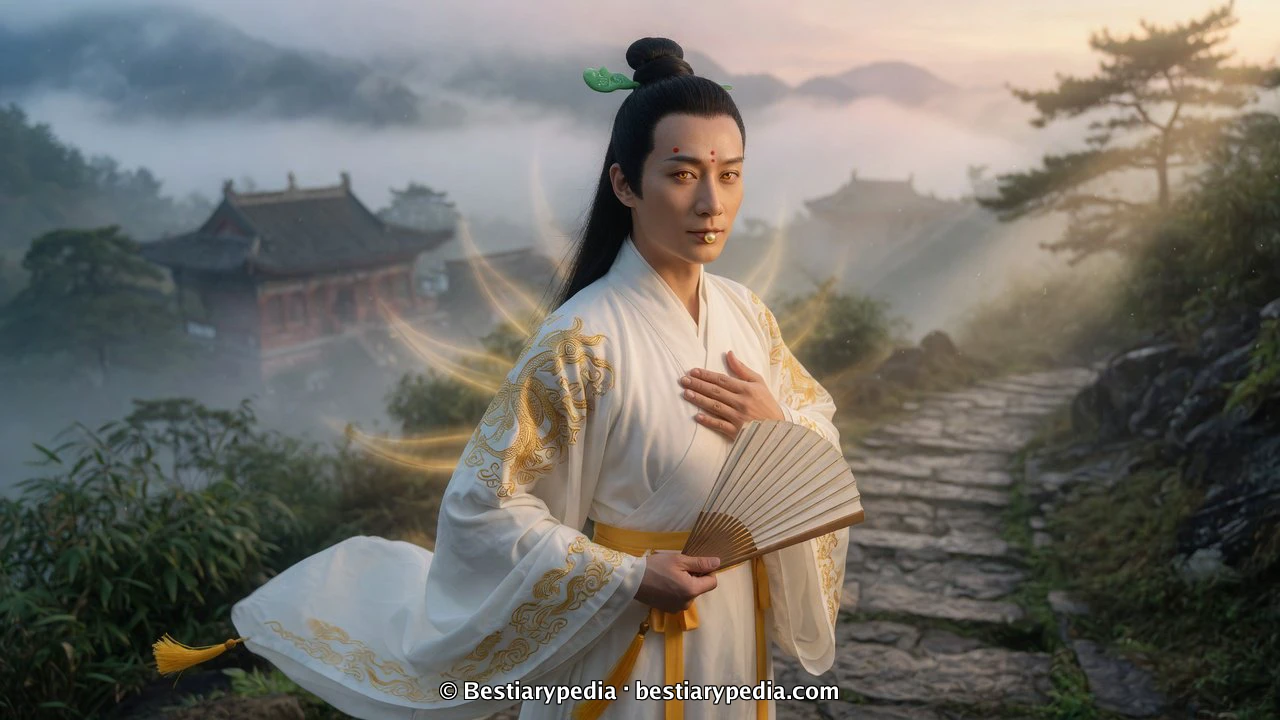
Its symbology combines the emblems of Chinese royalty with the signs of death and corruption: the courtly garments, the seal and the insignia of power, blackened or profaned. It embodies a disturbing inversion of the Confucian order, in which the sovereign, who was to guarantee harmony and receive the cult of his descendants, transforms into a predator of his own people. It is conceptually opposed to the celestial fox (huli-jing) that ascends through Taoist cultivation, for it represents the contrary path: that of earthly power that corrupts in non-death. As the cusp of the jiangshi cycle, it expresses the fear that not even the greatest escape a «badly closed» death.
Relics
🏺 profaned imperial jade seal
🏺 fractured jade dragon
🏺 blackened ceremonial bronze sword
Symbology
Element
corrupted yin earth
Number
6
Color
profaned imperial purple
Animals
broken jade dragon, funerary crane, white tiger of the west
Sigils:
🏷️ Traits
Powers
Weaknesses
Behavioral
Resistances
🔗 Relations with other beings
🗺️In the Atlas
Travel the beings’ world of origin and the cosmos of their dimensions.
📜 Mythologies
Chinese folklore encompasses a set of beliefs, stories and practices transmitted over millennia among the populations of the northern plains and the Yellow River valley, with continuity in periods such as the Shang and Zhou dynasties. Its origins trace back to oral traditions and rituals of agricultural and aristocratic communities that integrated the veneration of ancestors, natural forces and tutelary spirits in a system where cosmic order depended on the balance between heaven, earth and human beings. The narratives include entities such as the dragon associated with waters and imperial power, the phoenix as a symbol of renewal, and various local deities linked to mountains, rivers and villages. These traditions shaped a worldview in which the harmony between yin and yang, together with the influence of currents such as Taoism and Confucianism, guided both ritual practices and social organization. Stories about immortals, ghosts and celestial guardians were preserved in texts such as the Shanhaijing and in festivals that still endure, transmitting values of filial respect, obedience to the natural order and recognition of the invisible forces that govern existence. The legacy of Chinese folklore is manifested in classical literature, theater, visual arts and contemporary celebrations that keep alive figures such as the Monkey King or the household deities, influencing the cultural identity of China and the communities of the diaspora.
Sources
Strange Tales from a Chinese Studio
Pu Songling · 1766
'Liaozhai Zhiyi' (Strange Tales from a Chinese Studio) by Pu Songling (1766) is a Ming-Qing supernatural story collection influencing jiangshi imagery and wandering spirits despite no direct mention.
Zi Bu Yu
Yuan Mei · 1788
'Zi Bu Yu' (子不語, 'What the Son Does Not Say') by Yuan Mei (1788) is a Qing collection of supernatural tales, first documented mention of jiangshi as corpses returning due to poor burial.
Frequently asked questions
How does the Blood-Eater Emperor Jiangshi arise?
It arises from an emperor who died without Taoist rites or whose mausoleum was desecrated. After centuries in a chamber sealed with impure jade it attains superior form.
What powers distinguish the Blood-Eater Emperor Jiangshi?
It commands armies of lesser jiangshi, drains blood by bite and resists common Taoist seals. Its physical strength surpasses several humans.
What relation does it maintain with huli-jing-celestial-immortal?
It maintains ideological rivalry due to the contrast between undead imperial corruption and Taoist ascension. It prefers victims among royal descendants.
🔖Cite this entry▾
If you cite this article in an academic, journalistic or editorial publication, use any of these formats:
Bestiarypedia. (2026, July 14). Emperor Jiangshi. Bestiarypedia. https://bestiarypedia.com/en/beings/jiangshi-blood-eater-emperor
Free citation with attribution and canonical link for editorial, academic or journalistic use. Full commercial reuse or creation of derivative products requires prior agreement.