Kitsune Myōbu
Kitsune Myōbu, celestial messenger of Inari Ōkami
Curated byBestiarypediaCreated onUpdated on
 Japan(Japan)
🔄 Transformation line (Phase 2 of 2)



Origins of Inari's Fox
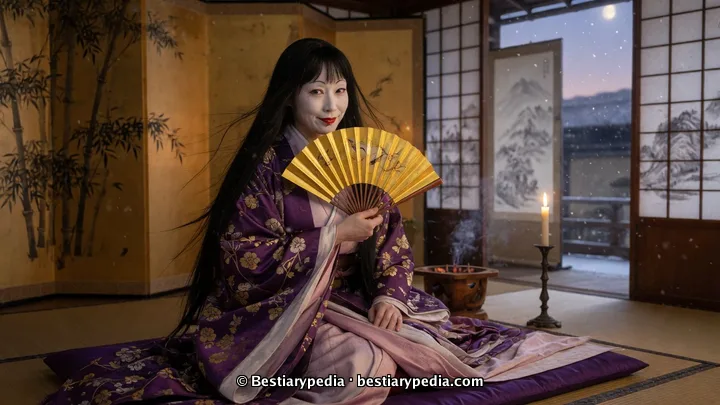
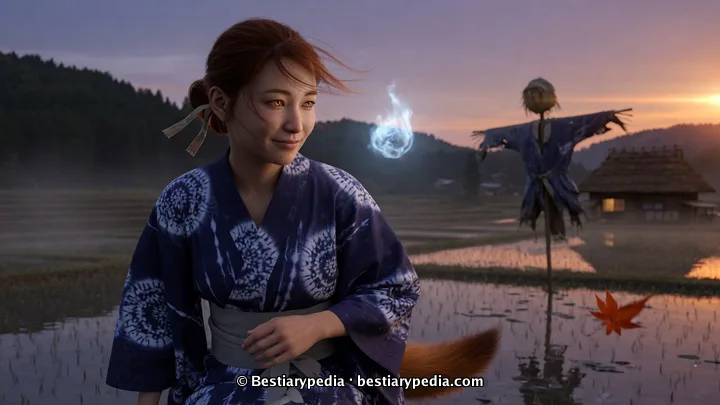
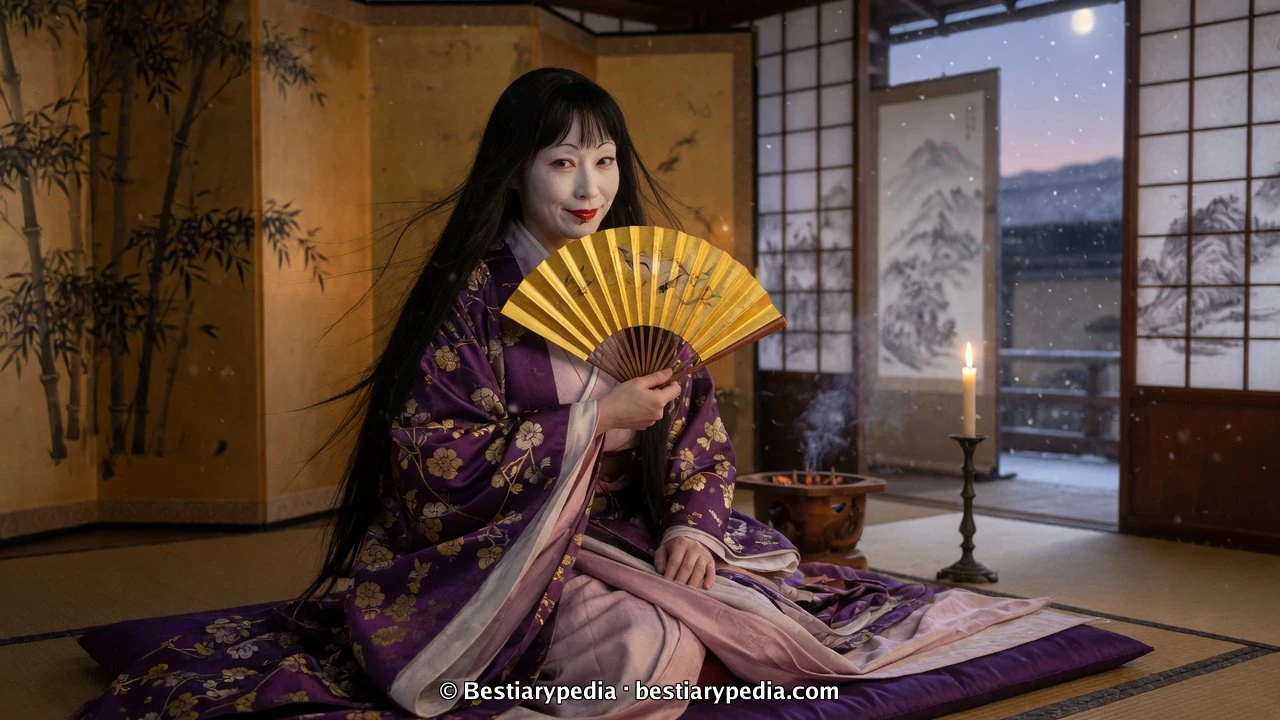
The myōbu (命婦) is, in the Japanese tradition, the celestial fox at the service of Inari Ōkami, the deity of rice, fertility, commerce and prosperity. It belongs to the class of the zenko (善狐), the benevolent foxes, and is distinguished from the wild yako by its purity and its sacred bond. According to folklore, a kitsune that demonstrates exceptional virtue (protecting crops, assisting pilgrims) can be elevated by Inari to this celestial service, acquiring a white coat and the nine tails. These messenger foxes inhabit and guard the shrines of Inari, of which there are tens of thousands scattered throughout Japan, the most famous being the Fushimi Inari Taisha of Kyoto, renowned for its tunnels of thousands of vermilion torii.
Nature and powers
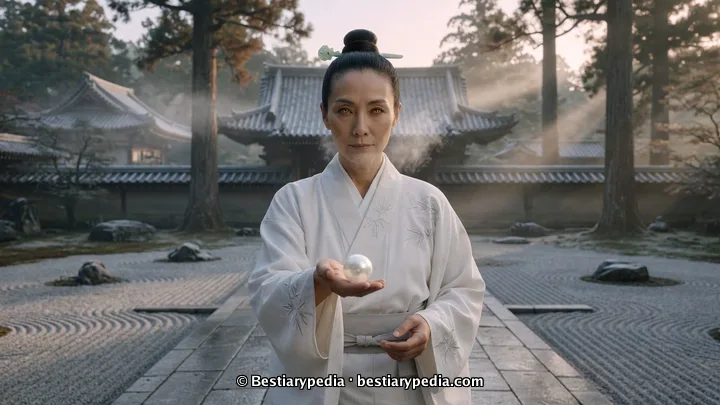
The myōbu acts as an intermediary between Inari and the faithful: it transmits blessings of abundant harvest, mercantile prosperity and success, and inspires prophetic dreams to devout farmers and merchants. It is attributed the ability to move between the shrines of Inari, to take human form to deal with the chosen priests and to punish the profanations of sacred places. Its usual image is that of a white fox, sometimes carrying in its mouth a jewel (the hōju or nyoi-hōju, the «jewel that grants wishes»), a key to the rice barn, a sheaf or a scroll, attributes that appear in the pairs of fox statues that flank the shrines of Inari. It is considered protected by its purity against ordinary weapons.
Symbols and Tradition
The iconography of the myōbu is omnipresent in the cult of Inari: the white fox statues with the jewel or the key, the vermilion torii and the offerings of rice, sake and aburaage. Its whiteness symbolizes purity and its sacred condition, in contrast with the wild fox. The link between the fox and the rice cult, very rooted in rural Japan, made the myōbu one of the most beloved protective figures of popular Shintoism. Within the family of the nine-tailed fox, it represents the benevolent path of elevation, that of the fox that ascends by virtue and service to a deity, in contrast to the path of solitary cultivation (the tenko) or that of predation (the yako).
Relics
🏺 Hōju personal assigned by Inari
Symbology
Element
Yang earth purified by rice
Number
9
Color
White with red details
Animals
White nine-tailed fox
Sigils:
🏷️ Traits
Powers
Weaknesses
Behavioral
Resistances
🔗 Relations with other beings
🗺️In the Atlas
Travel the beings’ world of origin and the cosmos of their dimensions.
📜 Mythologies
Japanese folklore encompasses oral traditions, myths, legends and supernatural creatures like yōkai and kami, compiled in Edo-period illustrated texts by Toriyama Sekien in works like Gazu Hyakki Yagyō and Konjaku Hyakki Shūi, reflecting Shinto animist beliefs, ecological fears of floods and droughts, and respect for nature in rivers, lakes and rice fields of regions like Shiga, Osaka and Kyoto.
Sources
Konjaku Monogatarishū
Unknown compiler · 12th century
Vast Japanese collection of more than a thousand tales (setsuwa) from the late Heian period (c. 12th century). It gathers Buddhist, secular and supernatural stories from India, China and Japan, and is an essential source for yōkai, oni and spirits of Japanese folklore.
Kwaidan: Stories and Studies of Strange Things
Lafcadio Hearn · 1904
Lafcadio Hearn's 1904 collection, gathering and translating Japanese supernatural legends from oral tradition and introducing them to the West. A classic reference for ghost and yokai folklore.
Frequently asked questions
How does a yako kitsune ascend to Myōbu rank?
It demonstrates exceptional virtue by protecting crops or pilgrims. Inari Ōkami selects it and transforms its fur to pure white with nine permanent tails.
What specific powers does the Kitsune Myōbu exercise?
It flies via the telluric network between shrines, transmits Inari's agricultural and commercial blessings and inspires prophetic dreams to devotees.
What symbols represent the Kitsune Myōbu?
The celestial hōju, white fox statues, cascading red torii and rice ears symbolize its purity and service to Inari.
🔖Cite this entry▾
If you cite this article in an academic, journalistic or editorial publication, use any of these formats:
Bestiarypedia. (2026, July 26). Kitsune Myōbu. Bestiarypedia. https://bestiarypedia.com/en/beings/kitsune-myobu-inari-messenger
Free citation with attribution and canonical link for editorial, academic or journalistic use. Full commercial reuse or creation of derivative products requires prior agreement.