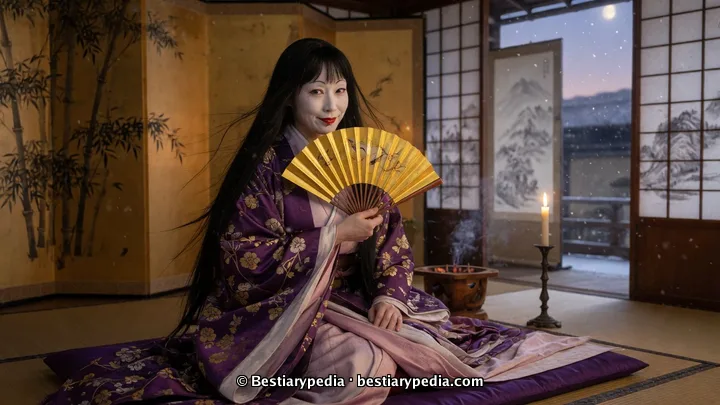
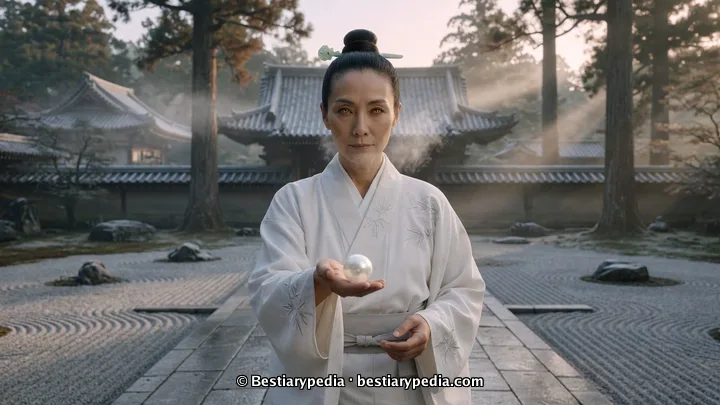
Kitsune Yakō
Kitsune Yakō, rural predator fox of Japanese folklore
Curated byBestiarypediaCreated onUpdated on
 Japan(Japan)
🔄 Transformation line (Phase 1 of 2)




Origins of the wild kitsune
In Japanese folklore, the kitsune (狐) is the fox endowed with intelligence and supernatural powers, and tradition distinguishes two major classes: the zenko (善狐), benevolent foxes associated with the deity Inari, and the yako or nogitsune (野狐), «field foxes» or «wild», of a more mischievous and sometimes malevolent nature. This «wild» form represents the initial stage of the archetype: the common Japanese fox that, after living many years, spontaneously acquires the ability to transform, without the disciplined cultivation of higher forms. Unlike the Chinese huli-jing and the Korean gumiho, predominantly female, the kitsune can adopt any gender. The folklore, collected in collections such as the Konjaku Monogatari and the Tōno Monogatari by Yanagita Kunio, places these foxes mainly in the rural sphere.
Nature and Powers
The yako dominates human transformation, although some residual trait usually gives it away, and it is famous for two characteristic powers of the kitsune: the kitsune-bi (狐火), the «fox fire» or will-o'-the-wisp with which it deceives nocturnal travelers, and the kitsune-tsuki (狐憑き), the possession that disturbs a person by altering their voice and their conduct and causing them cravings for aburaage, the fried tofu that is the favorite offering of foxes. It employs illusions, deceptive dreams and charm to swindle the peasants, and its opportunistic character leads it to act by instinct rather than by refinement. Tradition also attributes to it the ability to flee quickly when discovered, maintaining a predatory and elusive profile.
Tradition and variants
The kitsune yako constitutes the primary form of the archetype, the starting point from which can arise, with time and discipline, the higher forms: the myōbu in the service of Inari or the celestial tenko achieved by independent cultivation. In the villages epidemics of possession were attributed to it, combated with offerings of fried tofu and with exorcisms in the shrines of Inari. It belongs to the same family as the Chinese huli-jing and the Korean gumiho, with which it shares the motif of the transformed fox, but it preserves properly Japanese features, such as the link with Inari and the phenomena of kitsune-bi and kitsune-tsuki. It represents the untamed nature of the fox before its eventual spiritual elevation.
Relics
🏺 Chicken bone collar
🏺 Kitsune-bi sphere
Symbology
Element
Yang Fire
Number
1
Color
Reddish brown with blue-white flashes
Animals
Kitsune, Tanuki, Scarecrow
Sigils:
🏷️ Traits
Powers
Weaknesses
Behavioral
Resistances
🗺️In the Atlas
Travel the beings’ world of origin and the cosmos of their dimensions.
📜 Mythologies
Japanese folklore encompasses oral traditions, myths, legends and supernatural creatures like yōkai and kami, compiled in Edo-period illustrated texts by Toriyama Sekien in works like Gazu Hyakki Yagyō and Konjaku Hyakki Shūi, reflecting Shinto animist beliefs, ecological fears of floods and droughts, and respect for nature in rivers, lakes and rice fields of regions like Shiga, Osaka and Kyoto.
Sources
Konjaku Monogatarishū
Unknown compiler · 12th century
Vast Japanese collection of more than a thousand tales (setsuwa) from the late Heian period (c. 12th century). It gathers Buddhist, secular and supernatural stories from India, China and Japan, and is an essential source for yōkai, oni and spirits of Japanese folklore.
Kwaidan: Stories and Studies of Strange Things
Lafcadio Hearn · 1904
Lafcadio Hearn's 1904 collection, gathering and translating Japanese supernatural legends from oral tradition and introducing them to the West. A classic reference for ghost and yokai folklore.
Yanagita Kunio's Tōno Monogatari
Yanagita Kunio · 1910
Classic collection of Japanese folk tales compiled by Yanagita Kunio documenting maternal spirits and regional variants of ubume in rural areas.
Frequently asked questions
How does the transformation ability of the Kitsune Yakō arise?
It arises spontaneously after one hundred years of rural life in a common Japanese fox without Taoist practices. It is a natural process of extreme aging.
What techniques does the Kitsune Yakō employ against humans?
It uses foxfire to disorient travelers possession to alter personalities and dream seduction to drain vital energy in rural villages.
What relation does it have with the huli-jing and other kitsune?
It is a cross-cultural variant of the rural huli-jing and initial form of the kitsune archetype distinct from Tamamo-no-Mae with potential ascent to myōbu or tenkō.
🔖Cite this entry▾
If you cite this article in an academic, journalistic or editorial publication, use any of these formats:
Bestiarypedia. (2026, July 26). Kitsune Yakō. Bestiarypedia. https://bestiarypedia.com/en/beings/kitsune-yako-field
Free citation with attribution and canonical link for editorial, academic or journalistic use. Full commercial reuse or creation of derivative products requires prior agreement.