Paimon
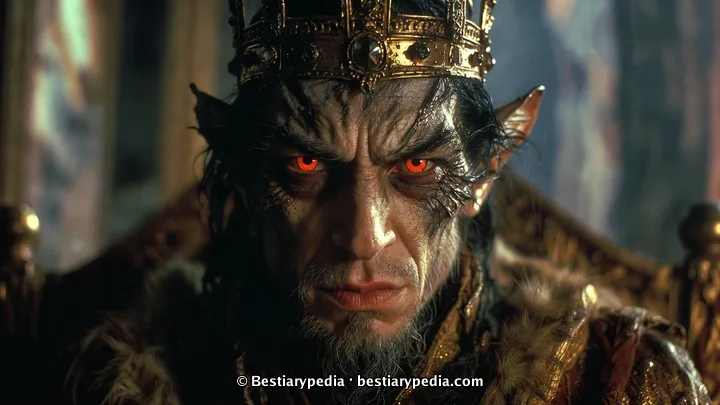
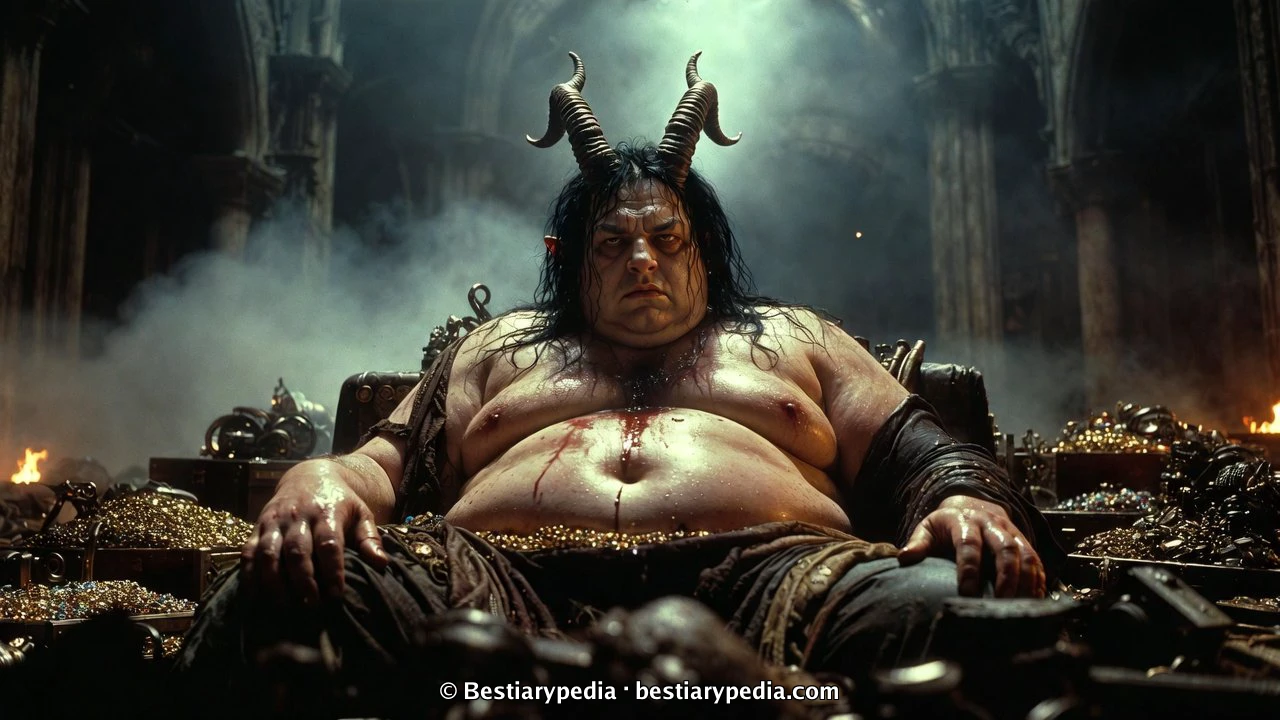
Paimon, king of the Order of the Goetia and lord of two hundred infernal legions
Curated byBestiarypediaCreated onUpdated on
Mythical Origins of Paimon in Goetic Demonology
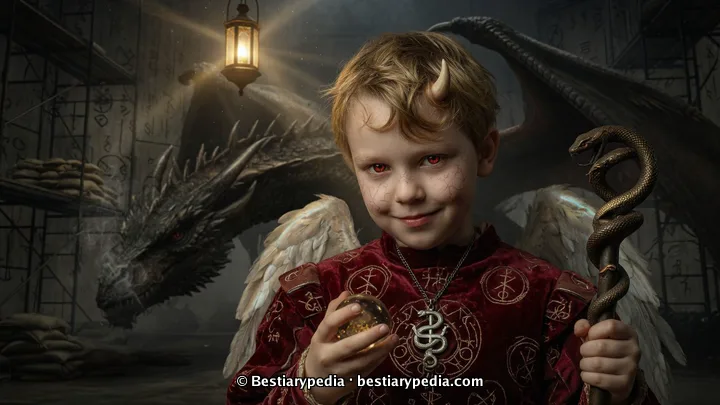
Paimon emerges as one of the seventy-two demonic kings listed in the Ars Goetia, central section of the Lesser Key of Solomon compiled in medieval Europe. According to demonological traditions, he was a fallen angel who retained royal rank after the celestial rebellion, ruling two hundred infernal legions with authority over hidden knowledge of past present and future. His origin intertwines with legends of eastern kings subdued by Solomon through magical seals, transforming into an invocable entity that reveals cosmic secrets. This narrative reflects influences from hermetic texts and Renaissance grimoires where angelic fall symbolizes duality between forbidden wisdom and structured infernal power.
Symbolic Appearance and Infernal Court of Paimon
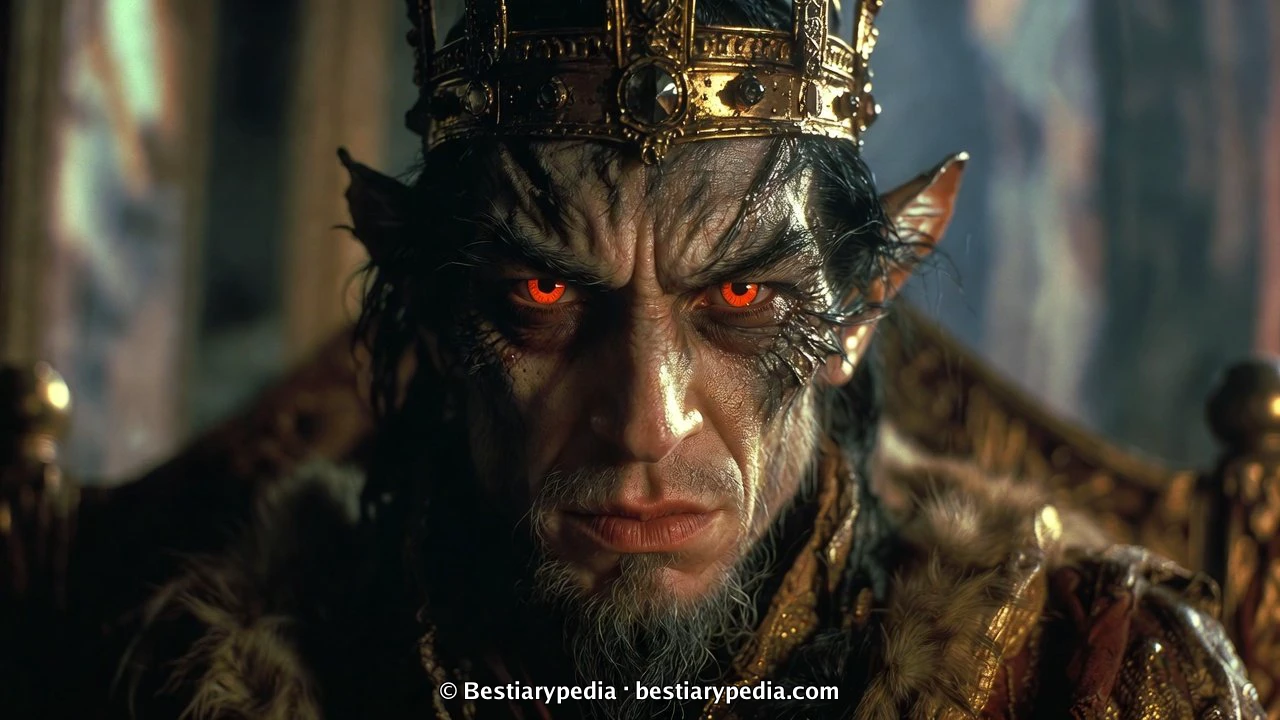
Paimon typically manifests as a tall crowned man with a royal diadem riding a dromedary camel that advances amid musical clamor of trumpets and cymbals. His court includes legions of spirits performing harmonic melodies revealing his mastery over liberal arts and occult sciences. This image evokes infernal sovereignty combined with wisdom accessible to summoners who offer proper ceremonial respect. Associated symbols include the camel as emblem of endurance in spiritual deserts and the crown denoting authority over titles and dignities granted to those who conjure him correctly.
Occult Powers and Relations with Other Infernal Kings
Paimon masters liberal arts occult sciences and spirit languages granting familiar dignities and revealing temporal secrets to devoted summoners. He maintains hierarchical alliances with kings such as Belial and Asmodeus within the Goetia Order sharing legions and forbidden knowledge that reinforce the infernal structure. These relations enable exchanges of favors during complex conjurations where his wisdom complements the destructive power of other demons. His vulnerability to divine names and exorcism rituals links him to Solomonic containment traditions preserving balance between chaos and order in historical grimoires.
Also known as
Relics
🏺 Paimon's Camel
🏺 Resplendent Crown
Symbology
Element
Infernal Fire
Number
9
Color
Emerald Green
Animals
Camel
Sigils:
🏷️ Traits
Powers
Weaknesses
Behavioral
Resistances
🔗 Relations with other beings
🗺️In the Atlas
Travel the beings’ world of origin and the cosmos of their dimensions.
📜 Mythologies
The Abrahamic religions comprise Judaism, Christianity and Islam, three monotheistic traditions that share a common origin in the figure of Abraham, regarded as patriarch in all three. Originating in the ancient Near East, Judaism developed among the Hebrews during the second millennium BCE, Christianity arose in the 1st century CE in the context of Second Temple Judaism and Islam appeared in the 7th century on the Arabian Peninsula. Each is based on divine revelations transmitted through prophets and sacred scriptures, such as the Torah, the Bible and the Qur'an, and upholds the belief in a single creator and judge God.
Sources
Pseudomonarchia Daemonum
Johann Weyer · 1577
Catalogue of sixty-nine demons included by Johann Weyer in his work "De praestigiis daemonum" (1577). It describes the infernal hierarchy, its ranks and offices, and is the direct precedent of the Ars Goetia and later Western demonology.
Ars Goetia
Anonymous · 1650
First section of the Lemegeton or Lesser Key of Solomon enumerating seventy-two demons.
The Lesser Key of Solomon
Anonymous · 17th century
Anonymous 17th-century grimoire, also called the Lemegeton, composed of five books (Ars Goetia, Theurgia-Goetia, Ars Paulina, Ars Almadel and Ars Notoria). It catalogues celestial and infernal spirits with their hierarchies, seals and rituals of invocation.
Dictionnaire Infernal
Collin de Plancy · 1818
Demonological dictionary by Collin de Plancy (1818), famous for the illustrations by Louis Le Breton in its 1863 edition. It catalogues demons, superstitions and infernal beings, and popularized the visual image of many entities of goetia.
Frequently asked questions
How does Paimon's origin intertwine with legends of eastern kings subdued by Solomon?
Paimon emerges as one of the seventy-two demonic kings in the Ars Goetia. He was a fallen angel who retained royal rank after the celestial rebellion. His origin intertwines with legends of eastern kings subdued by Solomon through magical seals.
What dominion does Paimon exercise over the liberal arts and occult sciences according to Goetic tradition?
Paimon masters liberal arts, occult sciences and spirit languages. He grants familiar dignities and reveals temporal secrets to devoted summoners. His court includes legions of spirits performing harmonic melodies that reveal his mastery over these disciplines.
What hierarchical alliances does Paimon maintain with other infernal kings within the Goetia Order?
Paimon maintains hierarchical alliances with kings such as Belial and Asmodeus within the Goetia Order. He shares legions and forbidden knowledge that reinforce the infernal structure. These relations enable exchanges of favors during complex conjurations.
What characteristic symbols accompany Paimon's manifestation in Goetic iconography?
Paimon manifests as a tall crowned man with a royal diadem riding a dromedary camel. He advances amid musical clamor of trumpets and cymbals. The camel symbolizes endurance in spiritual deserts and the crown denotes authority over titles and dignities.
🔖Cite this entry▾
If you cite this article in an academic, journalistic or editorial publication, use any of these formats:
Bestiarypedia. (2026, July 14). Paimon. Bestiarypedia. https://bestiarypedia.com/en/beings/paimon
Free citation with attribution and canonical link for editorial, academic or journalistic use. Full commercial reuse or creation of derivative products requires prior agreement.