Azrael
Azrael, the archangel who guides souls to the afterlife
Curated byBestiarypediaCreated onUpdated on
Origins of Azrael
Azrael (from the Hebrew 'God has helped') is the name that the esoteric and popular tradition gives to the Angel of Death. His figure comes mainly from Islam, where he is identified with Malak al-Mawt, the «angel of death» of the Quran, one of the four great archangels along with Yibril (Gabriel), Mikail (Michael) and Israfil, commissioned by God to collect the souls of the deceased at the appointed time. In classical rabbinic Judaism the name Azrael is not canonical (it does not appear in the Talmud), but a related figure, Azriel, is documented in mysticism and in Kabbalistic literature. Through occultism and Western angelology, the name Azrael became popular as that of the angel in charge of death, an impartial emissary of the divine will who is neither a demon nor a divinity, but the serene executor of the transit between this life and the hereafter.
Nature and function
The function of Azrael is to take the soul of the dying when his hour fixed by God arrives, with gentleness for the just and with severity for the impious. The Islamic tradition describes him as a being of colossal dimensions, endowed with four thousand wings and a body with as many eyes and tongues as there are human beings in the world; it is said that he keeps a record of humanity and that, when a leaf detaches from the tree under his throne, he knows that that person must die. He does not act by his own will nor with cruelty: he is an obedient servant who fulfills the divine decree and, according to some versions, he has compassion for the souls he collects. His figure embodies the idea that death, far from being a chaotic accident, is an ordered transit supervised by a celestial messenger.
Iconography and legacy
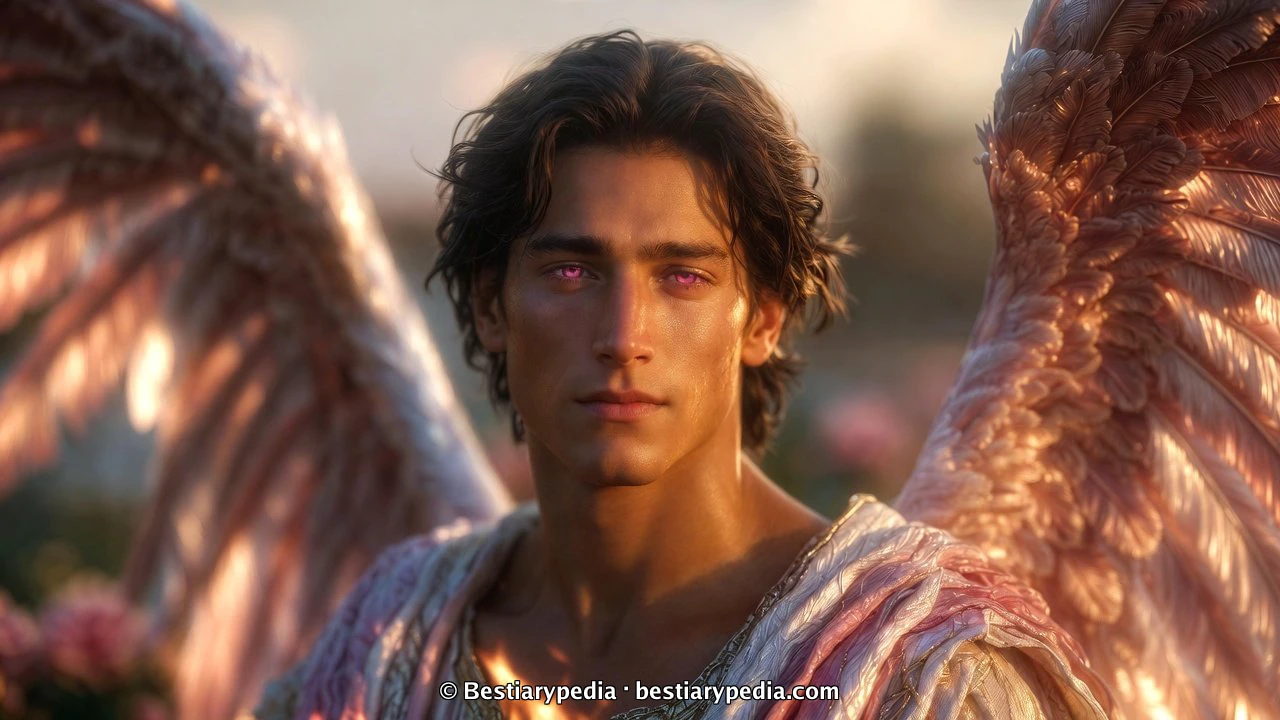
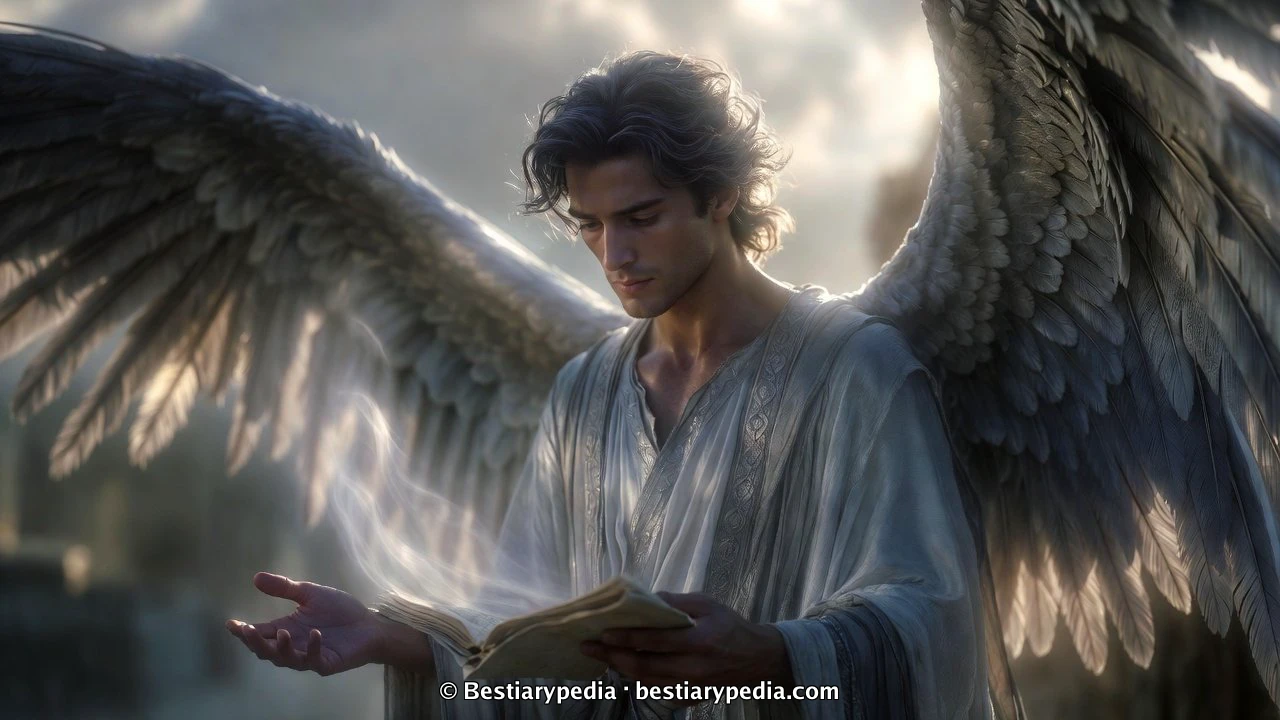
The image of Azrael has varied according to the times and cultures: the Islamic tradition insists on his superhuman size and his innumerable wings and eyes, while Western art and literature have represented him as a solemn and veiled figure, sometimes confused with the popular image of Death. In esoteric angelology he is associated with the planet and the energies linked to the end of cycles, and he is invoked as a compassionate guide of souls rather than as a threat. Azrael frequently appears in literature, poetry (as in the work of Byron or Longfellow) and contemporary popular culture as the serene face of death. His enduring presence reflects the human need to give an understandable, and even comforting, face to the mystery of dying.
Also known as
Relics
🏺 Sword of Azrael
🏺 Scale of Judgment
Symbology
Element
Death
Number
7
Color
Black
Animals
Raven, Pale Horse
Sigils:
🏷️ Traits
Powers
Weaknesses
Behavioral
Resistances
🔗 Relations with other beings
Sibling of

🗺️In the Atlas
Travel the beings’ world of origin and the cosmos of their dimensions.
📜 Mythologies
Esoteric and Kabbalistic traditions within Judaism, encompassing Merkabah mysticism from the Talmudic era, 13th-century Zoharic Kabbalah, 16th-century Lurianic Kabbalah, the 18th-century Hasidic movement, and various meditative, contemplative, and visionary practices aimed at ascending through spiritual worlds, invoking divine names, and achieving mystical union with the divine while unraveling the secrets of the creative universe.
Sources
The Quran
Mahoma (revelación tradicional) · 632
Holy book of Islam, revealed to the prophet Muhammad in the 7th century. Beyond its religious message, it mentions angels such as Jibril and Mika’il, the jinn created from smokeless fire and figures like Iblis, and is a primary source for many beings of Islamic tradition.
Zohar
Moisés de León (atrib.) · c. 1280
Central work of the Kabbalah, which appeared in 13th-century Spain and is attributed to Moses de León. It mystically comments on the Torah and expounds the sefirot, the spiritual worlds and the angelic and demonic powers of Jewish esotericism.
3 Enoch (Hebrew Book of Enoch)
Anonymous · c. 500 CE
The Hebrew Book of Enoch (3 Enoch or Sefer Hekhalot) is a medieval Jewish mystical text (5th-6th c. CE), attributed to Enoch transformed into Metatron. It describes angelic hierarchies, fallen princes like Tamiel, and visions of the heavenly palaces (Hekhalot).
Frequently asked questions
To what religious tradition does Azrael belong?
Azrael is the Angel of Death above all in Islam, where he is identified with Malak al-Mawt, one of the four great archangels. In classical rabbinic Judaism he is not canonical, although a related figure, Azriel, appears in the Kabbalah; Western occultism popularized his name.
What is Azrael's role?
His mission is to collect the soul of the moribund at the moment fixed by God, with sweetness for the just and with severity for the impious. He does not act by his own will, but as an obedient servant of the divine decree.
How does the Islamic tradition describe Azrael?
As a being of colossal dimensions, endowed with four thousand wings and a body with as many eyes and tongues as there are human beings in the world. It is said that he carries a record of humanity and knows when each person is to die.
Is Azrael an evil being?
No. It is an impartial emissary of the divine will, neither demon nor divinity, that embodies death as an ordered and supervised transit, not as a chaotic punishment. Tradition even presents it as compassionate with the souls it collects.
🔖Cite this entry▾
If you cite this article in an academic, journalistic or editorial publication, use any of these formats:
Bestiarypedia. (2026, July 26). Azrael. Bestiarypedia. https://bestiarypedia.com/en/beings/azrael
Free citation with attribution and canonical link for editorial, academic or journalistic use. Full commercial reuse or creation of derivative products requires prior agreement.