Lilitu
Lilitu, the Mesopotamian succubus spirit that drains vitality in dreams
Curated byBestiarypediaCreated onUpdated on
 Mesopotamia(Iraq)
⇄ Cultural variants (3)



4 beings in the lineage
Mythical origins of Lilitu
Lilitu belongs to the class of the lilû, spirits of the nocturnal wind of ancient Mesopotamia, and already appears in Sumerian and Akkadian spells from the second millennium before our era. Her name has traditionally been linked to lil, the wind or the air, although current Assyriologists discuss that etymology. She is not a goddess nor has a cult: she is a threat that is conjured. The texts place her in the wastelands and the ruins, far from the city and from order, and describe her as the one who has neither husband nor house, the one who cannot give birth and therefore stalks what others engender. The series of spells Maqlû names her among the presences that are combated with fire and word.
Appearance and powers of Lilitu
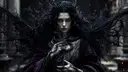
She is imagined winged, with raptor claws and loose hair, capable of entering through the cracks like a current of air. Her attack is nocturnal and silent: she lies with sleeping men to steal their seed and strength from them, and she haunts parturient women and newborns, to whom their sudden death was attributed. Against her amulets, clay figurines and conjuring bowls with spiral inscriptions were used, which were buried under the threshold of the house to trap her. It is advisable to dispel a very widespread misunderstanding: the so-called Burney Relief, the famous Babylonian plaque of the winged woman with claws and owls, was identified with Lilitu in 1937, but current scholarship has discarded that reading and sees in it Ishtar or Ereshkigal.
The first link of vampirism
The importance of Lilitu is not in its myths, which barely exist, but in its cultural descent. From the lilû class proceeds the name and a good part of the traits of Lilith, the figure that the Jewish tradition would develop centuries later until converting her into Adam's first wife. That transit places her in the documented origin of a chain that crosses the Near East, medieval demonology and the European vampire. Recent scholarship nuances the link and warns against the readings that take for granted a straight line between the Babylonian conjuration and Hebrew folklore, but even with that caution Lilitu continues to be the oldest point to which the fear of the woman who visits at night and takes life can be traced.
Also known as
Relics
🏺 Ritual Bowl
🏺 Burney Relief
Symbology
Element
Night Wind
Number
1
Color
Black
Animals
Night Owl, Wild Lion
Sigils:
🏷️ Traits
Powers
Weaknesses
Behavioral
Resistances
🔗 Relations with other beings

🗺️In the Atlas
Travel the beings’ world of origin and the cosmos of their dimensions.
📜 Mythologies
Mesopotamian mythology developed in the region situated between the Tigris and Euphrates rivers, in the territory that today corresponds to Iraq and bordering areas, and spans an extensive period that begins with Sumerian civilization around the fourth millennium BCE and continues through the Akkadian, Babylonian and Assyrian cultures until the Hellenistic era. Its tales were transmitted on clay tablets written in Sumerian and Akkadian, and reflect a worldview in which the gods controlled the forces of nature and human destiny, while kings acted as intermediaries between the divine world and society.
Sources
Epic of Gilgamesh
Sin-leqi-unninni (editor) · c. 2100–1200 BCE
The great Mesopotamian epic (2nd millennium BCE), preserved on cuneiform tablets. It recounts the deeds of King Gilgamesh and Enkidu, his quest for immortality and a primeval flood, and is an essential source of Sumerian and Babylonian gods and demons.
Maqlû Series
Ancient Babylonian scribes · c. 700 BCE
The Maqlû series is a collection of ancient Babylonian incantations (c. 700 BCE) against demons like Lilitu, preserved on clay tablets, detailing her attacks on sleepers and pregnant women.
Babylonian Talmud
Several rabbis · ca. 500 CE
Jewish rabbinic text compiled ca. 500 CE, mentions Bar Kokhba in tractates like Sanhedrin 93b as false Messiah, with discussions on Akiva's support.
Frequently asked questions
What exactly is a lilitu?
Not a goddess, but a threat that is conjured. It belongs to the lilû, spirits of the nocturnal wind of ancient Mesopotamia, and appears in Sumerian and Akkadian spells from the second millennium before our era. It has no cult, temple nor its own myths: only texts that teach to protect oneself from her.
Is the winged woman of the Relieve de Burney?
Almost certainly not. That identification was proposed by Emil Kraeling in 1937 and became extremely popular, but current scholarship has discarded it: today the plaque is seen as Ishtar, and the British Museum leans towards Ereshkigal. The argument that supported it, the association with owls, is not documented in Babylonian texts.
How did they protect themselves from her?
With amulets, clay figurines and conjuring bowls: containers with inscriptions written in spiral that were buried face down under the threshold of the house to trap the spirit. Thousands are preserved, and they are one of the most eloquent material sources of domestic fear in the ancient Near East.
Is Lilitu the same as Lilith?
Lilitu is its Mesopotamian antecedent: from the lilû class come the name and a good part of the traits that the Jewish tradition would develop centuries later. Recent scholarship warns against taking for granted a straight line between the Babylonian spell and Hebrew folklore, but the linguistic and thematic kinship is the oldest that can be traced.
🔖Cite this entry▾
If you cite this article in an academic, journalistic or editorial publication, use any of these formats:
Bestiarypedia. (2026, July 22). Lilitu. Bestiarypedia. https://bestiarypedia.com/en/beings/lilitu
Free citation with attribution and canonical link for editorial, academic or journalistic use. Full commercial reuse or creation of derivative products requires prior agreement.