Osiris, Lord of the Dead
Osiris, Lord of the Dead and god of resurrection in Egyptian mythology
Curated byBestiarypediaCreated onUpdated on
 Ancient Egypt(Egypt)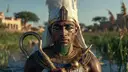
The sovereign of the beyond
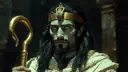
This is the form of Osiris as lord of the Duat, the Egyptian underworld, into which he transformed after his death and resurrection. According to the myth, whose most complete account is transmitted by Plutarch, Osiris was the civilizing king of Egypt until his brother Set murdered and dismembered him; his wife Isis gathered the fragments of his body and, with funerary magic and the first mummification (work of Anubis), restored a form of life to him. But Osiris did not return to the world of the living: resurrected, he became sovereign of the kingdom of the dead and supreme judge of souls. Mummified, enthroned and bearing the insignia of royalty (the heka scepter and the nejej flail), he embodies victory over death and the promise of an eternal life that every Egyptian deceased aspired to share.
The Judgment of the Duat
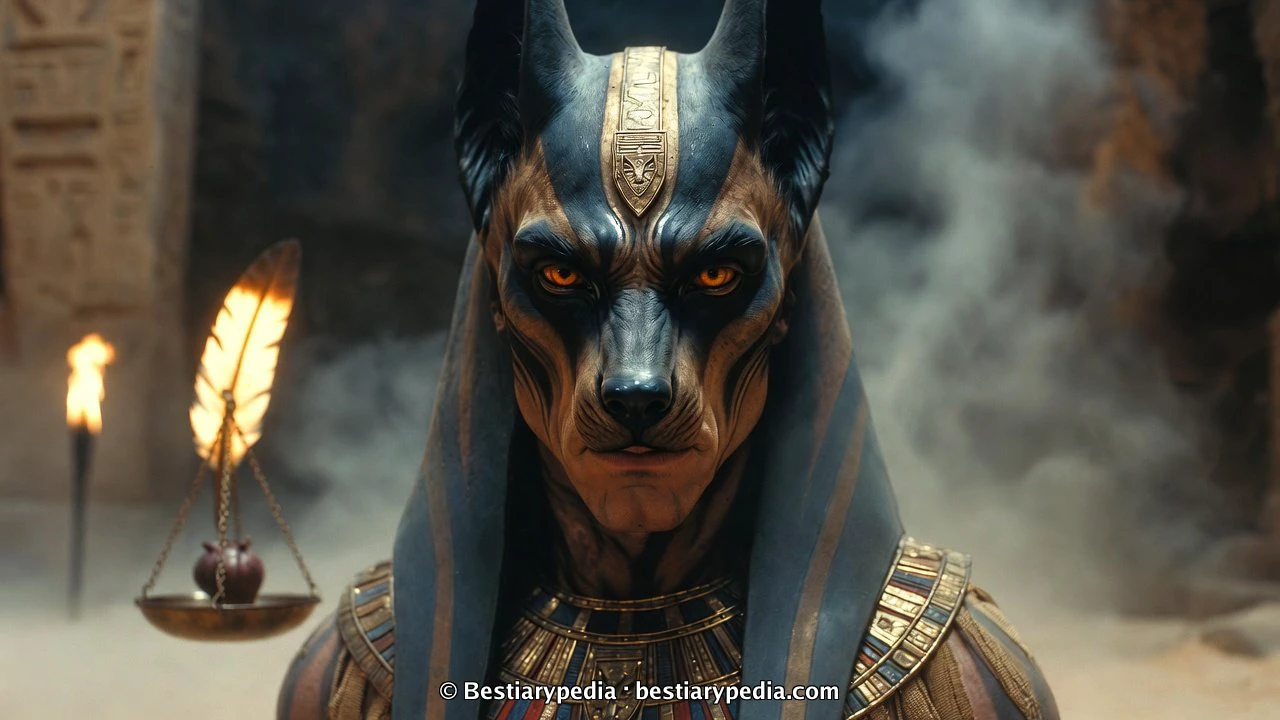
As lord of the Duat, Osiris presides over the Hall of the Two Truths, where the fate of each soul is decided in the ceremony of the weighing of the heart (psychostasia), described and illustrated in the Book of the Dead. The heart of the deceased is placed on one pan of the scale and the feather of Maat, symbol of truth and justice, on the other; Anubis handles the plumb line and Thoth records the verdict before a tribunal of forty-two judges. The deceased pronounces the «negative confession», declaring the faults he has not committed. If the heart turns out light, he is declared «just of voice» (maa-jeru) and accesses the Fields of Iaru, a paradise of abundance; if it weighs due to his faults, Ammit, the Devourer, devours it, and the soul suffers the second death, definitive annihilation. In the funerary texts, the deceased identifies with the god and is called «Osiris N.», placing his name before that of the sovereign of the dead.
Cult and legacy
The funerary cult of Osiris was one of the most important and lasting of ancient Egypt, with its main center in Abydos, where mysteries were celebrated that recalled his passion, death and triumph over the tomb. His iconography (the body wrapped like a mummy, the green or black skin that refers to regeneration and the fertile silt of the Nile, and the atef crown) identifies him immediately as lord of the afterlife. The hope in the Osirian resurrection, previously reserved for kings and later «democratized» to all the deceased, shaped for millennia the mummification rites and the Egyptian funerary texts. In Hellenistic and Roman times, his figure spread throughout the Mediterranean associated with the mysteries of Isis, and his myth of the god who overcomes death has continued to fascinate the study of ancient religions as one of the great archetypes of death and rebirth.
Also known as
Relics
🏺 Crook and Flail
🏺 Atef Crown
Symbology
Element
Fertile Earth
Number
14
Color
Green and Black
Animals
Bull
Sigils:
🏷️ Traits
Powers
Weaknesses
Behavioral
Resistances
🔗 Relations with other beings
🗺️In the Atlas
Travel the beings’ world of origin and the cosmos of their dimensions.
📜 Mythologies
Egyptian mythology developed in ancient Egypt over more than three millennia, from the predynastic period to the Roman era, and was closely linked to the civilization that inhabited the banks of the Nile. Its beliefs were based on a worldview in which cosmic order, represented by the concept of maat, was maintained through the action of the gods and the performance of rituals by humans. The Egyptian pantheon included numerous local and national deities, among which Ra stood out, associated with the sun and creation, and Osiris, god of resurrection and the underworld, along with other figures such as Isis, Horus, Seth and Amun. Mythological narratives explained the origin of the world, the daily cycle of the sun and the fate of the soul after death, integrating elements of the nature of the Nile valley and astronomical observation. Funerary texts, such as the Book of the Dead, and temple reliefs constitute the main sources for the knowledge of these beliefs. Although official worship declined with the Christianization of Egypt, Egyptian mythology has exerted a lasting influence on art, literature and the Western imagination, and continues to be the subject of study in Egyptology.
Sources
Book of the Dead
Anonymous · c. 1550 BC
Compilation of funerary spells from ancient Egypt used from the New Kingdom onward.
Pyramid Texts on Osiris
Priests of Unas · c. 2350 BCE
Passages of the Pyramid Texts (c. 2350 BCE), the oldest Egyptian funerary spells, carved in Old Kingdom royal chambers. They identify the dead pharaoh with Osiris, the resurrected god of the afterlife, and invoke Isis, Nephthys, Set and Horus.
Frequently asked questions
How is the mythical origin of Osiris described in the Pyramid Texts and the Coffin Texts?
Osiris emerges in the Pyramid Texts as a primordial deity linked to the fertility of the Nile and the cycle of vegetation. His central myth narrates how he was king of Egypt before being murdered by his brother Set. This narrative is consolidated in the Coffin Texts where his role as lord of resurrection is emphasized.
What functions does Osiris exercise as judge of the tribunal of the Duat?
In the Duat, Osiris presides the tribunal of the dead, where Anubis weighs the heart of the deceased against the feather of Maat. The just access the Fields of Iaru, a paradise of eternal abundance; the impure are devoured by Ammit. This judicial function consolidates Osiris as guarantor of the cosmic order and of the justice after death.
What familial and mythical relationships does Osiris maintain with Set, Isis and Anubis in Egyptian tradition?
Osiris was murdered by his brother Set before being resurrected. Anubis weighs the heart of the deceased in the court presided over by Osiris. Funerary rituals invoke his name to ensure safe passage to the afterlife.
What cultural symbolism and legacy does Osiris leave in the traditions of the ancient Mediterranean?
Osiris embodies the eternal cycle of death and rebirth profoundly influencing Egyptian agriculture funerary rites and the conception of life after death. His cult extended beyond Egypt impacting Hellenistic and Roman traditions. As a symbol of hope and regeneration his figure inspires later myths about gods who conquer death.
🔖Cite this entry▾
If you cite this article in an academic, journalistic or editorial publication, use any of these formats:
Bestiarypedia. (2026, July 20). Osiris, Lord of the Dead. Bestiarypedia. https://bestiarypedia.com/en/beings/osiris-lord-of-the-dead
Free citation with attribution and canonical link for editorial, academic or journalistic use. Full commercial reuse or creation of derivative products requires prior agreement.
Similar beings
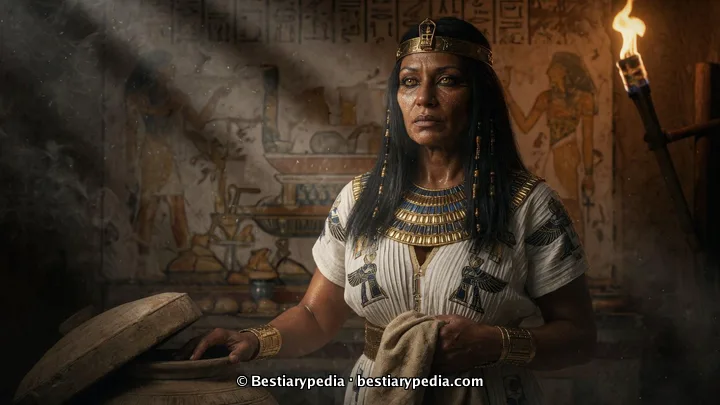
Nephthys
Nephthys, Egyptian funerary goddess, sister of Isis, wife of Set and mother of Anubis
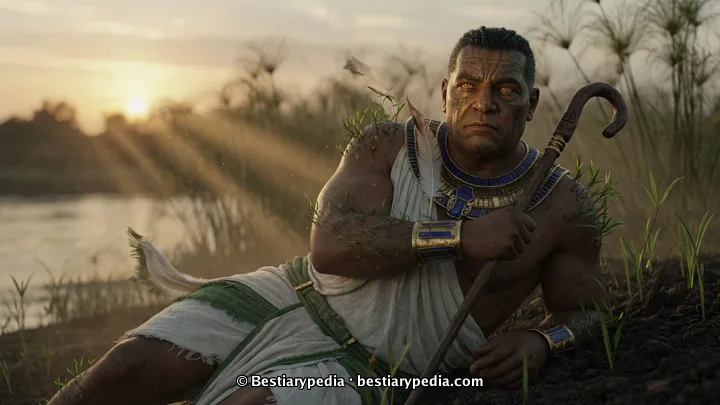
Geb
Geb, Egyptian god of the Earth, son of Shu and Tefnut
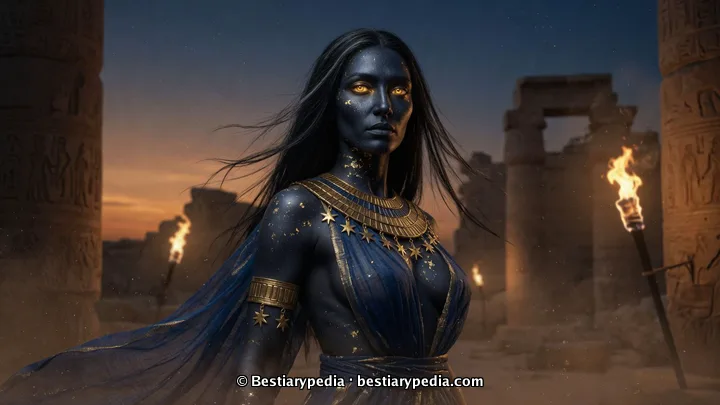
Nut
Nut, Egyptian goddess of the sky who arches over the Earth
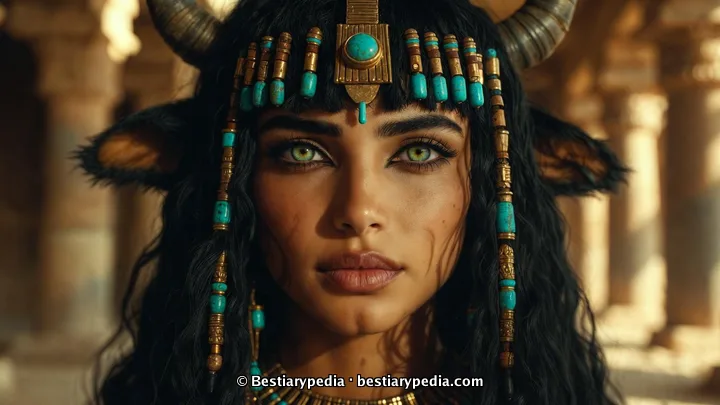
Hathor
Hathor, goddess of love, beauty, music and motherhood in Egyptian mythology
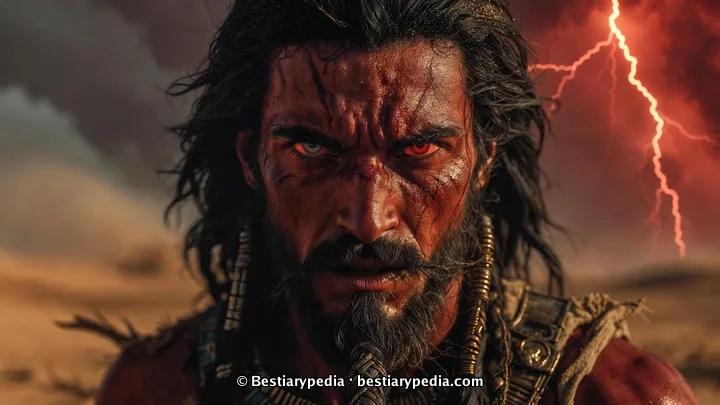
Set
Set, god of chaos, storm and violence in Egyptian mythology
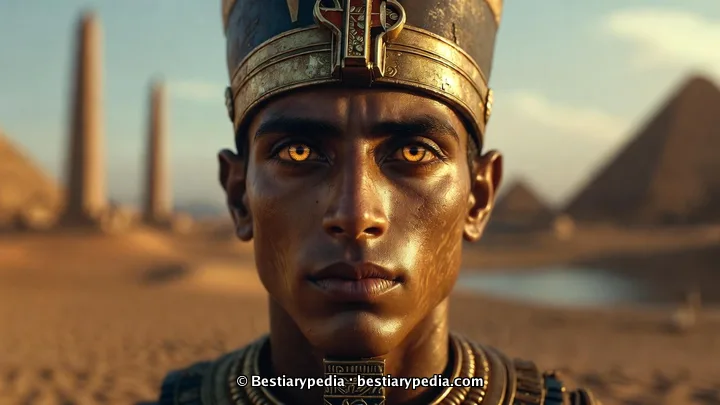
Ra
Ra, Egyptian god of the sun, creator of the world and father of the gods
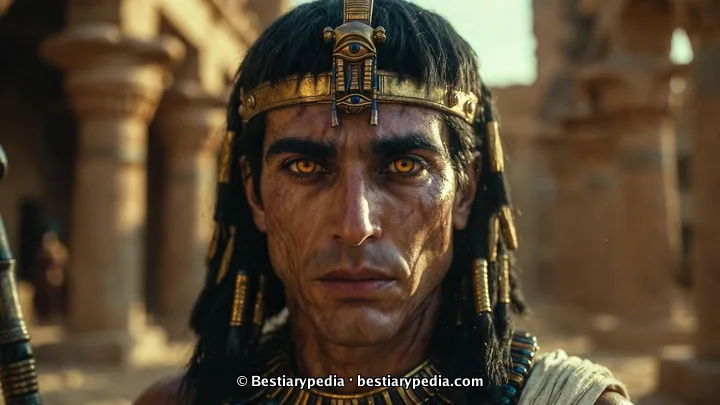
Horus
Horus, god of the sky, kingship and war in Egyptian mythology
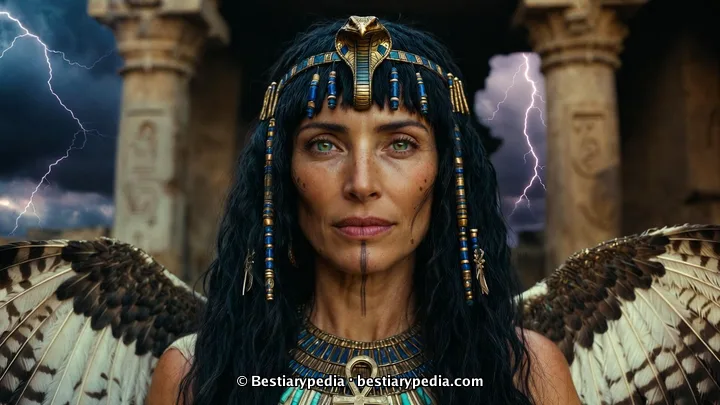
Isis
Isis, Egyptian goddess of motherhood, magic and resurrection